Reading Group Guide


Discussion Questions
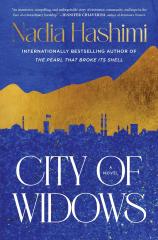
City of Widows


1. The bacha posh tradition, in which a girl is dressed and raised as a son, grants Marjan freedoms unavailable to other girls, including playing soccer with the neighborhood boys. How does the novel weigh the liberation this tradition offers against its underlying message about the value society places on girls? Discuss the observation that "a girl dressed as a boy was still a girl and would inevitably be treated like a girl."
2. “Without a man to validate her existence, she is a shadow and so is her daughter,” the narrative tells us. How does Marjan's struggle to obtain a tazkera and a passport for Hawa illustrate the concrete, legal dimensions of this invisibility? What does the practice of excluding mothers' names from birth certificates reveal?
3. Marjan reflects that “half of soldiering is knowing when to fight and when to lie low.” How does this philosophy of strategic patience surface throughout her life, from her forced marriage to her later actions under Taliban rule? Do women have to be soldiers to live this philosophy?
4. The legendary lion Marjan at the Kabul Zoo, having survived a coup, invasion, civil war and the Taliban, becomes a potent symbol in the novel. How does the protagonist's shared name deepen this motif? In what ways does the lion embody both national and personal endurance?
5. The narrative explores the “thousand lies” Marjan tells to shield Hawa from the truth about her past and her father's identity. How do these protective deceptions both preserve and strain the bond between mother and daughter? Do you believe Marjan was right to conceal the truth for as long as she did?
6. Samia advises Marjan that survival is “infinitely harder alone” and urges her to “Find yourself a circle of women.” How does solidarity between women function as a survival mechanism throughout the book, from the women's shelter to the Female Tactical Platoon? Which relationships strike you as the most sustaining?
7. The #IAmMySong campaign, in which young girls post videos of themselves singing to protest government restrictions, frames voice itself as defiance. How does the novel connect artistic expression to political resistance? Why might singing feel especially threatening to those in power?
8. Zanabad, the “City of Widows,” is a hillside sanctuary founded by a widow known as “Mother of the Mountain,” where marginalized women build their own homes, teach one another to read and sew, and rebuild each time the authorities tear them down. What does this community reveal about female agency and matriarchy? How does it reframe what a “city” or a "home" can be? Is it truly the safe space to which the women aspire?
9. The destruction of art and culture is depicted over and over, from ruined instruments to Hawa's grief that “without music, I feel lost.” How does Nadia Hashimi link cultural destruction to the broader oppression of women? Why might art be one of the first things an extremist regime seeks to silence?
10. The text critiques the international romanticizing of Afghan women's endurance, calling the word “resilient” a “dangerous myth” because “It gave the world permission to turn its back.” Later, Marjan reflects that “going to battle for oneself was a great love story too.” How do these two ideas speak to each other? What responsibility, if any, does the novel place on the outside world that admires survival from a distance?
11. What do you think happens to Marjan and Hawa in the years after this novel ends? If you could imagine the ideal future for them, what would it be?


City of Widows
- Publication Date: July 28, 2026
- Genres: Fiction, Women's Fiction
- Hardcover: 432 pages
- Publisher: William Morrow
- ISBN-10: 0063423545
- ISBN-13: 9780063423541