
Reading Group Guide


Discussion Questions
A Far-flung Life
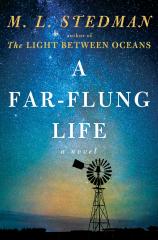


1. The novel begins, “Out here, it’s red earth for as far as the eye can see. Overhead, the sun plows an unending blue sky” (page 3). M. L. Stedman has described the Western Australian landscape as being “a character in its own right.” How would you describe that character? What role does it play in the story of the MacBrides and the Wanderrie Creek way of life?
2. The first two chapters take the reader through the accident and the immediate aftermath, before the full extent of what has happened is revealed. Why start with the crash and then go back in time, introducing Rose, and then Pete Peachey? How does this affect the way the reader experiences the story?
3. Rose resolves “never to take the blame for anything again” (page 30) and comes up with her “yawa, yawa, yawa” ritual. She tells Matt, “[Truth]’s not forever if you don’t want it to be. It’s just until you make it go away” (page 31). How does this thinking inform Rose’s actions at various times in her life? Does it help or harm her ultimately?
4. When Rose forges Phil’s signature, Lorna feels it’s “a calculated desecration, and something in Lorna hardened that day” (page 108). Why is this such a point of no return for Lorna with Rose? What does it tell you about the difference between the moral code of Rose and of Lorna, and how their relationship works?
5. The narrator observes: “After the birth of her son, Rose MacBride’s mind reached places which, if we are lucky, we will never know” (page 142). In a desperate moment, Rose thinks, “she could fend off the questions of a child, but this thing would one day be a man, with all the irresistible wiles and force that entailed. The world could not protect the both of them” (page 137). Bearing in mind the morals and social values of that era, how do you think Rose envisaged her future? Could anyone or anything have made a difference?
6. Time is a major theme of the book: “a handful of muddled seconds” is contrasted with millennia; the minutes measured by Old Wally, with the “stretching and the shrinking of the light that conspire(s) to carry the years away.” What is the effect of these different timescales on how the reader experiences the story? Peachey says, “Time’ll get you through anything, in the end....The secret’s time” (page 142). Do you agree? If no, what won’t time ease, and why?
7. The book explores memory and forgetting. What do “memory” and “forgetting” mean in our technological age, in which every trivial detail can be stored and retrieved with a click or two? What do you think the impact is or will be on society? In English, we say “forgive and forget.” What role does forgetting play in forgiving? And what role do both of them play in letting us move beyond the wounds, great and small, that affect any human life?
8. When we meet Andy as a boy, he’s playing in the wreck of the old Bedford truck, pretending to drive it out into a desert (page 177). This parallels the first scene in the novel where the MacBride men are all in the truck together, 10 years earlier (page 3). What does this echo call up for the reader? How does it set the stage for Part II, and even the end of Part III?
9. Myrtle Eedle and Sergeant Rundle mostly appear in their own chapters, and, with the exception of Myrtle selling Andy stamps, we never see them directly interacting with the MacBrides. Why do you think the author chose to tell the story this way? How do these chapters affect the rhythm of the novel?
10. Sergeant Wisheart and Sergeant Rundle have very different approaches to what’s right and wrong, and how the law should be applied. What are the pros and cons of their different perspectives? Who do you align with the most?
11. When Peachey tells Andy that it “sounds to me like a forgetment’s a free pass ....Maybe it’s your chance to make your own story,” he also tells him that “a butcher-bird has lots of songs...its territorial song, and its mating call, its distress call, its warning cry. And sometimes, it just sings to itself, because it wants to; because it can.... Just because you’ve heard one song, doesn’t mean you know the whole bird” (page 294). How does this apply to the characters in general, and to people in real life?
12. Who are the characters you’re most drawn to in the story? Who are the ones with whom you most strongly disagree?
13. Thinking back to that era, if you were Matt, what would you have told Andy, and when? What would you have told Bonnie, and when? Or Lorna? And if you were Andy, would you want to know everything, no matter what? Would your answers be different today?
14. Thinking of all the characters who have secrets, to what extent does keeping their secrets make their lives happier or less happy? And on the other hand, the characters from whom secrets are kept --- what’s the effect on them?
15. Who has a right to keep secrets? Who has a duty to keep them? What secrets might be wise or even healthy between spouses, between parents and children, between individuals?


A Far-flung Life
- Publication Date: March 3, 2026
- Genres: Fiction, Historical Fiction
- Hardcover: 448 pages
- Publisher: Scribner
- ISBN-10: 1668219611
- ISBN-13: 9781668219614
