Featured Guide

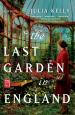
Julia Kelly, author of The Last Garden in England

Present day: Emma Lovett has been tasked to restore the gardens of the famed Highbury House estate, designed in 1907 by her hero, Venetia Smith. 1907: When Venetia Smith is hired to design the gardens of Highbury House, she is determined to make them a triumph. 1944: When land girl Beth Pedley arrives at a farm on the outskirts of the village of Highbury, all she wants is to find a place she can call home. Cook Stella Adderton is desperate to leave Highbury House to pursue her own dreams. And widow Diana Symonds is anxiously trying to cling to her pre-war life. When war threatens Highbury House’s treasured gardens, these three very different women are drawn together by a secret that will last for decades.

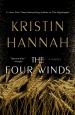
Kristin Hannah, author of The Four Winds

Texas, 1921. The Great War is over, the bounty of the land is plentiful, and America is on the brink of a new and optimistic era. But for Elsa Wolcott, deemed too old to marry in a time when marriage is a woman’s only option, the future seems bleak. Until the night she meets Rafe Martinelli and decides to change the direction of her life. By 1934, millions are out of work, and drought has devastated the Great Plains. Everything on the Martinelli farm is dying, including Elsa’s tenuous marriage; each day is a desperate battle against nature and a fight to keep her children alive. In this uncertain and perilous time, Elsa --- like so many of her neighbors --- must make an agonizing choice: fight for the land she loves, or leave it behind and go west, to California, in search of a better life for her family.

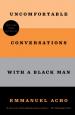
Emmanuel Acho, author of Uncomfortable Conversations with a Black Man

“You cannot fix a problem you do not know you have.” So begins Emmanuel Acho in his essential guide to the truths Americans need to know to address the systemic racism that has recently electrified protests in all 50 states. In UNCOMFORTABLE CONVERSATIONS WITH A BLACK MAN, Acho takes on all the questions, large and small, insensitive and taboo, many white Americans are afraid to ask --- yet which all Americans need the answers to, now more than ever. With the same open-hearted generosity that has made his video series a phenomenon, Acho explains the vital core of such fraught concepts as white privilege, cultural appropriation and “reverse racism.” In his own words, he provides a space of compassion and understanding in a discussion that can lack both.

Melanie Benjamin, author of The Children's Blizzard

The morning of January 12, 1888, was unusually mild, following a punishing cold spell. It was warm enough for the homesteaders of the Dakota Territory to venture out again, and for their children to return to school without their heavy coats --- leaving them unprepared when disaster struck. At the hour when most prairie schools were letting out for the day, a terrifying, fast-moving blizzard blew in without warning. Schoolteachers as young as 16 were suddenly faced with life and death decisions: Keep the children inside, to risk freezing to death when fuel ran out, or send them home, praying they wouldn’t get lost in the storm.

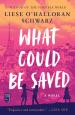
Liese O'Halloran Schwarz, author of What Could Be Saved

Washington, DC, 2019: Laura Preston is a reclusive artist at odds with her older sister, Bea, as their elegant, formidable mother slowly slides into dementia. When a stranger contacts Laura claiming to be her brother who disappeared 40 years earlier when the family lived in Bangkok, Laura ignores Bea’s warnings of a scam and flies to Thailand to see if it can be true. But meeting him in person leads to more questions than answers. Bangkok, 1972: Genevieve and Robert Preston raise their three children with the help of a cadre of servants. Robert works for American intelligence, Genevieve finds herself drawn into a passionate affair with her husband’s boss, and their serene household is vulnerable to unseen dangers in a rapidly changing world and a country they don’t really understand.

Ashley Audrain, author of The Push

Blythe Connor is determined that she will be the warm, comforting mother to her new baby, Violet, that she herself never had. But in the thick of motherhood’s exhausting early days, Blythe becomes convinced that something is wrong with her daughter --- she doesn’t behave like most children do. Or is it all in Blythe’s head? Her husband, Fox, says she’s imagining things. The more Fox dismisses her fears, the more Blythe begins to question her own sanity, and the more we begin to question what Blythe is telling us about her life as well. Then their son, Sam, is born --- and with him, Blythe has the blissful connection she’d always imagined with her child. Even Violet seems to love her little brother. But when life as they know it is changed in an instant, the devastating fallout forces Blythe to face the truth.

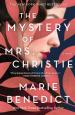
Marie Benedict, author of The Mystery of Mrs. Christie

In December 1926, Agatha Christie goes missing. Investigators find her empty car on the edge of a deep, gloomy pond, the only clues some tire tracks nearby and a fur coat left in the car --- strange for a frigid night. Her World War I veteran husband and her daughter have no knowledge of her whereabouts, and England unleashes an unprecedented manhunt to find the up-and-coming mystery author. Eleven days later, she reappears, just as mysteriously as she disappeared, claiming amnesia and providing no explanations for her time away. The puzzle of those missing 11 days has persisted. Acclaimed author Marie Benedict brings us into the world of Agatha Christie, imagining why such a brilliant woman would find herself at the center of such murky historical mysteries.

Jacqueline Winspear, author of This Time Next Year We'll Be Laughing: A Memoir

After 16 novels, Jacqueline Winspear has taken the bold step of turning to memoir, revealing the hardships and joys of her family history. Both shockingly frank and deftly restrained, her story tackles the difficult, poignant and fascinating family accounts of her paternal grandfather’s shellshock; her mother’s evacuation from London during the Blitz; her soft-spoken animal-loving father’s torturous assignment to an explosives team during WWII; her parents’ years living with Romany Gypsies; and Winspear’s own childhood picking hops and fruit on farms in rural Kent, capturing her ties to the land and her dream of being a writer at its very inception.

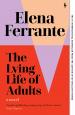
Elena Ferrante, author of The Lying Life of Adults

Giovanna’s pretty face is changing, turning ugly, at least so her father thinks. Giovanna, he says, looks more like her Aunt Vittoria every day. But can it be true? Is she really changing? Is she turning into her Aunt Vittoria, a woman she hardly knows but whom her mother and father clearly despise? Surely there is a mirror somewhere in which she can see herself as she truly is. Giovanna is searching for her reflection in two kindred cities that fear and detest one another: Naples of the heights, which assumes a mask of refinement, and Naples of the depths, a place of excess and vulgarity. She moves from one to the other in search of the truth, but neither city seems to offer answers or escape.

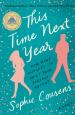
Sophie Cousens, author of This Time Next Year

Minnie Cooper knows two things with certainty: her New Year's birthday is unlucky, and it's all because of Quinn Hamilton, a man she's never met. Their mothers gave birth to them at the same hospital just after midnight on New Year's Day, but Quinn was given the cash prize for being the first baby born in London in 1990 --- and the name Minnie was meant to have, as well. When Minnie unexpectedly runs into Quinn on their mutual 30th birthday, she sees only more evidence that fortune has continued to favor him. But if Quinn and Minnie are from different worlds, why do they keep bumping into each other? And why is it that each fraught encounter leaves them both wanting more?