Reading Group Guide


Discussion Questions
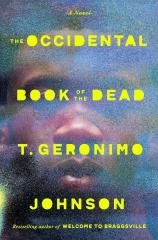
The Occidental Book of the Dead


1. Jonson’s name --- George Washington Jonson --- is freighted with irony. How does the novel use names (Anthony Montana, Da Whizz, “Serious”) to signal character, aspiration and the weight of history? What does it mean to name a Black child after a founding father who enslaved people?
2. The novel presents two very different versions of Jonson’s rookie-orientation speech: one delivered by his partner, Tucker, in 1992, and another delivered by Jonson himself in 2005. What changes between them, and what stays the same? What does the contrast reveal? Does Jonson become Tucker, in your view?
3. OASIS (Off America’s Streets and Into the System) is described as an open secret within the police department --- a system of racial profiling that senior officers quietly school rookies in. How does Johnson depict institutional racism as something systemic rather than the work of individual “bad apples”? Does the novel let George Washington Jonson off the hook?
4. Anthony Montana, the young man shot at the novel’s center, is white but lives in The Bricks and works for a Black drug dealer. His mother, Holland, is also white. How does the novel use race in unexpected or inverted ways? What does Anthony’s story suggest about poverty, community and the access to education?
5. The novel is structured like a television series --- with “Gospels,” episodes, a series finale and a bonus track. How did this structure affect your reading experience? What does Johnson gain by framing a story about race and policing as prestige TV? Consider how serialization and entertainment have shaped America’s relationship to these issues.
6. The book contains at least two distinct narrative layers: the “real” story as Jonson tells it, and the fictionalized TV adaptation called “Syndication.” What does the gap between these versions reveal? Why might Johnson want readers to hold both versions simultaneously?
7. Tucker is in many ways Jonson’s antagonist, yet the novel complicates this. By the novel’s end, what kind of relationship do Jonson and Tucker have? Is there friendship, complicity, mutual use or something stranger? How does the novel refuse easy moral categories?
8. The novel is set in “Atlantis, Georgia” --- a fictional stand-in for Atlanta. What does the mythological resonance of that name (a lost civilization, submerged beneath the sea) contribute to the novel? What does Johnson suggest about the relationship between Atlanta’s self-image and the realities of race and poverty within it?
9. The dedication reads: “Dedicated to the future memory of white supremacy.” Unpack this phrase. Is it a wish? A warning? An ironic eulogy? How did your interpretation of the dedication change as you read the novel?
10. Several characters in the novel are parents --- biological, step or surrogate --- who are judged by others for how they raise or fail to raise their children, often along racial lines. How does the novel interrogate who gets to be considered a “good” parent in America, and whose failures are treated as personal versus whose are treated as systemic?
11. The novel argues --- most explicitly through Da Whizz --- that the racial wealth gap, predatory credit and housing inequality are not failures of the American system but evidence of it functioning as designed. How did engaging with that argument through fiction affect you differently than encountering it in an essay or news article? Did the novel change or deepen how you think about debt and financial inequality in your own world?
12. By the end of the novel, has Jonson found the redemption or clarity he was seeking? Does the novel offer hope, resignation or something more ambiguous? As a reading group, what do you make of the novel’s final emotional note --- and what do you think the author wants readers to carry with them after finishing?


The Occidental Book of the Dead
- Publication Date: October 6, 2026
- Genres: Fiction
- Hardcover: 672 pages
- Publisher: William Morrow
- ISBN-10: 0063330547
- ISBN-13: 9780063330542