Reading Group Guide


Discussion Questions
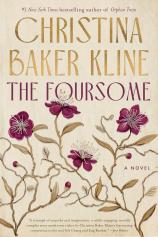
The Foursome


1. THE FOURSOME is told through Sarah’s perspective. How does seeing events through her eyes shape your understanding of the other central characters: her sister Adelaide, her husband Eng, and his brother Chang? Were there moments when you felt the limits of Sarah’s point of view, or times when what she couldn’t or wouldn’t see told you more than what she observed directly?
2. The novel explores the idea of complicity --- the ways people participate in systems of harm through silence, willful ignorance, or simply the ordinary routines of daily life. Which moments in the novel struck you as the most powerful depictions of complicity, and how does Christina Baker Kline dramatize something as invisible as choosing not to see?
3. The title THE FOURSOME frames these four people as a unit, yet the bonds between them are hardly equal. How do the different pairings within the foursome --- the twins, the sisters, the two marriages --- pull against each other? Which relationship did you find most compelling, and why?
4. Sallie and Addie are bound together in ways most sisters never are. How does the novel calibrate the love and resentment between them? Did your sympathies shift between the two sisters over the course of the book?
5. Historical fiction always faces the question of how to render the past without making characters sound either artificially modern or inaccessibly archaic. How did you experience the novel’s language and dialogue? Were there moments where the historical setting felt especially vivid or especially distant?
6. The Bunker twins have been written about for nearly 200 years. What does a novel --- as opposed to a biography or documentary --- allow us to understand about these historical figures that other forms might not? What can fiction access that fact alone cannot?
7. The novel takes on slavery from the perspective of a white protagonist who is embedded in and benefits from the institution. How does that narrative choice shape the way the book depicts enslaved people and the realities of their lives? What are the risks and possibilities of that approach?
8. Many of the most charged moments in the novel involve what is not said aloud: the silences between characters, the things left unspoken at dinner tables and in shared bedrooms. Can you point to a scene where silence carried as much weight as dialogue? What did that restraint reveal?
9. The novel depicts an extraordinarily unusual domestic arrangement --- two married couples sharing a life because their husbands are physically inseparable. Have you ever been in a situation where the structure of your living arrangement or family shaped your relationships in ways you didn’t expect? How did reading about the foursome’s daily life challenge your assumptions about what a household or marriage can look like?
10. Sarah undergoes a slow moral awakening over the course of the novel as she comes to see things she had been taught not to see. Have you ever experienced a similar shift, where something you had accepted as normal gradually revealed itself to be something else entirely? What prompted that change in you?
11. The Bunker twins were one of the most famous spectacles of 19th-century America --- people who were defined in the public eye by their physical difference. How does the novel complicate or challenge the idea of spectacle? Has there been a time in your life when you felt reduced to a single defining characteristic, or when you caught yourself doing that to someone else?
12. The book raises questions about the difference between choosing a life and making the best of the one you’re given. Do you think Sarah chose her life with Chang, or did she make the best of a constrained set of options? Where do you draw the line between agency and accommodation in your own life?
13. One of the novel’s recurring tensions is between the desire to belong to a community and the cost of conforming to its expectations. The foursome’s life in North Carolina is defined by both acceptance and otherness. When have you felt that tension between fitting in and being fully yourself?
14. The novel is set in a period when the institution of slavery was woven into the fabric of everyday life for white Southerners. Reading about that ordinariness --- the way brutality coexisted with domestic routine --- what surprised you most? Did it change the way you think about how people in any era normalize what future generations may find unconscionable?
15. If your book club could step into the world of THE FOURSOME and spend an evening with any one of the central characters, who would you most want to talk to, and what would you ask? What questions does the novel leave unanswered that you most wish you could resolve?


The Foursome
- Publication Date: May 12, 2026
- Genres: Fiction, Historical Fiction, Women's Fiction
- Hardcover: 384 pages
- Publisher: Mariner Books
- ISBN-10: 0063097990
- ISBN-13: 9780063097995