Reading Group Guide


Discussion Questions
Peck & Peck


1. Chapter 1 opens with “I’ve been called a thief, a rebel, an upstart, a traitor, and --- maybe this one won’t come as a surprise based on the others --- Prisoner 83A0956” (p. 1). How does this introduction affect your first impression of Batter’s character?
2. Rainey Gray, Batter’s mother, describes typefaces as “practical and emotional, a volatile combination that should only ever be handled by a trained professional” (p. 15). Why does Rainey believe type design is so important? Can a typeface really change minds or save lives, as she implies? How much thought do you give to the typeface you use?
3. Batter is an identical twin whose brother died at birth. How does his yearning for a brother he’s never met affect his feelings about himself? And had his twin lived, how does he imagine his life would have been different? All of us have an inner life, and some psychologists believe it’s a kind of twin we each carry inside. When you feel something “in your gut,” is that your inner twin speaking? Do you ever feel like you have an evil twin?
4. Many people believe twins always get along, but twin research proves otherwise. What causes sibling rivalry? And how does sibling rivalry affect others? A company is often compared to a family because its day-to-day activity is influenced by roles, alliances and professional jealousies. As in a family, there is a pecking order. How much is your company like a family? How is it different?
5. When Batter goes to the Aviary for the first time, he observes the collection of eggs: “every egg is a calcified fortress, a citadel designed to withstand weight, weather, and wear. We consider them as fragile; they’re anything but” (p. 116). In other words, the eggshell, like several characters in the book, defies expectations. Which characters do the same, revealing themselves to be more than they seem? Do you think most people hide behind a shell?
6. Crime is a consistent theme throughout the book. Some crimes are committed for noble reasons --- for example, when poets speak out against a fascist leader. But other crimes --- bribes, plagiarism, accounting fraud --- are typically byproducts of greed and/or desperation. Some believe today’s Generative AI platforms are an example of this latter type of crime because, like bribes, they make the end user complicit by promoting plagiarism as an acceptable way to get things done faster. AI is unregulated, which means none of us have a say in how it is built or used.
What are your thoughts on AI regulation? Does Peck & Peck seem odd for insisting that the only way to protect a writer’s rejected work is to burn their copy? Given the way that AI scrapes without permission, does Peck & Peck seem ahead of its time? Is scraping justifiable in order for companies to form one source of knowledge? Is it okay to ignore copyright law? Finally, how do you protect what you do (e.g., research, law briefs, emails, essays, songs, books, voice, visual likenesses, family photos) from being used by AI without your permission? Is plagiarism the price of progress?
7. Batter and Paul, like Declonius and Salton, are complete opposites. Yet the brotherhood shared by Batter and Paul is a reminder that family isn’t always defined by blood. Despite their different life experiences, what makes Batter and Paul friends? And despite their common upbringing, what makes Declonius and Salton enemies? How are both pairs surprised by each other at the end?
8. Every edition of Peck & Peck is fronted by the poem “Come. Home.” Declonius explains it refers to a person’s knowledge of who they are and what they stand for --- to “come home” is to return to your values. What values guide you? Do you ever feel like your values are threatened by the work you do? How well does your company, government or school represent your values?
9. Batter is named after Batter the dog. What role do Rainey’s dog stories play in the book? And why is each story tied to a distinct psychological issue (anxiety, low self-esteem, narcissism, etc.)? Does she really suffer from “nerves,” or is it, as she says, just the opposite --- that most people lack nerve? Why does she insist that Batman would be nothing without Alfred? Does every hero require help?
10. Batter proves that he has excellent first instincts, but his desire to do the right thing often puts him in harm’s way. As he says, “Doing the brave thing and doing the right thing were usually the same. But why was doing the right thing so hard?” (p. 191). Where do we see these instincts at play? What are some instances where Batter succeeds by trusting his gut?
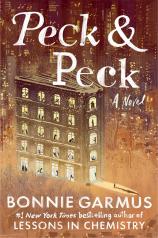
11. The Peck & Peck building is a character in its own right. What does the building represent? Why are we drawn to things that aren’t carbon copies? Can you name a building you love?
12. Batter isn’t sure who he is, a problem, especially when money is tight. Have you ever felt like you’re waiting for your life to begin? What sorts of things keep you from knowing what you want to do? Do you think it’s harder to be a success in the humanities? What would happen if the humanities disappeared?