IndieBound Independent Bookstores

Barnes & Noble


Loading
Reading Group Guide
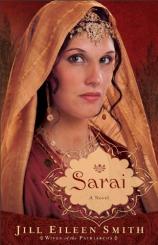
Sarai
Wives of the Patriarchs, Book 1
by Jill Eileen Smith

List Price: $14.99
Pages: 320
Format: Paperback
ISBN: 9780800734299
Publisher: Revell

Click here to buy this book from Amazon.com.
Click here to buy this book from Amazon.ca.


About This Book

He promised her his heart. She promised him a son. But how long must they wait?

When Abram finally requests the hand of his beautiful half sister Sarai, she asks one thing --- that he promise never to take another wife as long as she lives. Even Sarai’s father thinks the demand is restrictive and agrees to the union only if she makes a promise in return --- to give Abram a son and heir. Certain she can easily do that, Sarai agrees.

But as the years stretch on and Sarai’s womb remains empty, she becomes desperate to fulfill her end of the bargain, lest Abram decide that he will not fulfill his. To what lengths will Sarai go in her quest to bear a son? And how long will Abram’s patience last?

Combining in-depth research and vivid storytelling, Jill Eileen Smith brings to life the beautiful and inscrutable Sarai in this remarkable story of love, jealousy, and undaunted faith.

top of the page


rgg_discuss.gif (1294 bytes)

1. The story begins with a prologue set during a wedding feast. Sarai and Abram’s nephew Lot is marrying Melah, who is already pregnant with his child. How does this set the stage for the rest of the story for each of the characters --- Sarai, Abram, Lot, and Melah?

2. Fifteen years later in chapter 1, Melah tries to talk Sarai into sacrificing to the goddess Ningal in order to heal her barrenness and grant her a child. Why do you think Sarai even listened to Melah and considered that option? Keep in mind that she was raised in a polytheistic culture, where many gods were worshiped. Have you ever been tempted to give in to a belief that you knew to be false just because it promised something you desperately wanted? What was the result?

3. In the same chapter, Abram encounters the Creator, who calls Abram by name and tells him to leave his family and go to a place He would show him. God promises to bless Abram and make him the father of a great nation. How does Abram respond? Why do you think he chooses to offer a sacrifice?

4. In chapter 3, Abram’s father, Terah, declares that he will go with Abram and Sarai to wherever it is God has called them. God had called Abram to leave his father’s household, so why do you think Abram allows Terah to go with them? Lot accompanies them as well. Do you think this is disobedience on Abram’s part to allow Terah and Lot to follow when God had told him otherwise? Why or why not?

5. Before they leave Ur to go to the land God would show them, Abram learns from Eliezer that it is not safe for beautiful women in foreign lands. What request does Abram make of Sarai before they leave? Why does this distress Sarai?

6. When Abram’s tribe reaches Harran, they end up staying for two years due to Terah’s failing health. Abram and Sarai’s relationship is strained during this time, as Abram finds it necessary to keep their status as husband and wife a secret. Since this means little time alone together, it also means one more obstacle to Sarai bearing a child. How do you think this makes Sarai feel? The promise of God had raised her hopes of pregnancy, but with each passing day those hopes fade. Have you ever longed for something with such intensity? How did you deal with your feelings?

7. Melah is enamored with the pagan city of Harran and seems bored and uninterested in Abram’s belief in one God. How does her attitude affect Sarai?

8. On his deathbed, Terah utters two words that could have dual meanings. What are they? Why do you think Sarai interprets them as meant for her? What promise had she made that was impossible for her to keep?

9. Lot and Melah have a less-than-ideal relationship. Abram and Sarai consider Lot to be selfish and arrogant, and Sarai does not want their nephew gaining control of all they own if something should happen to Abram before she can bear the promised child. What does she propose to Abram to ensure their future? How might this have affected their relationships with Lot and Melah?

10. Melah continually urges Sarai to offer a sacrifice to foreign gods in order to procure a son. Why do you think Melah will not take no for an answer? What does she hope to gain if Sarai finally embraces her gods?

11. What does Sarai do that causes her to think she is to blame for the ensuing famine? What does Abram do in response to that famine? How does this affect their relationship?

12. In Egypt, Sarai is taken into Pharaoh’s palace because of her great beauty. Why do you think Abram keeps silent when she is taken? How does Sarai feel at this point? Why do you think Sarai feels her fate rests in her own hands?

13. What happens in Pharaoh’s household that allows Sarai to be returned to Abram? Who is Hagar, and why do you think she is given to Sarai? How might Hagar feel, having to leave all she knows and loves? Why doesn’t she tell someone the truth? Have you ever kept a secret out of fear? What was the result?

14. After leaving Egypt, Abram and Lot both prosper greatly, but Melah grows increasingly discontent living near Sarai. How would you describe Lot and Melah’s marriage at this point? Why do you think Lot is so easily swayed by Melah’s words?

15. Eventually the land is no longer able to hold both Abram’s and Lot’s flocks and herds, and Abram tells Lot they must separate. Why do you think Lot chooses the plains close to Sodom? After this, God appears to Abram again to reaffirm his covenant. From a covenant standpoint, why do you think Abram and Lot’s separation is necessary?

16. Soon after Lot moves his family to Sodom, raiders invade the city and take them captive. What is Melah’s emotional state at this time? How does she handle her devastating loss?

17. Abram rescues Lot and his family, who return to Sodom. Why do you think they choose to continue living in a wicked city rather than return to living in tents far from the vices of Sodom? What is Melah’s attitude at this point?

18. During this time, Sarai discovers that she can no longer bear a child. What choice does she make that changes the course of her life forever? Why do you think she makes this choice? What does that say about her faith as compared to Abram’s?

19. Three women cross paths in this story --- Sarai, Melah, and Hagar. How do their choices differ? What is the final fate of each? How might their stories have changed if they had embraced different attitudes? Which one do you identify with the most?

20. In the end, Sarah finally bears the promised son, Isaac. Why do you think “laughter” is an appropriate name for this long-awaited son? What lessons can we learn from Sarah’s life?

top of the page

Critical Praise

"Sarai gives ‘the rest of the story’ --- Abram and Sarai’s journey toward faith. Don’t hesitate to open this rich biblical drama for new insight and a new perspective."
— Lyn Cote, author of Her Abundant Joy


"An absorbing visit to the past, filled with wonderful details, fascinating characters, and an unforgettable ending."
— Maureen Lang, author of Springtime of the Spiritand Whisper on the Wind


"Jill has a special insight into her characters and a great love for biblical stories. I highly recommend Sarai. You will not be disappointed."
— Hannah Alexander, award-winning author of Eye of the Storm

 
Facebook Fan Page  Follow us on Twitter


Add Your Guide to ReadingGroupGuides.com!

Bookreporter.com Bets On...: Books We're Betting You'll Love


Privacy Policy | Contact Us | Advertising | About Us

© Copyright 2001-2013, ReadingGroupGuides.com. All rights reserved.
The Book Report, Inc. • 250 West 57th Street • Suite 1228 • New York, NY • 10107
Ph: 212-246-3100 • Fax: 212-246-4640

Bookreporter.comReadingGroupGuides.comGraphicNovelReporter.comFaithfulReader.com
Teenreads.comKidsreads.comAuthorsOnTheWeb.com