Reading Group Guide


Discussion Questions
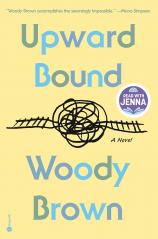
Upward Bound


1. What assumptions did you hold about autistic people --- especially those who are nonspeaking --- before reading UPWARD BOUND? How has the novel challenged, reshaped or reinforced those assumptions?
2. Which character or characters did you feel most connected to, and why?
3. Many characters in the novel are constrained by systems meant to help them --- schools, jobs, care facilities, social services. Where did the book make you feel the greatest tension between safety and freedom?
4. “You could tell that it didn’t even occur to them that we might mind being left waiting,” Walter observes. “As if time means nothing to people who have nothing but time.” He then counters this with, “I think it’s the opposite. Our time is wasted so profligately that we cherish time for what it might be, not for its emptiness.” How does the novel reframe whose time is considered valuable? Where else do you see time being controlled, wasted or protected --- and by whom?
5. Walter states, “People can be elitist when it comes to speech. If you can’t communicate, it must mean that you are mentally retarded.” How does the book challenge this assumption through structure, point of view and interiority? Which characters are most harmed by this belief, and which benefit from it?
6. After reading this novel, what do you think a “good” institution for autistic young adults would look like? How could caregivers ensure that their clients --- of varying, multifaceted sets of needs --- get individualized care? What sweeping changes (politically, societally, economically or otherwise) would need to happen before this institution could become a reality?
7. Throughout the book, dignity is shown not as something abstract but as something fragile and situational. Which characters feel most at risk of losing their dignity, and what actions --- small or large --- help preserve it?
8. “Here, without a real communication partner, I am as mute as Jorge,” Walter says. What does this reveal about communication as something relational rather than individual? Where else in the novel do systems, rather than bodies, create silence?
9. We’re told of Tom, “The same CP that makes his muscles and joints stiff as concrete also freeze his face and mouth. He can’t speak a word and can’t express emotions. He has them, god knows he has them, but he holds even the most benign feelings inside like a well-guarded secret.” How does Brown give Tom emotional agency despite --- or because of --- these constraints? How did reading Tom’s interior life shape your understanding of expression?
10. At one point, the novel states simply, “Ann makes [Tom] feel like a whole person, not a chair.” What, specifically, does Ann do differently from other caregivers or staff? How does the novel complicate this relationship, holding both its tenderness and its limits at the same time?
11. Walter says of the Upward Bound staff: “Good soul + good training = good aide. A tall order for a low-paying gig.” How does the novel portray the moral stakes of underpaid care work? In what ways are staff members like Carlos, Ann and Andy also constrained by the same systems as the clients? In what ways are these staffers constrained by different systems?
12. How does the novel explore the emotional cost of losing access to self-definition? Where do you see characters being reduced to categories rather than known as individuals?
13. We’re told that Carlos “might be the only person in Jorge’s daily life who honestly had affection for him, who saw him and even knew him a little.” What makes Carlos different from other authority figures in the book? How does his presence --- and later, his absence --- reveal what true recognition looks like?
14. Late in the novel, Walter declares, “I can’t belong to this club of silence, I refuse, but I can tell stories from behind the front lines.” How does UPWARD BOUND itself enact this refusal? In what ways does the novel argue that who gets to tell the story --- and how --- is a moral act?
15. After the book ends, what do you think survival looks like for these characters? Is survival framed as progress, acceptance, resistance, storytelling, or something else entirely?
16. How has UPWARD BOUND changed the way you see other people --- and the world at large? What will you do with this gift of additional insight and understanding?


Upward Bound
- Publication Date: March 31, 2026
- Genres: Fiction
- Hardcover: 208 pages
- Publisher: Hogarth
- ISBN-10: 0593979974
- ISBN-13: 9780593979976