
Reading Group Guide


Discussion Questions
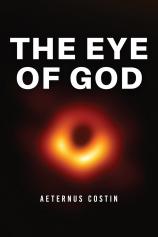
The Eye of God


Discussion Questions
Understanding the Argument
1. Aeternus Costin claims that Gravity displays all the attributes traditionally assigned to God (eternity, immutability, omnipresence). Do you find this redefinition compelling? Why or why not?
2. How does Costin’s critique of consciousness and the soul affect traditional religious frameworks?
3. Which of the classical arguments for God (teleological, ontological, cosmological) did you find most vulnerable or most defensible?
Personal and Cultural Reflection
4. Costin describes shifting from faith to doubt after reading the Bible. Have you experienced a similar shift after engaging deeply with a sacred text or philosophical work?
5. The book argues that religion persists partly because it meets social and psychological needs. Do you agree?
6. Costin’s “epiphany” moment strongly echoes religious conversion stories. What do you make of this parallel?
Philosophical and Scientific Inquiry
7. Is it spiritually or philosophically satisfying to equate God with a physical force? Does this undermine or enhance the meaning of “God”?
8. Costin argues there is no afterlife because consciousness cannot exist without a physical brain. How do you respond to this claim?
9. Does grounding morality and meaning in human agency rather than divine will, as Costin suggests, lead to more or less responsibility?
Social Impact & Consequences
10. Costin predicts that if his ideas gain traction, religious institutions will resist, then eventually co-opt, the concept. Do you think this pattern is plausible?
11. How might Costin’s claims affect interfaith dialogue, science communication or ethics?
Activities for Book Clubs
1. Concept Mapping
Map the book’s central logical chain:
Gravity → attributes of God → critique of consciousness → demolition of supernatural theism → new metaphysics.
2. Debate Night
Split into two teams:
- Team A: “Gravity can be understood as God.”
- Team B: “God cannot be redefined as a physical force.”
3. Comparative Text Discussion
Read short excerpts from:
- Plato’s REPUBLIC (“Allegory of the Cave”)
- Thomas Hobbes’ LEVIATHAN
- Spinoza’s ETHICS
- Hawking’s THE GRAND DESIGN
Discuss how each informs Costin’s worldview.
(References used throughout the book.)
4. Personal Belief Narrative
Have each member describe a moment when their worldview shifted --- whether through science, spirituality or personal experience.
Questions for Further Study
1. Does redefining God as Gravity solve the traditional conflict between science and religion or simply sidestep it?
2. What implications does this view have for ethics, free will and meaning?
3. Can a “God” without consciousness still serve as an object of awe or reverence?
4. How does this book compare to other naturalistic or pantheistic philosophies (e.g., Einstein’s “God,” Spinoza, process theology)?
5. What social consequences might emerge if Costin’s view became mainstream?
Closing Reflection
THE EYE OF GOD blends rigorous critique with personal vulnerability, challenging readers to examine their own assumptions about belief, knowledge and reality. Whether one agrees with Costin’s conclusions or not, the book invites serious conversation about some of humanity’s oldest questions.


The Eye of God
- Publication Date: April 30, 2024
- Genres: Memoir, Nonfiction, Philosophy, Religion & Spirituality
- Paperback: 126 pages
- Publisher: Aeternus Costin Publications
- ISBN-10: N/A
- ISBN-13: 9798989136001
