Reading Group Guide


Discussion Questions
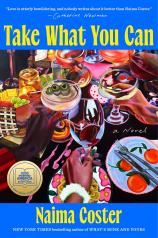
Take What You Can


1. Our first introduction to Val and Milly happens on a kayak in the sea. When the girls count down, Val dives straight into the water while Milly pauses before jumping. What does this say about each girl in 2004? How has their dynamic changed by the time Val moves to Park Slope, and how has it stayed the same?
2. Water is a recurring theme throughout the novel. What moments stand out to you? How does the author use the sea, the gorge, the pool, and the shower to orchestrate upheaval and change for Val and Milly?
3. Milly’s online persona stems from the idea “Why deny myself?” In what ways does she live by this philosophy? In what ways does she actively deny herself, and why do you think she does so?
4. Val’s desire for a “beautiful life” and to know “how to live” are themes throughout the novel. By contrast, in Milly’s open letter, she says she “went on living” in the wake of her mother’s death, and consistently looks at her life and considers how much she has lived. What drives each woman’s intentionality toward life? Is there a difference in their approaches?
5. During Val’s labor, Milly thinks, “Val still expected too little and too much of their friendship all at once.” What do you think Milly means here? In what ways do you see this dynamic playing out in their friendship through the years?
6. Val tells Milly, “I am your family.” Do the women uphold this statement throughout the novel? What does it mean to be family? What are the different family units that emerge in the book, and do the characters feel that some are more valid than others? Consider Helene, Val and Milly, Milly and Gladys, Val and her parents, and the Buchanans.
7. Milly often refers to what she can give to others in her relationships, while Val just wants to spend time together. How do these different ways of seeing relationships affect Milly’s and Val’s communication? How do they affect Milly’s and Val’s romantic relationships?
8. Jerome is the only person in Milly’s life who remembers her mother. Do you think their relationship is a way for her to remember the past, or is it grounded in the present?
9. While they both consider themselves motherless and the memories of their own mothers pain them, Milly and Val had very different mothers. How does this impact the way they understand each other, and how does it influence their approach to becoming mothers themselves?
10. Milly reflects, “Like a mother, Helene made their time together about the girls, Val and Milly’s exploits and dreams. What did they understand, really, about Helene and Elodie?” What do you think Helene received from her relationship with the girls?
11. There are many triangles in the novel: Val, Milly and Helene; Val, Milly and Cleo; Milly, Harris and Jerome; each woman, her daughter and her husband. How do these different trios balance (or fail to balance) the needs, wants and agency of each person involved?
12. Milly says of Helene, “After all this time, she’s still between us.” What is Helene’s role in their relationship, as someone who both divided them and brought them together? How do you think Val and Milly view her as young women, and how does that change by the novel’s end?
13. Val and Milly have lived across the spectrum of “having money.” How do their shifts in class status change the way they view themselves, and how does the novel explore the influence that wealth and proximity to it have on one’s experience of the world? Consider Val’s reaction to Milly’s life in Park Slope, the Buchanans, the aftermath of Helene’s will, and Cleo’s request to borrow money.
14. Throughout the novel, Val and Milly find themselves the only Black people in predominantly white spaces. How does this impact their relationship to each other, and how does it impact them when they’re apart?
15. Val says Helene’s money is “the first and last inheritance she’d ever get.” But what have Val and Milly inherited from their families of origin? What are they passing down to their daughters?
16. When the women meet up with Elodie at the end of the novel, she says, “Isn’t it interesting how what you need changes when you’re a mother?... When you’re a mother, you need more. Your need is so big, if you aren’t careful, it can swallow everything.” How has this been true for Val and for Milly, both in the immediate aftermath of giving birth and throughout their first year of motherhood?


Take What You Can
- Publication Date: August 4, 2026
- Genres: Fiction
- Hardcover: 368 pages
- Publisher: Pamela Dorman Books
- ISBN-10: 0593833279
- ISBN-13: 9780593833278