
Reading Group Guide


Discussion Questions
Last One Out
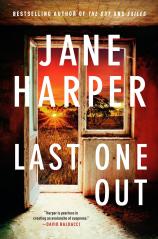


1. What is the significance of the title of this novel, LAST ONE OUT? What does it refer to?
2. The prologue comes to us from an omniscient viewpoint, rather than a specific character’s point of view, and sets the scene for Sam Crowley’s disappearance. What is the effect of this perspective on the story to come?
3. The three abandoned houses we see in the prologue are a powerful visual introduction to the novel. How are they symbolic of the loss of a once-thriving town and its population?
4. Loss is a major theme in this novel, portrayed in several ways through the setting and many of the characters’ lives. What are some of the experiences of loss explored in the story? How are they handled by the characters? Can you think of any similar real-world examples? Discuss.
5. Discuss the dynamic among Ro, Della and Griff. How do their relationships contribute to the narrative? How do they appear to have changed since Sam was around?
6. Did you work out any of the circumstances around Sam’s disappearance and/or who committed the crimes in the novel? If so, what clues led you to the killer/s?
7. Who else did you suspect of the crime along the way, and why?
8. Did you believe Warren’s supposed suicide might also have been suspicious? If so, what gave you this impression?
9. The encroaching mine is a constant presence in the novel. What are some ways it is described, and what is the effect of this on the story? Discuss how the mine has contributed to the town’s decline and what effect this has had on the residents of Carralon Ridge.
10. It becomes apparent that Sam and his close childhood friends, Darcy and Jacob, drifted apart over time. Why do you think this happened? Do you believe their parents’ views about the mine and the town influenced this? Discuss.
11. At one stage, Ro thinks, “Ties within this community were complex and deep, perhaps even more so than she’d realized herself” (page 223). How does the novel explore community and belonging? What are the benefits of a tight-knit community, in your opinion, and what can be some of the drawbacks?
12. How does the setting of Carralon Ridge contribute to the overall mood of the story? How do the descriptions of the physical environment --- including the dense surrounding bushland, the town’s derelict dust-coated buildings, and its isolation --- enhance the storytelling? Give some examples.
13. Heather and Noel’s teenage sons, Kyle and Zach, take out their boredom and frustration on the town itself, destroying some of its abandoned places. How does their behavior differ from the pranks Darcy, Jacob and Sam --- and even the older generation, including Warren, Damien and Griff --- played on others in their youth? Why do you think this is?
14. How does the author’s use of suspense and pacing affect the reader’s experience? What are some ways the author achieves this?
15. Why do you think Ro continually returns to Sam’s notebook and the footage gathered from the time of his disappearance? How is she hoping this will help in her search for the truth about what happened?
16. Toward the end of the book, Ro is surprised to find her abandoned garden beds well tended and the metal arch from her wedding relocated when she had thought it lost. How are these discoveries catalysts for change in Ro?
17. The idea that poor mental health played a part in Warren’s death and Sam’s disappearance distracts both the authorities and the people of Carralon Ridge from the truth about what happened to the men. Why do you think people were inclined to believe this, even though neither man had shown obvious symptoms?
18. Jane Harper is well known for using her settings to create mood and atmosphere for her stories. How does she do this in LAST ONE OUT, and how does this compare to the settings in other Jane Harper novels you have read?
19. On page 116, Ro thinks to herself, “Time changes things.” It has been five years since Sam’s disappearance. What is different about this year that finally allows the truth about what happened to Sam to come to light?
20. The final scenes of LAST ONE OUT are set in Ro and Griff’s new home, in another small town, but this time one that is thriving and full of life. Do you get the sense things will be different for Ro and Griff now? If so, why?


