
Reading Group Guide


Discussion Questions
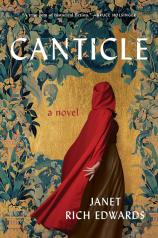
Canticle


1. Aleys and Finn each have dreams of their own. In your opinion, do they achieve them? Do you think they could have achieved them if they’d married instead of entering religious life?
2. In the Middle Ages, women either married or became “enclosed” as nuns (if they could pay the dowry required by convents). Faced with this, women throughout Europe began forming their own independent communities. What do you see as the pros and cons of these options for women? What would you choose if you were faced with a marriage you didn’t want?
3. Early in the story, Sophia advises Aleys, “Try to be simple.” What does Sophia mean? How does Aleys grow to understand Sophia’s meaning?
4. How do you feel about Friar Lukas? In what ways are the things he and Aleys seek the same? How do they differ?
5. Sophia states of her relationship with God, “I am more his hausfrau than his lover.” Reflect on how our ambitions can change with age and experience.
6. Aleys’ lifestyle of religious seclusion is in sharp contrast with life in the 21st century. Is there any corner of the anchoritic life that intrigues you?
7. In medieval Europe, the merchant class began to read and write in local languages to engage in the new trade opportunities that were opening up. In 1300, when CANTICLE is set, there would have been little for people to read other than contracts and courtly love poems. Reflect on the growing desire of people in the Middle Ages to translate and read the Bible for themselves.
8. When Aleys suddenly begins healing people at the hospital, she’s unsure whether to believe it or not. What would be your own reaction if you suddenly suspected you might be a vessel for miracles?
9. In the 13th century, there were several channels for religious life: the “secular” organized church with its hierarchy of priests and bishops who minister to congregations; the monks who lead scholarly (but not enclosed) lives in monasteries; new orders of friars who preach on street corners and take vows of poverty; nuns enclosed in convents; anchoresses who provide prayers and spiritual advice to townspeople; and mystics who might be embedded in or independent of these institutions. What kinds of religious power or authority are held by the Bishop? By Lukas? Sophia? Aleys? How do the centers of power shift over the course of the novel?
10. At the end of the novel, the narrator states, “She lives for those that choose; she is dead for those that choose.” Why do you think the author left the ending ambiguous? What do you think happened?


Canticle
- Publication Date: December 2, 2025
- Genres: Fiction, Historical Fiction
- Hardcover: 368 pages
- Publisher: Spiegel & Grau
- ISBN-10: 1966302053
- ISBN-13: 9781966302056

