Under My Skin


About the Book
Under My Skin



"My first memory is before I was two, and it is of an enormous dangerous horse towering up, up, and on it my father still higher, his head and shoulders somewhere in the sky. There he sits with his wooden leg always under his trousers, a big hard slippery hidden thing. I am trying not to cry, while being lifted up in tight squeezing hands, and put in front of my father's body, told to grip the front of the saddle, a hard jutting edge I must stretch my fingers to hold. I am inside the heat of horse, the smell of horse, the smell of my father, all pungent smells. When the horse moves, it is a jerking , jolting motion, and I lean back my head and shoulders into my father's stomach and feel there the hard straps of the wooden-leg harness. My stomach is reeling because of the swoop up from the ground now is so far below me. Now, that is a real memory, violent, smelly--physical."
--CHAPTER 3, Under My Skin
1995 James Tait Black Memorial Book Prize,University of Edinburgh
1995 Los Angeles Times Book Prize
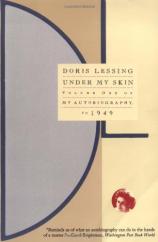
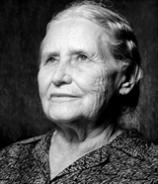
Under My Skin recounts the first thirty years of its author's life, from her birth in Persia in 1919, through her childhood and young adulthood in Southern Rhodesia (now Zimbabwe), to her depature, in 1949, for London, where she would make her career as a writer. And yet, in Doris Lessing's telling, the tenor of her life was set even before she was born-- in the devestating impact of the First World War on her parents. Alfred Cook Taylor, Lessing's hapless father, lost a leg in the trenches and married the determined nurse who tended to him; already thirty-five, she herself had lost her lover in the war. To this union of sad circumstances, redolent with disappointment and sacrifice, Lessing traces her own feelings of loneliness and the "struggling panicky need to escape" that caused her to flee from the life of marriage and babies that her upbringing and culture had mapped out for her. Lessing is unsentimental about her past, and advises the reader that "it is a mistake to exclaim over past wrong-thinking before at least wondering how our present thinking will see to posterity." She describes how her mother loved her younger brother, Harry, but not her; how she was not in love with her first husband, nor he with her, "though such were the intoxications of the time it was easy to think so"; how she left him with their two young children, intent on making the world a better place for them ("I was absolutely sincere. There isn't much to be said for sincerity, in itself");how she then married the repressed and coldly logical Gottfried Lessing, a German refugee and comrade, "but only because in those days people could not have affairs, let alone live together." Vividly, she evokes the world which, in her view, made her. We see her as a young girl, growing up in the bush, knowing how to look after chickens, worm dogs and cats, and pan for gold. Lessing also describes the political scene of wartime Salisbury, where she joined a group of Communists, peddling their newspaper, The Guardian, to locals. Interwoven throughout is a portait of the developing writer, in love with books, and recognizing in British colonial Africa a subject worthy of writing about, that "here life is matching her natural disposition--her talents."


Under My Skin
- Publication Date: September 1, 1995
- Paperback: 448 pages
- Publisher: Harper Perennial
- ISBN-10: 0060926643
- ISBN-13: 9780060926649