Reading Group Guide
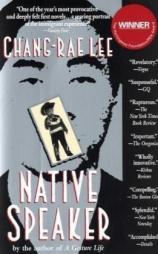
Native Speaker
by Chang-Rae Lee

List Price: $12.95
Pages: 349
Format: Paperback
ISBN: 1573225312
Publisher: Riverhead Books

Click here to buy this book from Amazon.com.
Click here to buy this book from Amazon.ca.


About This Book


In Native Speaker, author Chang-rae Lee introduces readers to Henry Park. Park has spent his entire life trying to become a true American -- a native speaker. But even as the essence of his adopted country continues to elude him, his Korean heritage seems to drift further and further away.

Park's harsh Korean upbringing has taught him to hide his emotions, to remember everything he learns, and most of all to feel an overwhelming sense of alienation. In other words, it has shaped him as a natural spy.

But the very attributes that help him to excel in his profession put a strain on his marriage to his American wife and stand in the way of his coming to terms with his young son's death. When he is assigned to spy on a rising Korean-American politician, his very identity is tested, and he must figure out who he is amid not only the conflicts within himself but also within the ethnic and political tensions of the New York City streets.

Native Speaker is a story of cultural alienation. It is about fathers and sons, about the desire to connect with the world rather than stand apart from it, about loyalty and betrayal, about the alien in all of us and who we finally are.

top of the page


rgg_discuss.gif (1294 bytes)


1. As you review the list Lelia compiles of who Henry is (p. 5), which descriptions strike you as the most accurate? The most disturbing? The hardest for Lelia to accept? What characterization might you add to the list yourself? What does Lelia mean by the accusation scribbled on the scrap piece of paper under their bed: "False speaker of language" (p. 6)? Why could this be considered Henry's greatest fault, and his greatest transgression against his wife? How is it possible that a man who "on paper, by any known standard, was an impeccable mate" (pp. 160-161) could be failing his wife so miserably?

2. How does Dr. Luzan unknowingly break down the surface "opacity" (p. 133) Henry has acquired through his experience of working with Hoagland? Would a subject other than an older Asian male have had the same unsettling effect on Henry? How does this assignment begin the process of eroding Henry's professional commitment and confidence? Explain what Henry means when he says, "I can no longer simply flash a light inside a character, paint a figure like Kwang with a momentary language" (p. 206).

3. The adult Henry recalls of his childhood: "My self-conception was that I was frail" (p. 135). Why, despite Henry's intense emotional involvement with his father, does he identify so strongly with his mother? What is his mother afraid of, and how does she transmit that fear to her son?

4. How do Lelia and Henry each react to Mitt's death? What do their different responses reveal about their characters? To what degree are their reactions based on personality and what degree are they based on each character's cultural background? Who or what does each parent believe is to blame for this tragic occurrence?

5. On rare occasions, Henry addresses the reader directly, as "you," for example: "We will learn every lesson of accent and idiom, we will dismantle every last pretense and practice you hold, noble as well as ruinous. You can keep nothing safe from our eyes and ears. This is your own history. We are your most perilous and dutiful brethren, the song of hearts at once furious and sad" (p. 320). What emotions prompt Henry to speak pointedly to the novel's reader? What was your reaction to this passage from the book? Why do you think the author employs this device? Why does he use it so seldom?

6. What do you think Henry means when he says of his colleagues Grace and Pete, "We are friends in the way people in an unprovisioned lifeboat are" (p. 319)? Does he agree with Jack, who believes that all of Hoagland's employees are a family? Why does Henry feel indifferent to whether Jack betrays him? At the novel's conclusion, does Henry feel, as his father did, that the only family is one of blood?

7. In the early phase of Henry's employment at Hoagland's firm, why does Henry believe he has "finally found [his] truest place in the culture" (p. 127)? How do Henry's working under cover and exploiting his own people constitute "the darkest version of what [his immigrant father] only dreamed of" (p. 334)? How does Henry's spy career function in the novel as a metaphor for cultural assimilation?

8. What are the major similarities between Kwang and Henry's father? What are their major differences? Why are these two men tightly intertwined in Henry's mind and heart? What does Henry unexpectedly come to see in Kwang, which Henry "will search out now for the long remainder of [his] days" (p. 141)?

9. Henry's attitudes toward his Korean heritage are complex and conflicted. How do they affect his feelings about having a son of mixed blood? Which aspects of his father's emotional legacy does Henry hope will live on in himself and in Mitt? Which of his family's characteristics does he feel would be better off "diluted" in his offspring? Why does Henry feel that Mitt was blessed to have had Leila's genes and her daily emotional influence in his life?

10. At the novel's conclusion, why does Henry appear to derive joy from his position assisting Lelia? How does her approach to speech therapy differ from the lessons Henry was taught as a child (see p. 233)? How has Lelia's life with Henry and Mitt influenced the way she relates to her students?

top of the page

 
Back to top.   


Privacy Policy | Contact Us | Advertising | About Us

© Copyright 2001-2009, ReadingGroupGuides.com. All rights reserved.