Reading Group Guide
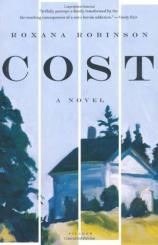
Cost
by Roxana Robinson

List Price: $25.00
Pages: 432
Format: Hardcover
ISBN: 9780374271879
Publisher: Farrar, Straus and Giroux

Click here to buy this book from Amazon.com.
Click here to buy this book from Amazon.ca.


About This Book

Hailed as “one of our best writers” by The Washington Post’s Jonathan Yardley, Roxana Robinson writes fiction that deftly explores the limits of human endurance, opening our eyes to the subtle landscape of memory and fate. In Cost, she brings us the gripping story of a fragile family tested when a son spirals into addiction.

The novel opens as art professor Julia Lambert, in her beloved summer house in Maine, settles into a visit from her aging parents. Her mother is beginning her descent into Alzheimer’s, while her father, who was once a renowned neurosurgeon, copes with his helplessness in the face of her illness. Julia’s son Steven arrives with a troubling revelation: his brother, Jack, is showing signs of heroin use. Before the summer is over, Julia will find herself navigating the difficult dual roles of daughter and mother as she tries to restore those she loves to an impossible realm of healing and compassion. Reconnecting with her self-absorbed ex-husband and her estranged sister, Julia slowly discovers the limits of her power as her son’s substance abuse begins to permeate their lives. Yet she also discovers her far-reaching capacity for love, weighing her bulwark against a looming tide of loss.

top of the page


rgg_discuss.gif (1294 bytes)

1. Discuss the novel’s title. What are the many costs --- emotional and material --- associated with Jack’s addiction? What other circumstances lead the characters to consider their self-worth, or the “worth” of others?

2. How does Julia’s relationship with her sister compare with Steven’s relationship with his brother? What leads siblings to become estranged despite having been close during childhood?

3. What does the house in Maine represent to Julia at various points in her life? How does the house set the tone for the novel: picturesque, laden with memories, and in need of repair?

4. What does Cost tell us about the nature of marriage? What enabled Edward and Katharine to sustain their marriage? How does Wendell justify his affair? Is Harriet wise to avoid marriage, pursuing long-term relationships instead?

5. What are the repercussions of the parenting styles presented in the novel? Was Julia harmed by Edward’s judgmental nature? To what extent was Jack’s life a response to the way he perceived his parents?

6. Does Carpenter change Julia’s family, or are they unaffected by his talk of loving interactions? What is captured in the moment when Edward mentally corrects Carpenter, asserting that addiction is not an illness (chapter twenty-seven)? Does Edward have different standards for the ill? Where does he believe self-determination ends and nature begins?

7. Steven is haunted by his parents’ infidelity. Why does he blame his mother more easily than his father? How do Julia’s memories of Eric shape the way she sees herself?

8. What accounts for the difference between Jack and Steven, who uses his rebellion for noble causes (such as protesting against loggers)? Would Steven have been an achiever if his brother had not been so troubled?

9. What portraits of the mind are offered in Cost? How does Edward feel about his memories of being a pioneering surgeon? What remains of Katherine despite her fading memory? What realities does each character create in the face of a disorienting world?

10. In chapter thirty-two, Julia tells Jack that he has to try harder. Is Julia naïve or simply afraid of what lies in store for her son? How do the other members of the family respond to both the psychological and the neurological fallout of his addiction? Why is it easier for Julia to acknowledge her parents’ faltering health, while Harriet wants to believe that they are just fine?

11. What aspects of Julia’s life emerge during her gallery opening? What is the significance of Harriet’s presence there?

12. What were you thinking as you read the novel’s closing scenes? Which characters had changed the most, along with your impressions of them?

13. How would you and your family have responded to a situation like Jack’s? What do you believe can or should be done to address the needs of those with such severe addictions?

14. What themes are woven throughout this and other novels and stories by Roxana Robinson? What is unique about the approach she uses in bringing Julia’s situation to life?

top of the page

Critical Praise

"Cost is stunning. Each of the characters is so perfectly realized, each is made known to us with such heart and intelligence. This is a very big book: the territory of family is more fragile and dangerous than any geography we know, and Roxana Robinson has made life of that. I loved, admired, and was frankly undone by every minute of it.”  "
Susan Richards Shreve, author of A Student of Living Things


"Roxana Robinson is surely one of the most graceful stylists and psychologically perceptive writers working. … Cost approaches the subject of drugs’ impact from an original and very significant angle. This book shows further the extent of Robinson’s insights into the whirl, the generational ironies at work, and the desperate indulgences to which we turn in our confusion. Cost is an important, timely book that furthers insight into our present fortunes and dilemmas."
Robert Stone, author of Prime Green: Remembering the Sixties


"Cost is a gritty portrait of the havoc wreaked upon a family by one member's drug addiction. Roxana Robinson's vivid, sensuous prose moves effortlessly among relationships and points of view, evoking a brutal war between familial love --- in its infinite power and mystery --- and the mechanical devastations of pathology."
Jennifer Egan, author of The Keep


"With passion, feeling, and a keen eye for detail, Roxana Robinson brings chillingly to life a family and a family tragedy, showing us how --- like a luminous yet ominous landscape --- their tangible visible world can coincide with the invisible, tumultuous world of their emotions."
Lily Tuck, author of The News From Paraguay

 
Back to top.   


Privacy Policy | Contact Us | Advertising | About Us

© Copyright 2001-2008, ReadingGroupGuides.com. All rights reserved.