IndieBound Independent Bookstores

Barnes & Noble


Loading
Reading Group Guide
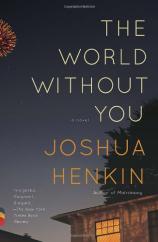
The World Without You
A Novel
by Joshua Henkin

List Price: $15.00
Pages: 336
Format: Paperback
ISBN: 9780307277183
Publisher: Vintage

Click here to buy this book from Amazon.com.
Click here to buy this book from Amazon.ca.


About This Book

It’s July 4th, 2005, and the Frankel family is descending upon their beloved summer home in the Berkshires. But this is no ordinary holiday. The family has gathered to memorialize Leo, the youngest of the four siblings, an intrepid journalist and adventurer who was killed on that day in 2004, while on assignment in Iraq.

The parents, Marilyn and David, are adrift in grief. Their forty-year marriage is falling apart. Clarissa, the eldest sibling and a former cello prodigy, has settled into an ambivalent domesticity and is struggling at 39 to become pregnant. Lily, a fiery-tempered lawyer and the family contrarian, is angry at everyone. And Noelle, whose teenage years were shadowed by promiscuity and school expulsions, has moved to Jerusalem and become a born-again Orthodox Jew. The last person to see Leo alive, Noelle has flown back for the memorial with her husband and four children, but she feels entirely out of place. And Thisbe --- Leo’s widow and mother of their three-year-old son --- has come from California bearing her own secret.

Set against the backdrop of American Independence Day and the Iraq War, The World Without You is a novel about sibling rivalries and marital feuds, about volatile women and silent men, and, ultimately, about the true meaning of family.

top of the page


rgg_discuss.gif (1294 bytes)

1. Discuss the sibling relationships in the novel. To what extent have Noelle’s decisions been shaped by being Clarissa and Lily’s sister?

2. When Marilyn announces that she and David are separating, Clarissa, Lily, and Noelle are thrown into shock. Is separation/divorce different for children when they’re adults than when they’re younger?

3. Marilyn won’t let David tell the girls their news before everyone gets up to the Berkshires. Do you agree with this decision not to tell the family in advance?

4. “It’s been the hardest year of Thisbe’s life, yet it’s different for her. Marilyn and David were Leo’s parents.” What does the novel mean by this? In what ways is it different to lose a son than to lose a husband?

5. Marilyn thinks, “Mothers and daughters-in-law: such volatile, loaded relationships.” Is there something about Marilyn and Thisbe that makes it hard for them to be close? Is the relationship between mother-in-law and daughter-in-law inherently volatile?

6. Clarissa’s infertility plays a central role in the book. Originally, it was Nathaniel who wanted to have children and Clarissa didn’t, but now that they’re having trouble conceiving Clarissa seems more upset than Nathaniel is. Does this have to do with Leo’s death? Is infertility always harder for the woman than for the man?

7. Lily and Noelle have a particularly difficult relationship. Why is this? How do sibling relationships change as people get older? Are some siblings simply not meant to get along?

8. Marilyn and David bought kosher food and a new set of dishes so Noelle could eat in their home, but Noelle still won’t eat there. Do you agree with Noelle’s decision? In a conflict between loyalty to one’s family and loyalty to one’s beliefs, what should win out?

9. There are some very high-powered people in this novel. Nathaniel has two PhDs and may someday win the Nobel Prize. Lily clerked on the Supreme Court. Malcolm is a chef featured in magazines. Marilyn is a successful doctor. Amram and Noelle, by contrast, struggle professionally. To what extent do the characters in this book define their own success in comparison with the success of their siblings and parents?

10. Thisbe says to Lily, “Everyone who knew us says Leo and I were great together. There’s no love like the love that’s been erased.” Were Leo and Thisbe great together? How reliable is memory when someone has died? Do you think Thisbe and Leo would have worked things out if he had come home from Iraq?

11. Most of the major characters in the novel are female, yet the author is male. Does that influence the way you read this novel? Is it different for a male writer to write from the perspective of a woman?

12. Like the journalist Daniel Pearl, Leo was captured in the Middle East and executed by terrorists. More recently, a number of prominent journalists have died in the Middle East. The specter of the Iraq War hovers over this novel, and the book is populated by characters who have strong, often opposing political opinions. Yet the book takes place in the bucolic Berkshires, far from the center of the conflict. Would you describe this as a political novel?

13. Although Lily and Malcolm aren’t married, they live together and have been a couple for ten years. Why does Lily refuse to let Malcolm come to the Berkshires for Leo’s memorial? Does it say something about their relationship? About Lily herself?

14. Noelle thanks her father for being “the voice that understands there are things you can’t know.” What does she mean by that? What makes David such a likable character?

15. Amram, by contrast, is a more difficult human being. What do you think attracted Noelle to him? What attracted Amram to Noelle? The novel says that Thisbe “understands Amram’s appeal. He has a kind of bullying charisma.” Do you find Amram likable?

16. “Judaism, Lily likes to say: just another installment in the random life of Noelle Glucksman.” Later, Noelle tells Thisbe that it was random that she ended up in Israel and that she could just as easily have landed in Sweden. What role do randomness and coincidence play in Noelle’s life? In the lives of the other characters?

17. Thisbe thinks: “Everyone wants to know about the milestones --- Leo’s birthday, their anniversary --- and those are hard, of course, but it’s the everyday things that are the toughest.” What does Thisbe mean by that? Do you agree with her observation?

18. Gretchen’s wealth plays a role in this novel, and the family all responds to it differently. Discuss the role of money in the novel in general.

19. The book says that David “mourns for Leo no less than Marilyn does even if he isn’t bellowing it into bullhorns . . . In a way he thinks his response is more dignified.” Is David’s response more dignified? Are there better and worse ways to mourn?

20. When Amram finally returns after having been gone for two days, Noelle is livid. Later, she hits Amram in the eye with a tennis ball, and Amram accuses her of having done so intentionally. Do you think Noelle hit him intentionally? Whom do you sympathize with in this scene?

21. At the book’s end, where do you think the various characters will be in ten years?

Suggestions for Further Reading:
Independence Day by Richard Ford
A Thousand Acres by Jane Smiley
Bridge of Sighs by Richard Russo
The Marriage Plot by Jeffrey Eugenides
Away by Amy Bloom
Wish You Were Here by Stewart O’Nan
The Privileges by Jonathan Dee

top of the page

Critical Praise

"A keen observer of American life, Joshua Henkin imbues The World Without You with wisdom, humor, and a clear sense of history. By mapping out the familiar and the strange, the changed and unchanged, territories of contemporary life, this book is a triumph and an important novel about America."
— Yiyn Li, author of Gold Boy, Emerald Girl


"Rich, deep, funny, and wise, The World Without You is a sumptuous layer cake of a novel whose ordinary yet urgent dramas remind us that family is where it all begins: what we know of love, what we know of the world around us, and how we go forward --- over and over --- from there. Once again, Henkin proves that he is a writer of voluminous heart, humanity, and talent."
— Julia Glass, author of The Widower's Tale


"An immeasurably moving masterpiece that tracks the intricate threads connecting children to parents, sisters to brothers, wives to husbands. To say I "cared" about these characters would be to hugely understate their consuming effect on me. Like all loving--and complicated, and generous--families, they extended a thread to me. Their poignant struggles continued to affect me long after I read the final page."
— Heidi Julavits, author of The Vanishers


"Witty, poignant and heartfelt. The 4th of July will never be the same for me, nor for my fellow Americans. I can't imagine a world without Joshua Henkin"
— Gary Shteyngart, author of Super Sad True Love Story


"Marvelous on the solitudes that exist even within the strongest and most compassionate of families, and I love the relentlessness with which it reminds us that our politics will reach its wrecking ball into the lives of even those of us who are most comfortable."
— Jim Shepard, author of You Think That's Bad

 
Facebook Fan Page  Follow us on Twitter


Add Your Guide to ReadingGroupGuides.com!

Bookreporter.com Bets On...: Books We're Betting You'll Love


Privacy Policy | Contact Us | Advertising | About Us

© Copyright 2001-2013, ReadingGroupGuides.com. All rights reserved.
The Book Report, Inc. • 250 West 57th Street • Suite 1228 • New York, NY • 10107
Ph: 212-246-3100 • Fax: 212-246-4640

Bookreporter.comReadingGroupGuides.comGraphicNovelReporter.comFaithfulReader.com
Teenreads.comKidsreads.comAuthorsOnTheWeb.com