IndieBound Independent Bookstores

Barnes & Noble

Loading
Reading Group Guide
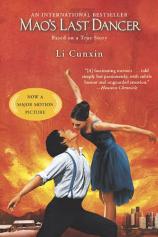
Mao's Last Dancer
by Li Cunxin

List Price: $17.00
Pages: 528
Format: Paperback
ISBN: 9780425240304
Publisher: Berkley

Click here to buy this book from Amazon.com.
Click here to buy this book from Amazon.ca.


About This Book

From a desperately poor village in northeast China, to a career that took him across the world, this is the incredible story of Li Cunxin --- a story that almost vanished, like so many other peasants’ lives, amid revolution and chaos. At age 11, Li was chosen by Madame Mao’s cultural delegates to be taken from his rural home and brought to Beijing, where he would study ballet. In 1979, the young dancer arrived in Texas as part of a cultural exchange, wary of class enemies and prepared to “serve glorious communism.” It didn’t take long for him to fall in love with America --- and with an American woman. Two years later, through a series of events worthy of the most exciting cloak-and-dagger fiction, he defected to the United States, where he quickly became known as one of the greatest ballet dancers in the world. This is the remarkable story of his journey.

Click here for the movie website.

top of the page


rgg_discuss.gif (1294 bytes)

1. How are fate and destiny shown as a common theme throughout the book?

2. Do you think Li did so horribly in his first year at the Beijing Dance Academy because he lacked talent or because he was homesick?

3. When the Bandit wanted to make Li his Blood Brother (p 182., Li was hesitant at first because he didn’t think he could live up to the Bandit’s expectations of him as his brother. Do you think it was their shared emotional need to feel like part of a family at the Academy that made him finally agree? Why or why not?

4. The hardships of commune life seem exhausting and relentless, but Academy life was not much easier. Which would you choose and why?

5. Some of Li’s teachers at the Academy were very encouraging and motivational to the students and some were not. Discuss some of the varied teaching styles and why you think they differed so much. Do you think this had to do with the Cultural Revolution or different personalities?

6. Li is a very emotional boy, often breaking into tears when he is sad or unsure of things. How does this differ from Western preconceived notions about people, especially men, in communist China?

7. Discuss Li’s first trip to Houston and his defense of, and eventual confusion about, Chairman Mao’s Cultural Revolution.

8. Do you think personal or artistic freedom were Li’s main objectives to return to America?

9. Was Li’s harrowing experience at the consulate in Houston, prior to his defection, a necessary move by the Chinese government, especially their threatening to harm to his family? Even with China’s updated “open-door policy,” do you consider this a scare tactic, or required for the country’s communist ideals?

10. When Li’s marriage to Elizabeth ends in divorce, Li blames himself, saying he “...didn’t understand love in Western culture...” (p. 346.. Do you agree? Discuss how Li’s guilt plays a role throughout the book.

11. Discuss Li’s conflict with his freedom and the price he paid for it.

12. Do you think Li would have been as disciplined and dedicated to ballet if not for the intense work ethic he was trained with in China?

13. “Taste the mango” was a phrase that Li followed from his days at the Academy, when Teacher Xiao mentored him to excel. Discuss some of the important things in Li’s life and career that would not have been possible had he not made that phrase one to live by.

14. Li’s fourth brother, Cunmao, has a very different sense of duty to his family than Li (p. 429.. How so? Why do you think these brothers handled their family situations so differently? Did Li’s leaving for the Academy have everything to do with it, or was it something else entirely?

15. Li’s niang and dia instilled pride, courage, dignity, and love in him. How do you think his life would have been different had he not done everything for his family? Discuss how this mentality in China is different from Western culture. Do you think this is still the way of thinking in China, which is more heavily Western-influenced now?

top of the page

Critical Praise

"...heartening rags-to-riches story [and] a fascinating glimpse into the history of Chinese-U.S. relations and the dissolution of the Communist ideal in the life of one fortunate individual..."
Publishers Weekly


"[A] fascinating memoir…told simply but passionately, with subtle humor and unguarded emotion."
The Houston Chronicle


"Mix Billy Elliot with Torn Curtain and you’ll have some of the tale in very broad outline…well-paced…full of adventures."
Kirkus Reviews


"Fascinating reading…unfolds with honesty, humor, and a quiet dignity. This book has wide appeal, for it concerns not only a dancer’s coming of age in a turbulent time but also individual strength, self-discovery, and the triumph of the human spirit."
Library Journal

 
Facebook Fan Page  Follow us on Twitter


Add Your Guide to ReadingGroupGuides.com!

Bookreporter.com Bets On...: Books We're Betting You'll Love


Privacy Policy | Contact Us | Advertising | About Us

© Copyright 2001-2012, ReadingGroupGuides.com. All rights reserved.
The Book Report, Inc. • 250 West 57th Street • Suite 1228 • New York, NY • 10107
Ph: 212-246-3100 • Fax: 212-246-4640

Bookreporter.comReadingGroupGuides.comGraphicNovelReporter.comFaithfulReader.com
Teenreads.comKidsreads.comAuthorsOnTheWeb.com