IndieBound Independent Bookstores

Barnes & Noble

Loading
Reading Group Guide
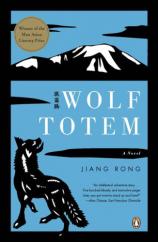
Wolf Totem
A Novel
by Jiang Rong

List Price: $15.00
Pages: 544
Format: Paperback
ISBN: 9780143115144
Publisher: Penguin

Click here to buy this book from Amazon.com.
Click here to buy this book from Amazon.ca.


About This Book


The winner of the inaugural Man Asian Literary prize, Wolf Totem is the fictionalized memoir of author Jiang Rong, who, as a young rusticated Chinese intellectual, spent eleven years in Mongolia and lived many of the experiences that he immortalizes in his novel. A gripping adventure story, an ecological cri de coeur, an antitotalitarian fable, and a moving testimony to the follies of modern man, Wolf Totem is a truly unforgettable reading experience.

For Chen Zhen, a cultured university student from Beijing, few experiences could have felt less natural than being plunged into the intensely natural surroundings of the Olonbulag—the vast and inhospitable Mongolian grassland to which he has been sent in the early days of Mao Zedong’s Cultural Revolution. Nevertheless, with the guidance of an old Mongol herdsman named Bilgee—“Wise One” in the native language—Chen soon learns to feel at home on the great and unspoiled prairie. Above all, Chen acquires a respect and fascination for the ruling predators of the region: the packs of wolves that seem to possess an almost human intelligence and a powerful spiritual identity. Through their stories and struggles, the Mongols teach Chen about the secrets of the grassland, which they regard both as an immense living organism and as a manifestation of the eternal spirit of Tengger—the Mongol heaven. Even as Chen learns to fight the wolves that continuously threaten the sheep, cattle, and horses he has been entrusted to protect, he observes the vital presence of the wolves. The animals not only preserve the ecological balance of the grassland but have also influenced the course of human history.

Yet even as Chen absorbs the lessons of the Olonbulag, the area is under systematic attack from a force far more devastating than the wolves. Blindly driven by a political philosophy in which the only relevant values are human, and convinced that the wolves are the true class enemies, the Communist government adopts a radical policy of extermination. Under the leadership of the arrogant official Bao Shungui, Chinese troops pursue a ruthless program to drive the wolves out of the region. An epic drama of survival gradually unfolds, as antiquity clashes with modernity, man battles animal, and Chen strives to learn all he can about an ancient way of life before it vanishes forever. In a desperate attempt to bridge the gap between the wild and the civilized, Chen captures and adopts a wolf cub that he hopes to breed with domesticated dogs. The relationship between Chen and Little Wolf forms a center of compassion within a narrative of struggle, violence, and pain.

top of the page


rgg_discuss.gif (1294 bytes)


1. One of the Mongol customs strange to Westerners is their practice of sky-burial, in which the corpse is allowed to fall randomly out of a wagon and is left for hawks and wolves to devour. However, the Mongols consider burial in coffins equally strange. What are some of the other examples of cultural differences in Wolf Totem, and how do they color Jiang’s work as a whole?

2. How does Bilgee’s idea of Tengger differ from ideas of heaven with which you are more familiar? How does the Mongols’ idea of heaven influence their way of life and vice versa?

3. What philosophy of existence stands behind Chen Zhen’s attraction to the wolves? What place, if any, does this philosophy provide for kindness and mercy? How do you respond to Chen’s worship of strength and his devotion to the kill-or-be-killed order of the grasslands? Is there something unsettling about his views?

4. Discuss the character of Bao Shungui, the military representative who leads the extermination campaign against the wolves. How well does Jiang enable us to understand his motivations? Is he simply ignorant, or is there something more complicated to his personality?

5. Erlang, the massive dog with wolflike inclinations, may have struck you as one of the most intriguing characters in Wolf Totem. What makes the dog so interesting?

6. Although many of Jiang’s characters express uneasiness and even anguish over the fate of the grassland, none of them openly rebel against the governing authority, and most of them, in one way or another, play a role in the wolves’ destruction. Why?

7. Chen’s friend Yang is also horrified by the government’s encroachment on the Olonbulag. How do the reasons for his sense of revulsion differ from those that motivate Chen?

8. Evaluate Chen’s motives for capturing and raising Little Wolf—an act that he long defends but comes at last to regard as an unpardonable sin. Do you consider Chen’s experiment justifiable or is it just another crime against Tengger?

9. Jiang Rong does not hesitate to ascribe elements of human intelligence and emotion to the wolves in Wolf Totem. While this practice creates sympathy for the wolves, it is perhaps unscientific in its assumptions. Does this tendency to anthropomorphize help or hinder the reader’s understanding of the wolves?

10. How does Little Wolf’s inability to howl in wild wolf language influence the cub’s sense of identity?

11. Jiang Rong implies that the Mongolian grassland was, in large part, a victim of Maoist doctrines and policies. However, the story of the destruction of the Olonbulag may not be entirely different from that of the destruction of the American wilderness—a destruction accomplished by a capitalist republic. Do you see any important distinction between the two events?

12.Jiang Rong mourns the passing of the Mongolian frontier. Yet, although the beauty and adventure are gone from their lives, in the epilogue Batu and Gasmai are shown enjoying a much more comfortable standard of living that they ever had on the wild plains. Play devil’s advocate for a moment: Does Jiang romanticize a way of life that few of us would really choose as an alternative to the comforts of modern life?

top of the page

Critical Praise

“An intellectual adventure story. . . . Five hundred bloody and instructive pages later, you just want to stand up and howl.”
Alan Cheuse, San Francisco Chronicle


“[Jiang Rong] is on the way to becoming one of the most celebrated and controversial Chinese novelists in the world.”
The Guardian (London)


“Electrifying. . . . The power of Jiang’s prose (and of Howard Goldblatt’s excellent translation) is evident. . . . This semi-autographical novel is a literary triumph.”
National Geographic Traveler (Book of the Month)

 
Facebook Fan Page  Follow us on Twitter


Add Your Guide to ReadingGroupGuides.com!

Bookreporter.com Bets On...: Books We're Betting You'll Love


Privacy Policy | Contact Us | Advertising | About Us

© Copyright 2001-2012, ReadingGroupGuides.com. All rights reserved.
The Book Report, Inc. • 250 West 57th Street • Suite 1228 • New York, NY • 10107
Ph: 212-246-3100 • Fax: 212-246-4640

Bookreporter.comReadingGroupGuides.comGraphicNovelReporter.comFaithfulReader.com
Teenreads.comKidsreads.comAuthorsOnTheWeb.com