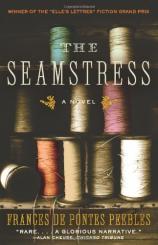
The Seamstress
by Frances de Pontes Peebles
List Price: $15.99
Pages: 656
Format: Paperback
ISBN: 9780060738884
Publisher: Harper Perennial
As seamstresses, the orphaned sisters Emília and Luzia dos Santos know how to cut, how to mend, and how to conceal. These are useful skills in the backcountry of Brazil, where vigilantes called cangaceiros make the rules. Emília dreams of falling in love and escaping to the city. Luzia also longs to escape their little town, where residents view her deformed arm with suspicion.
But when Luzia is abducted by a group of cangaceiros led by the infamous Hawk, the sisters’ quiet lives diverge in ways they never imagined. Emília stumbles into a marriage where her glamorous life is soon overshadowed by heartache and loneliness. Luzia, forced to trek through scrubland and endure a nomadic existence, begins to see the cangaceirosas comrades, not criminals.
Luzia will overcome time and distance to entrust her sister with a great secret --- one Emília vows to keep. And when Luzia’s life is threatened, Emília will risk everything to save her.
top of the page

1. How does their shared childhood as poor, religious, orphaned seamstresses shape Emília and Luzia’s unique perspectives on life?
2. How does access to water define political power in a country like Brazil in the 1920s and 1930s? How did the author’s descriptions of extreme drought affect your appreciation of modern conveniences?
3. How does the Hawk’s treatment of Luzia in the caatinga, or scrub, reveal Antônio’s true nature?
4. What does Emília’s reception into Recife society indicate about the esteem in which the Coelho family is held? To what extent is her mother-in-law, Dona Dulce Coelho, overly concerned about others’ perceptions of Emília?
5. To what extent are secrets responsible for the marriage between Degas and Emília and, much later, for its disintegration?
6. How does Luzia’s behavior in the initial aftermath of Antônio’s death explain her success in becoming the new captain of the cangaceiros? In what other ways does her behavior change once the Hawk is dead?
7. How do Dr. Duarte’s interests in phrenology and politics and his import-export business connect him to the government’s search for the Seamstress and the Hawk?
8. At various points in the novel, how does Dr. Eronildes Epifano represent both salvation and damnation to the cangaceiros? What role does Degas play in alerting Emília to Dr. Eronildes’s duplicity?
9. Given the Seamstress’s attacks on innocent people, to what extent are Emília’s efforts to communicate information to Luzia through newspaper articles and photographs ethically defensible?
10. How does the book’s final image connect with earlier images of bones in The Seamstress? Why do you think the author chose to close her book with this image?
top of the page

"The Seamstress is a gripping portrait of the lives of two sisters caught in the political unbalance of a country at a crossroads. Bittersweet, beautifully written, this sweeping saga is as impossible to put down as it is to forget."
Aryn Kyle, author of The God of Animals
"[An] engrossing historical saga. . . . The novel’s true beauty is the exquisitely realized relationship between Emilia and Luzia, two strong women who, despite the separate paths their lives take, remain connected and committed to each other."
Library Journal
"This impressive debut novel seduces with its sweeping story, strong characterization, and extraordinarily vivid detail. A good read-alike for fans of Isabel Allende."
Booklist (starred review)