Reading Group Guide
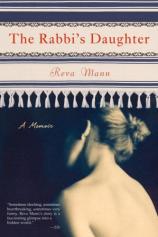
The Rabbi's Daughter
by Reva Mann

List Price: $14.00
Pages: 368
Format: Paperback
ISBN: 9780385341431
Publisher: The Dial Press

Click here to buy this book from Amazon.com.
Click here to buy this book from Amazon.ca.


About This Book

In this honest, daring, and compulsively readable memoir, Reva Mann paints a portrait of herself as a young woman on the edge—of either revelation or self-destruction. Ricocheting between extremes of rebellion and piety, she is on a difficult but life-changing journey to inner truth.

The journey began with an unhappy childhood in a family where religion set the tone and deviations from it were not allowed. But Reva, a granddaughter of the head of the Rabbinic Council of Israel and daughter of a highly respected London rabbi, was a wild child and she rebelled, spiralling into a whirlwind of sex and drugs by the time she reached adolescence.

As a young woman, however, Reva had a startling mystical epiphany that led her to a women’s yeshivah in Israel, and eventually to marriage to the devoutly religious Torah scholar who she thought would take her to ever greater heights of spirituality. But can the path to spiritual fulfillment ever be compatible with the ecstasies of the flesh or with the everyday joys of intimacy and pleasure to which she is also strongly drawn? With unflinching candor, Reva shares her struggle to carve out a life that encompasses all the impulses at war within herself.

An eye-opening glimpse into the world of the ultra-Orthodox and their elaborately coded rituals for eating, sleeping, bathing, and lovemaking, as well as a deeply personal rumination on identity, faith, and self-acceptance, this is at its heart a universal story. For those of any faith who have grappled with their own spiritual longings, and for anyone fascinated by traditional religion and its role in modern society, Reva Mann’s chronicle of a journey toward redemption is an unforgettable read.

top of the page


rgg_discuss.gif (1294 bytes)

1. Discuss the narrative approach used in The Rabbi's Daughter. What is it like to watch the events in Reva’s life unfold in the present tense, with occasional flashbacks to the past? Why do you think she chose to write in the present tense? Is this approach effective?

2. The Rabbi's Daughter explores many levels of intolerance. For example, Reva’s father, who is a religious man, has contempt for what he sees as the overly extreme religiosity of her husband, while the ultra-Orthodox look down on everyone who does not share their beliefs or their rigid adherence to the elaborate rituals and codes of behavior that govern their every act. Discuss how Reva reacts to these forms of intolerance, and how they shape the life she eventually chooses to lead.

3. Do you think being pregnant and becoming a mother changes Reva? How so? How does it affect her relationship with her own mother?

4. What do you think are the most important lessons that Reva carries over from her ultra-Orthodox life into the quite different way of life she has created for herself by the end of the book?

5. Men play a prominent role in Reva’s life. Discuss Reva’s romantic/sexual relationships with Chris, Simcha, and Sam. How do these relationships differ from one another and what does each bring her? Does Reva change through her encounters with each man? How so?

6. Why is Reva’s relationship with her father so strained? Why was it easier for her to relate to her grandfather, despite the fact that he was even more pious than her father?

7. Why is Reva drawn to Simcha? Do you think her initial doubts about him are well-founded? What role does Simcha play toward the end of the book? Do your initial impressions of him change?

8. When her mother dies, Reva decides to visit the sister she had not seen in twenty years. Why? Do you think her mother’s death played a role in that difficult decision? How did Reva feel about the visit?

9. During the course of the years described in this book, Reva must come to terms with the illness and death of both parents, and must face up to her own mortality as well. How do you think these experiences change her?

10. Describe your thoughts on the following passage that opens the third chapter (p. 58): “It is not good that man should be alone; I will make a helpmate for him(Genesis 2:18).” How does it illustrate the woman’s role in society according to the Old Testament? How does Reva feel about being a “helpmate?”

11. Do you think the chapter titles are appropriate? Do the Scripture and Talmudic writings present each chapter effectively?

12. Reva says, “I am jealous of his ability to study the holy books into the night while I have been trashing the very values written there” (page 234). Is this inner conflict ever resolved? Does Reva find a balance between her spiritual self and her sensual self?

top of the page

 
Back to top.   


Privacy Policy | Contact Us | Advertising | About Us

© Copyright 2001-2008, ReadingGroupGuides.com. All rights reserved.