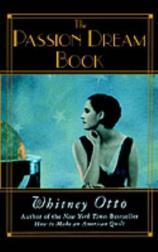
The Passion Dream Book


About the Book
The Passion Dream Book



A blending of fiction with history, The Passion Dream Book is a love story about artists and their tendency to migrate and colonize.
Beginning in Florence during the Italian Renaissance, the novel portrays a young girl named Giulietta Marcel, who is unconventionally apprenticed to her artist father. Dressed as a boy, she is engaged to spy on a famous artist who is at work on his masterpiece sculpture, David. She grows to want the artist and, at the same time, wants to be the artist.
Four hundred years later, Giulietta's descendant, Romy March, struggles with similar artistic aspirations in the sheltered comfort of her California home. For her, to embrace the life of an artist would be quite unorthodox in the early part of the 20th century. Her love affair with Augustine Marks, a black photographer, provides the novel's structure: they are together, they break apart, they reunite, they move on as they drift to various artists' colonies - a movie studio in silent-era Hollywood, the Harlem Renaissance, the end of the twenties in Paris, London in the thirties, and San Francisco at the start of the Beat Generation. Although Romy's devotion to Augustine remains constant, her artistic progression as a photographer grows at a different rate from her lover's and she must pursue her vision. She does not have her first show until she is forty-one, and is not recognized as an "important" photographer until her fifties.
The Passion Dream Book examines the time- honored dilemma of how an artist, a female one in particular, can reconcile her need to work with her personal desires. The most abstracted love triangle there is involves the artist, the work, and the lover.


The Passion Dream Book
- Publication Date: May 1, 1998
- Paperback: 292 pages
- Publisher: PerfectBound
- ISBN-10: 0061096237
- ISBN-13: 9780061096235