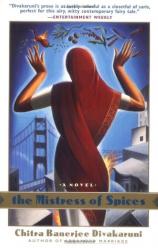
The Mistress of Spices


Review
The Mistress of Spices




Each chapter in THE MISTRESS OF SPICES is named for a different spice, and as you read the novel, you come to understand the deep connection between the chapter headings and their subjects. For spices have magical powers, but they must be used correctly and carefully in order for them to work.
Born ugly and unwanted in a small village in India, Nayan Tara (later renamed Tilottama or Tilo) is discarded by her family for the sin of being born female. She throws herself on the mercy of the mythical ocean serpents, who deliver her to the Island of Spices. There she is initiated into the sisterhood of Spice Mistresses who are sent out into the world to help others.
When she becomes a full-fledged Spice Mistress, she is transformed into a gnarled, arthritic old woman, and sent to Oakland, California where she runs a tiny store called the Spice Bazaar. As long as she follows the canons of her mentors on the island, and uses the spices only to help her customers (and never for her own enrichment), her powers work their magic.
However, she begins to rebel, and becomes involved in the lives of her clients. She falls in love with a young man who comes into her shop, and is eventually forced to choose between a supernatural, immortal life and the vicissitudes of an existence in modern times.
THE MISTRESS OF SPICES is a simply splendid novel. It is a beautifully crafted story of dreams, desires, hopes, and expectations. You will never look at jars of cinnamon, turmeric, or fennel again without wondering if they possess powers far beyond seasoning food.
Reviewed by Judith Handschuh on January 22, 2011


The Mistress of Spices
- Publication Date: February 17, 1998
- Genres: Fiction, Literary Fiction
- Paperback: 352 pages
- Publisher: Anchor
- ISBN-10: 0385482388
- ISBN-13: 9780385482387