IndieBound Independent Bookstores

Barnes & Noble


Loading
Reading Group Guide
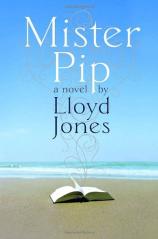
Mister Pip
by Lloyd Jones

List Price: $12.00
Pages: 272
Format: Paperback
ISBN: 9780385341073
Publisher: Dell Publishing

Click here to buy this book from Amazon.com.
Click here to buy this book from Amazon.ca.


About This Book


After the trouble starts and the soldiers arrive on Matilda’s island, only one white person stays behind. Mr. Watts, whom the kids call Pop Eye, wears a red nose and pulls his wife around on a trolley, and he steps in to teach the children when there is no one else. His only lessons consist of reading from his battered copy of Great Expectations, a book by his friend Mr. Dickens.

For Matilda, Dickens’s hero Pip becomes as real to her as her own mother, and the greatest friendship of her life has begun. Soon Mr. Watts’s book begins to inflame the children’s imaginations with dreams about Dickens’s London and the larger world. But how will they answer when the soldiers demand to know: where is this man named Pip?

Set against the stunning beauty of Bougainville in the South Pacific during the civil war in the early 1990s, Lloyd Jones’s breathtaking novel shows what magic a child’s imagination makes possible even in the face of terrible violence and what power stories have to fuel the imagination.

top of the page


rgg_discuss.gif (1294 bytes)


1. Is it important that Mr. Watts is the last white man on the island? Why?

2. Why does Matilda write Pip’s name in the sand alongside the names of her relatives? Why does this upset her mother? How does this contribute to Dolores’s feelings about Mr. Watts’s instruction of her daughter? Are these feelings understandable?

3. Why do you think Mr. Watts pulled his wife in the cart? Why did he wear the red clown nose? What meaning did that have for them?

4. What is the message Matilda’s mother is trying to express to the children with the story of her mother’s braids? How is this related to the issue of Mr. Watts’s faith in God?

5. What did you think of the lessons that the mothers of the children bring to the classroom? If you were the parent of a child in Matilda’s class, what lesson would you teach the children? What might your mother have taught the class?

6. Who is Dolores warning the children about when she tells them the story about the devil lady and the church money? How does this story justify her actions regarding the book and the redskins? Do you agree with Dolores’s refusal to bring forth the book? With Matilda’s?

7. Where do you think Gilbert’s father takes Sam? How do you know? In your opinion, was it necessary that he do so?

8. Why does the corned beef in Mr. Watts’s house "represent a broad hope" for Matilda? Discuss Mr. Watts’s reaction to Matilda’s fragment. Do you believe that Grace was alive when Matilda arrived?

9. Discuss how the characters in this story struggle to reconcile the concepts of race and identity. Does it seem to dictate their interaction with each other? How does it influence their concepts of self? What moments, especially, helped reveal this to you?

10. What is the meaning of the story of the Queen of Sheba? Why does Mr. Watts bring it up? Why is it significant that Dolores is familiar with that story?

11. Why does Dolores step forward to declare herself "God’s witness" to the murder of Mr. Watts? Were you surprised that she did? Why does she insist that Matilda remain silent?

12. Do you think Matilda was able to return home? How would that outcome affect your reading of both novels?

13. Discuss your memorable experiences of being read to as a child. What book made the greatest impact on your life? Did any book come to you at precisely the right time, the way Great Expectations was brought to Matilda?

14. On Great Expectations and Mister Pip: Are both Mister Pip and Great Expectations universal coming-of-age tales? How did you react to the blending of these two distinctly different settings and time periods?

15. The initial lines of Great Expectations are reflected several times in this novel. Compare them to the opening lines of Mister Pip. What connections do these first sentences draw between the themes of both novels?

16. In what way are the narrative voices of Mister Pip and Great Expectations the same? How are they different? What shifts do you notice in the storytelling after Matilda leaves the island? How did this impact your reading?

17. How is Dolores’s treatment of Matilda similar to Estella’s treatment of Pip in Great Expectations? How does this relationship help Matilda understand Pip’s attachment to Estella? Is it necessary that this attachment be severed before Pip/Matilda can grow individually?

18. Why do you think Mr. Watts omitted the characters of Orlick and Compeyson from his telling of Great Expectations? What additional meaning might the children have gleaned from the story if these characters and their storylines, such as Compeyson’s jilting of Miss Havisham, had been included?

19. What is signified by the changing of one’s name, both in Great Expectations and Mister Pip? Why does Matilda not change her name?

20. In what ways does Great Expectations help Matilda cope with her reality and prepare her for the future? How does it help Mr. Watts deal with his past? What makes Great Expectations the ideal Dickens choice for this purpose?

top of the page

Critical Praise

"Mister Pip is a rare, original and truly beautiful novel. It reminds us that every act of reading and telling is a transformation, and that stories, even painful ones, may carry possibilities of redemption. An unforgettable novel, moving and deeply compelling."
Gail Jones, author of Sixty Lights


"Mister Pip is sheer magic, a story about stories and their power to transcend the limits of imagination and reside in the deep heart's core. Lloyd Jones is a brave and fierce writer, and he has given us Dickens brand new again."
Keith Donohue, author of The Stolen Child


“As compelling as a fairytale–beautiful, shocking and profound.”
Helen Garner, author of Monkey Grip


‘It’s clear from the first page that this is prize-winning stuff… Being a truthful writer, Jones sees nothing – neither his heroes nor his villains in black and white. His is a bold inquiry into the way that we construct and repair our communities, and ourselves, with stories old and new’
The Times

 
Facebook Fan Page  Follow us on Twitter


Add Your Guide to ReadingGroupGuides.com!

Bookreporter.com Bets On...: Books We're Betting You'll Love


Privacy Policy | Contact Us | Advertising | About Us

© Copyright 2001-2013, ReadingGroupGuides.com. All rights reserved.
The Book Report, Inc. • 250 West 57th Street • Suite 1228 • New York, NY • 10107
Ph: 212-246-3100 • Fax: 212-246-4640

Bookreporter.comReadingGroupGuides.comGraphicNovelReporter.comFaithfulReader.com
Teenreads.comKidsreads.comAuthorsOnTheWeb.com