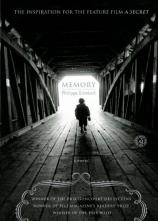
Memory
by Philippe Grimbert
List Price: $19.95
Pages: 160
Format: Hardcover
ISBN: 9781416559993
Publisher: Simon & Schuster
Twenty years after his mother and father jumped to their deaths from a balcony, Philippe Grimbert has written a gripping novel about the hidden memories that dominated their lives.
A colossal bestseller in Europe, Memory is the story of a family haunted by the secret of their past: an illicit love affair, a lost child, and a devastating betrayal dating back to the Second World War.
The day after my fifteenth birthday, I finally learned what I had always known....
Growing up in postwar Paris as the sickly only child of glamorous athletic parents, the narrator invents for himself a make-believe older brother, stronger and more brilliant than he can ever be. It is only when the boy begins talking to an old family friend that he comes to realize that his imaginary sibling had a real predecessor: a half brother whose death in the concentration camps is part of a buried family secret that he was intended never to uncover.
A spare, erotic, and ultimately cathartic narrative, Memory is a mesmerizing tale of coming to terms with one's shameful past through the unraveling of a series of dark desires.
top of the page

1. Philippe imagines two versions of his parents’ story. In both cases many details are supplied by his imagination. What are the significant differences and similarities between the two stories? Why is it so important for Philippe to imagine them in such detail?
2. Philippe frequently refers to his parents’ extreme athleticism and his own physical weakness as a child and adolescent. As the threat of deportation looms, Philippe images Maxime training harder than ever before, “keen to cover his chest with medals, to stand on the highest step of the podium.” Discuss the significance of physical strength in the novel.
3. Who was President Laval? Describe the two occasions in which Laval’s name appears in the novel. What is the psychological function of these seemingly coincidental occasions for Philippe?
4. Why does the young Philippe invent a fictional older brother? Describe the role of this imaginary brother in Philippe’s life.
5. What happens to the imaginary brother once Philippe learns of Simon’s existence? Why?
6. Watching a fictional movie set during the war years, the adolescent Philippe is aroused by the depiction of naked prisoners at a concentration camp. How are grief and shame linked to desire in the novel?
7. Why are Hannah and Simon picked up by the police and deported? While Hannah’s family attributes her showing the police the wrong papers to “mind-blowing carelessness,” Philippe ascribes a different cause. “Hannah, the perfect mother, had turned into a tragic heroine; the fragile young woman suddenly became a Medea, sacrificing her child and her own life on the altar of her wounded heart.” Which version do you find more convincing?
8. Memory is a novel by Philippe Grimbert about a character named Philippe Grimbert, whose life story very closely resembles the author’s own. The fictional Philippe uses the facts given to him by Louise to create an imaginary account of his parents’ story. Discuss the relationship between truth, fiction, and lies in the novel.
9. How does discovering the truth about his family change Philippe’s relationship to his father? What do you think accounts for this change?
10. Both the real and the fictional Philippe become psychoanalysts, largely because of the impact of the experiences described in the novel. How do psychological phenomena such as fantasy, repression, and association help shape the narrative?
top of the page

"A splendid book that gives the unspeakable written form."
Le Monde
"Powerful and gripping."
Publishers Weekly
“Memorable”
Kirkus Reviews
“The comfort we get from the cold raw truths --- death and loss and longing --- is that life itself is capable of small beauties. Grimbert captures this with style, depth and grace. Memory is a stunning book which simultaneously manages to widen our sense of history and story-telling.”
Colum McCann, author of Zoli and Dancer