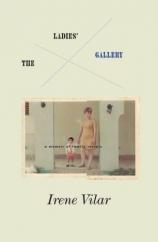
The Ladies' Gallery
A Memoir of Family Secrets
by Irene Vilar
List Price: $14.95
Pages: 360
Format: Paperback
ISBN: 9781590513231
Publisher: Other Press
A shred of black lace. A broken hand mirror. A spidery strip of false eyelash. These are the fragments left to Irene Vilar, granddaughter of Lolita Lebrón, the revered political activist for Puerto Rican independence who in 1954 sprayed the U.S. House of Representatives with gunfire, wounding several congressmen, and served twenty-seven years in prison. In The Ladies’ Gallery, Vilar revisits the legacy of her grandmother and that of her anguished mother, who leaped to her death from a speeding car when Vilar was eight.
Eleven years after her mother’s death, Vilar awakens in a psychiatric hospital after her own suicide attempt and begins to face the devastating inheritance of abandonment and suicide passed down from her grandmother and mother. The familial pattern of self-destruction flings open the doors to her national inheritance and the search for identity. Alternating between Vilar’s notes from the ward and the unraveling of her family’s secrets, this lyrical and powerful memoir of three generations of Puerto Rican women is urgent, impassioned, and unforgettable.
top of the page

1. As she grows up, Irene’s opinion of what a woman is or should be changes often. How do the various women in Irene’s life influence her thinking? How is her opinion skewed (or is it)?
2. Why did Lolita Lebrón abandon her family and immigrate to America in 1941? Are her actions seen as selfless or selfish (or both)?
3. What is Vilar’s opinion toward her grandmother’s act of defiance against the U.S. government?
4. The Ladies’ Gallery is an intimate, honest look at the author’s family. What challenges do you think Vilar faced in writing about issues such as violence, infidelity, and death among the people she loves? The Ladies’ Gallery’s subtitle is A Memoir Of Family Secrets. Why do you think Vilar was interested in revealing those secrets?
5. How does Irene’s view of her mother change after her death?
6. Vilar writes that one of her family’s favorite sayings is “Rub it out and start from scratch” (24). In what ways does Irene employ this strategy
7. Do Vilar’s own emotions come through in her writing or is her telling of events evenhanded? Were you distracted by her emotions (or lack thereof)? Are there moments in The Ladies’ Gallery in which you felt Vilar was holding back events or emotions, either about herself or her family?
8. Of all the places Irene has lived (New Hampshire, Spain, Puerto Rico, among others), where does she feel most at home? Does she ever feel fully at home?
9. In what ways are Lolita’s imprisonment and Irene’s hospitalization similar? Did Irene’s mother face any such situation or isolation?
10. What events led Irene to be committed?
11. Does Irene benefit from her hospitalization? Do any of the people she encounters leave lasting impressions?
12. Throughout The Ladies’ Gallery, we see instances in which Irene struggles with the concept that she is from America, especially when among her friends in Spain. Why does Irene have trouble seeing herself as an “American”? Do you see her as one?
13. Vilar chose to break her story into intertwining vignettes that alternate in time and perspective. What are the advantages or disadvantages of this form?
14. Vilar writes early in the memoir that “Repetition informs my life” (2). She later states that she is “blacklisted by repetitions” (281). What evidence do you find of this being true?
15. The Ladies’ Gallery takes its title from the area above the U.S. House of Representatives where Lolita and her compatriots carried out their attack. Why do you think Vilar chose this for the book’s title?
top of the page

"Irene Vilar is a writer of extraordinary passion, erudition, and intelligence."
Tobias Wolff
"Stunning. A Lyrical and visionary memoir of depression, Puerto Rican identity, and young womanhood."
Kirkus Reviews
"Startling, raw, and affecting, a painful exercise in which memoir as therapy becomes memoir as art."
The Philadelphia Inquirer
"A beautiful memoir, humorous and compassionate."
Newsday