Reading Group Guide
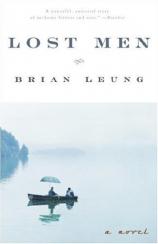
Lost Men
by Brian Leung

List Price: $23.00
Pages: 288
Format: Paperback
ISBN: 9780307351654
Publisher: Three River Press

Click here to buy this book from Amazon.com.
Click here to buy this book from Amazon.ca.


About This Book


A novel of rare grace and power, Lost Men is the story of a father and a son each confronting his past. Westen Chan was just eight years old when his Caucasian mother died and his father, Xin, sent him away to be raised by her relatives.

Twenty years later, after a lifetime of estrangement, Westen receives an invitation from his father to travel with him to China --- a prom-ise Xin once made when Westen was a child. So it is that two strangers --- a father and a son --- travel halfway around the world to a land that one of them knows intimately and the other has never seen. As they tour the country, the two men reveal themselves slowly and awkwardly: Westen’s history of failed relationships and his conflicted cultural identity; Xin’s regret at leaving his son and the terrible secret he’s kept too long. And in the end, their relationship may just hinge on the contents of a sealed letter written by Westen’s mother before her death --- one that threatens to answer the lifelong question neither of them has dared to ask.

Powerful, moving, and beautiful, Lost Men is a stunning literary novel that explores cultural and ethnic identity, the meaning of family, the exigencies of fate, and the lengths to which we will go to reconnect with those we fear we have lost. Brian Leung reveals both the intimate hearts of his characters and the telling details of place with equal and substantial grace.

top of the page


rgg_discuss.gif (1294 bytes)


1. What do you think of the dual voices --- those of Westen and his father, Xin --- the author uses to tell the story in Lost Men? Would the novel have been different if the story were told from only one point of view? Additionally, why do you think the author chose to begin and end the novel in the third person, and what is the effect?

2. “Each season offers a new identity. When you live here long enough, you learn to do the same” (page 11). Consider Westen’s statement. Does it reveal anything about his personality? What do you think it means in the context of what happens in Lost Men?

3. Talk about the relationships Westen has with the men in his life: his father, his uncle Cain, Gideon. How are these relationships different from, and similar to, one another?

4. Did it surprise you that after their trip to China, at the end of which Westen forgave his father, that the two men spoke only twice in the next year? What kept them apart in this way? What did you think of the scene in which Westen travels to see his father upon learning of his terminal illness?

5. Water is a recurrent symbol in Lost Men. Discuss some instances where water is prominent, and their significance. What other symbols are employed in the novel?

6. Why do you think Xin hides his illness from Westen, despite the many times on their trip to China when he bares his soul to his son --- including his revelation about the vicious attack on Celia, and the question of Westen’s paternity?

7. While on the Great Wall, why won’t Westen fully open the blue velvet box that Mrs. Cheung gave to him when he was a boy? What do you think held him back?

8. Though the title is Lost Men, in what ways are the women in the novel equally important to the story?

9. When Westen reveals to his father his nearly neutral sexuality, Xin gives Westen his blessing to find love, regardless of the gender of the person. Were you surprised by Xin’s reaction? How did you expect him to respond?

10. Xin communicates most intimately with Westen through letters; Westen writes heartfelt letters to his aunt Catherine from China; Westen’s mother has written a letter that reveals who Westen’s father really is. Consider the acts of letter-writing in Lost Men and the freedom they allow these characters.

11. What are the consequences of the secrets Xin and Westen have kept in their lives?

12. What does it mean to be Chinese (in Westen’s case), or to be of another ethnicity? Does DNA matter more in determining a person’s heritage, or is it the environment in which they are raised?

13. Were you surprised by what happens after Westen receives his mother’s letter?

top of the page

Critical Praise

"Brian Leung has written a compelling and heartfelt story about a father and son, separated for years, and their struggle to reconnect. Written in a spare, elliptical, lyrical voice, Lost Men plumbs complicated questions about family and identity. What can a father offer his son after so much time has passed? How does the past–the world of our fathers, and their fathers–continue to exert its hold over our lives? This is a novel of enormous wisdom and emotional weight."
Dan Chaon, author of You Remind Me of Me


"Lost Men is a kind of mystery novel, where the crime is being too proud to be a father, or a son, and the criminals find each other one last time. It's about lives I know but have never seen written down anywhere--Chinese, American, gay, straight. A quietly masterful first novel."
Alexander Chee, author of Edinburgh


"Lost Men is an accomplished first novel by the author of World Famous Love Acts (2004), an award-winning book of short stories. Written in the plainest of language, Lost Men is a powerful, universal story of inchoate fathers and sons."
Thomas Gaughan (Booklist)


"Grab a box of Kleenex and your comfy mom jeans–you'll be settling in once you pick up Brian Leung's lovely novel. It's an emotional story about a father and son's struggling relationship, where main character Westen Chan is asked by his estranged dad to visit him in China for some much-needed bonding. The beautifully written story is also about Westen coming to grips with his mixed heritage, and his father struggling to get back lost time. Sniff. We'll be fine."
Instinct Magazine

 
Back to top.   


Privacy Policy | Contact Us | Advertising | About Us

© Copyright 2001-2008, ReadingGroupGuides.com. All rights reserved.