IndieBound Independent Bookstores BRC Facebook Fan Page
Coming Soon
Reading Group Guide
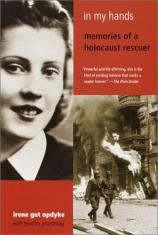
In My Hands
by Irene Gut Opdyke with Jennifer Armstrong

List Price: $12.00
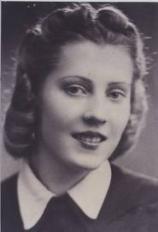
Pages: 288
Format: Paperback
ISBN: 0385720327
Publisher: Vintage

Click here to buy this book from Amazon.com.
Click here to buy this book from Amazon.ca.


About This Book


When the Nazi army invades Poland in 1939, Irene Gut is a seventeen-year-old student nurse. She is studious, young, and pretty, a good Catholic girl and close to her loving parents and three younger sisters--her life thus far is as remote as possible from the horrors of war. Yet, despite her youth, she is also fiercely loyal to her beautiful Poland and committed in her soul to helping others. So it is without hesitation that she volunteers to join the Polish army in its fight against the Germans. When the Polish army surrenders, Irene is exiled with other soldiers to the Lithuanian forest (now part of Russia) and roams from town to town bartering for supplies. On one such bartering mission she is raped, beaten, and left for dead by Russian soldiers. But Irene survives. She endures internment in a Russian hospital and exile in Kiev and is able to return to German-occupied Poland to be reunited briefly with her family. This period of happiness is short-lived: she is assigned to work for Major Eduard Rügemer of the German army, who is responsible for an ammunitions factory compound. Irene serves meals to Nazi soldiers and supervises the Jewish workers in the laundry. She begins to take actions to help the Jews suffering in the ghetto just beyond the compound's walls. And, ultimately, her relatively comfortable position and favored relationship with the major give her the opportunity to save the Jews who work in the laundry--her friends--from extermination by the Nazis. At every turn Irene is faced with another impossible challenge, another degradation, more evil. Each time, instead of breaking, she becomes braver and more resolute in her determination to fight for her friends, for her country, for what is right. Irene's breathtaking story is a testament to the possibility of good in mankind, and her strength of spirit lingers in the reader's mind long after the final page of her memoir. Jennifer Armstrong's beautiful rendering of Irene's story does justice to its subject: it is poetic yet cruelly frank--just as Irene's humanity looms large in the face of the most unspeakable evils of the twentieth century.

top of the page


rgg_discuss.gif (1294 bytes)


1. In the first pages of the memoir we are introduced to the Black Madonna of Czestochowa at the shrine of Jasna Góra, and Irene recounts that she prayed to God to get her through particularly difficult or lonely times. What role does religion play in Irene's story? Does religion sustain her or fail her in her times of need? As she watches the last trucks full of Jews drive away from the Ternopol ghetto she says, "I tried to pray, but the words in my head did not fit together in the right order. I wanted to say 'Holy Father,' but I could not. I thought He must have gone far away, taking His name with Him" [p. 147]. Does her faith waiver at other times? How do the different clergymen that Irene encounters strengthen or weaken her resolve?

2. Irene's father assures Irene during their brief reunion by telling her, "God has plans for you. He did not let you die" [p. 74]. Yet later, Irene explains, "You must understand that I did not become a resistance fighter, a smuggler of Jews, a defier of the SS and the Nazis, all at once. One's first steps are always small: I had begun by hiding food under a fence" [p. 126]. And, finally, in her epilogue she tells us, "Yes, it was me, a girl, with nothing but my free will clutched in my hand like an amber bead. God gave me this free will for my treasure. I can say this now. I understand this now. The war was a series of choices made by many people" [p. 234]. Were Irene's actions predestined or the result of her free will? How is free will an important theme in understanding the Holocaust overall?

3. How much of Irene's success is based on sheer luck and how much on quick thinking? For example, she easily escapes the Russian commissar [p. 63], she finds the vent in the major's bathroom to hide the Jews before moving them to the major's villa [p. 150], and she escapes through the prison window in Kraków [p. 224].

4. From the first chapter when we meet Bociek, the stork that Irene and her sisters care for, different images of birds permeate Irene's memoir. References to birds or bird images appear at least seven more times in the memoir in different contexts [pp. 68, 80, 104, 133, 142, 215, 234]. How are these images symbolic of Irene? What else do the birds represent? What is the significance of the moments in Irene's story when bird imagery is used? How does the bird motif characterize the style Jennifer Armstrong uses in telling Irene's story?

5. Irene tells us, "Sometimes, when I thought of the amount of hatred dwelling in Poland, I was surprised to see that the grass was still green, that the trees still flourished their leaves against a blue sky. . . . The birds can hop from one branch to another, tipping their heads and honing their small beaks against the bark while a child dies in the mud below" [pp. 99Đ100]. How is nature portrayed in In My Hands? How does Irene perceive man's relationship with nature and the land during the war? How is the land of Poland simultaneously a force for man to reckon with, as in the cruel cold of Polish winters, and a symbol of hope, as in the flowers of Poland heralding the arrival of spring?

6. So many questions remain at the end of the memoir, and the pictorials raise questions about Irene's life after Poland: What was her courtship and marriage like? What were her sisters' lives like after the war? Did she ever communicate with Eduard Rügemer again? Why did her sisters and her Jewish friends decide to remain in Europe? Why does the author choose to end Irene's memoir where she does and leave these and other questions unanswered?

7. In significant passages, Irene recalls the manifestation of German anti-Semitism in Poland. She writes of her home town:

And in some shops not many, but some there were signs saying, "Don't Buy from Jews!" or "A Poland Free from Jews Is a Free Poland." This mystified me. In my home, there had never been any distinction made between people. . . . We did not imagine where it would lead. How could we? To us, Germany had always been a seat of civilization, the home of poets and musicians, philosophers and scientists. We believed it was a rational, cultured country. How could we know that the Germans did not feel the same about us? How could we know the depth of their scorn for us? Despite our centuries of glorious achievements, despite our Chopins and our Copernicuses, our cathedrals and our heroes and our horses--despite all this, Germany viewed Poland as a land of Slavic brutes, fit only for labor. And so Hitler wanted to destroy us [pp. 17Đ18].

It was now impossible not to understand what Hitler's plans for the Jews were. . . . Janina and I would recall Jewish friends from our girlhood. . . . It seemed to us . . . that if our childhood friends could be considered enemies, what was to keep us from the same fate? Weren't we all the same? Hitler would finish the Jews, ghetto by ghetto, and then turn his full attention to the rest of us Poles [p. 98].


In both of these passages, Irene begins by discussing anti-Semitic acts and ends with fear of what such German behavior might mean to Poland and the Poles. From Irene's point of view, how did these anti-Semitic actions and sentiments differ from anti-Polish actions and sentiments?

8. Except for the incidental German women echoing the anti-Semitism of their Nazi soldier boyfriends, all of the perpetrators of evil in Irene's wartime experience are men. How are Irene's actions made possible by the fact that she is a woman? How might a man read her memoirs differently than a woman?

9. In Irene's memoirs she juxtaposes the major's decentness against Rokita's iciness [pp. 134Đ135]. Yet, after he elicits sex from her in exchange for protecting her secret she reflects, "I wondered how the major's honor would allow him to make such a bargain. I had always felt that behind the uniform was a decent man. I had never seen him do anything cruel or rash. . . ." [p. 191]. Is the major a sympathetic person? What are Irene's feelings toward Major Rügemer? Are the major's actions toward Irene"justified," or is Irene rationalizing? While Irene had clearly realized his feelings for her before this fateful moment and, more and more, had exploited them [pp. 113, 123, 142, 164], was the major's demand in fact inevitable?

10. Equally complex is Irene's opinion of the average German, as epitomized by Herr Schulz. On one hand, he is a "good, friendly man" and "had none of the ferocity and malevolence that [Irene] had come to expect of the Germans" [p. 88]. But she also admits, "As good and kind as he was, he was a German, and I could not reconcile those two things in my mind" [p. 93], and "He made hating the Germans a complex matter, when it should have been such a straightforward one" [p. 119]. Is Herr Schulz's behavior understandable? Excusable?

11. Is it possible that Dr. David and Dr. Miriam are Jewish, as their names would indicate? Was the "Rachel Meyer," whom Irene poses as in Kiev, supposed to be Jewish? If so, why would Irene not explicitly note this irony? After the war, when Irene is in the repatriation camp posing as a Jew, she notes twice, "I fooled myself that I belonged" [p. 231]. And, after three years, the village still "did not feel like home" [p. 232]. Why might Irene have felt this way?

top of the page

Critical Praise

"Even with its frequently painful material, the book has uncanny delicacy; what would be graphic in another writer's work is often metaphorical here, piercing the reader with what is not said. The message, true to Opdyke's vision, is redemptive."
Publishers Weekly


"Powerful and life-affirming, this is the kind of exciting memoir that marks a reader forever."
The Plain Dealer


Privacy Policy | Contact Us | Advertising | About Us

© Copyright 2001-2010, ReadingGroupGuides.com. All rights reserved.
The Book Report, Inc. • 250 West 57th Street • Suite 1228 • New York, NY • 10107
Ph: 212-246-3100 • Fax: 212-246-4640

Bookreporter.comReadingGroupGuides.comGraphicNovelReporter.comFaithfulReader.com
Teenreads.comKidsreads.comAuthorsOnTheWeb.comAuthorYellowPages.com