IndieBound Independent Bookstores

Barnes & Noble

Loading
Reading Group Guide
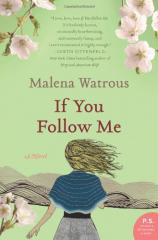
If You Follow Me
by Malena Watrous

List Price: $14.99
Pages: 384
Format: Paperback
ISBN: 9780061732850
Publisher: Harper Perennial

Click here to buy this book from Amazon.com.
Click here to buy this book from Amazon.ca.


About This Book

Hoping to outpace her grief in the wake of her father's suicide, Marina has come to the small, rural Japanese town of Shika to teach English for a year. But in Japan, as she soon discovers, you can never really throw away your past…or anything else, for that matter.

If You Follow Me is at once a fish-out-of-water tale, a dark comedy of manners, and a strange kind of love story. Alive with vibrant and unforgettable characters --- from an ambitious town matchmaker to a high school student-cum-rap artist wannabe with an addiction to self-tanning lotion --- it guides readers over cultural bridges even as it celebrates the awkward, unlikely triumph of the human spirit.

top of the page


rgg_discuss.gif (1294 bytes)

1. The novel opens as Marina is sitting at her desk, reading a comedy of manners, thinking about how they’re formulaic, but at least she understands them. “People play by and break the rules of love and social conduct, and the right twosomes find each other at the very end.” If You Follow Me is described as “a strange kind of love story,” chronicling the end of one relationship and the start of another. How does it match the “formula” that Marina sets out at the beginning of the book?

2. Marina came to Japan right after graduating from a women’s college, and has certain feminist beliefs. She thinks that girls should be strong, acting (and treated) no differently than boys. But the school where she works is split by gender, and the students act in ways that she feels are stereotypical of their gender as well. Marina struggles with this, and with her belief that Joe, her male predecessor on the job, was pampered and indulged as a guy. Discuss some of the ways in which she correctly identifies evidence of sexism in Japan. What ways might she be imposing false or western notions onto her host culture? How do different female characters in the book surprise her the book with their take on gender roles?

3. After having been in Japan for a while, Marina figures out that people often tell the truth indirectly, so she has to learn to “fill in the blanks,” to understand what they really mean. How did this affect what she read in Miyoshi-sensei’s letters? What times in your life have you had trouble communicating across cultural barriers?

4. In the past, the term “coming out novel” applied to books in which someone acknowledged his or her homosexuality, and then began living more openly and freely. In this novel, Marina finally comes out about the fact that Carolyn was her girlfriend near the end, after they’d broken up, and right before she starts a romantic relationship with a man. Is this the opposite of a “coming out novel”? Do you agree or disagree with her that sexuality is fluid, and love is rare?

5. There is an ancient tradition of honoring the seasons in Japanese art. In keeping with this tradition, this novel is broken into four sections: Fall, Winter, Spring, Summer. How do the things that happen in each section correspond with the mood of that season?

6. Before moving to Japan, Marina thinks of a picture she saw of a crowded Tokyo subway platform where a man was using a stick to prod commuters onto the train. She thinks, “People talked about going abroad to find yourself. Japan seemed like a place where you could get lost.” Do you think that she succeeds in “losing herself” in Japan? What does this mean exactly, and why is it something she wants?

7. What preconceptions, if any, did you have about Japan before reading this book? Did the portrayal of Japanese culture and the people either match the ideas you already had in mind or surprise you in any way? How do you think the book would have been different if Marina ended up in crowded Tokyo instead of the rural Shika?

8. Marina hates the language used to talk about death, especially the Kubler-Ross stages --- from denial to acceptance --- that her college bereavement group leader applied to everyone in that group. Why does she have such a problem with the rhetoric of grief, and such a hard time talking about suicide in particular? In spite of her discomfort with this language, does she move from denial to acceptance?

9. At the end of the novel, when she scatters her father’s ashes, she doesn’t want to say goodbye, because this “suggests separation or worse --- closure.” What’s her problem with this concept? Do you agree? Has there been a time in your life where you had trouble letting go?

10. Marina feels a lot of guilt and shame about a big thing --- her father’s suicide --- but she is also constantly doing little things wrong. She is so bad at following rules that it almost seems like she must be doing this on purpose (as Carolyn suggests more than once). Given her guilty conscience, why do you think that is? How does Marina’s guilt motivate her to do the things she does?

11. After attempting to get rid of the broken refrigerator, which lands her in deep trouble with her neighbors and supervisor, Marina comes to the realization that nothing gets thrown away in Japan. For a young woman whose her father killed himself, is this notion of object permanence comforting or terrifying? How do you think the idea influences Japanese culture? How does the ease of throwing away things affect American culture?

top of the page

Critical Praise

"I love, love, love If You Follow Me. It’s fearlessly honest, occasionally heartbreaking, and extremely funny, and I can’t recommend it highly enough."
— Curtis Sittenfeld, New York Times bestselling author of Prep and American Wife


"Graceful, smart, and filled with wonder, If You Follow Me is a heartfelt delight from beginning to end."
— Michelle Richmond, bestselling author of The Year of Fog


"How is it that If You Follow Me manages to be at once so funny and so moving? In this beautiful novel, what is most ‘foreign’ to Marina turns out to be her complex relationships with those she thought she knew best. Malena Watrous’s writing is sharp-edged and generous, tragic and true. I would follow her anywhere."
— Katharine Noel, author of Halfway House


"If You Follow Me is the kind of book you finish and then clutch to your heart as you run around telling everyone you know that they have to read it. I feel so close to these characters ---and that’s because Malena Watrous has made them so vivid and alive on the page. These people know more than their share of sadness, and still they’re such a delight to spend time with --- like friends you’ll stick by no matter what, whose frailties and awkwardness are not detractors but ‘charm points.’ Watrous has written a book of great genuine warmth, startling honesty, and remarkable power. I cherish it."
— Thisbe Nissen, author of Osprey Island


"With humor and sharp insight, grace and unflinching honesty, Watrous shows us not only what it’s like to be a young American living in rural Japan, but also what it means to explore the terra incognita of love. Watrous is a wonderful writer, and this is a deeply moving and indelible book."
— Julie Orringer, author of How to Breathe Underwater


"Watrous ably writes a novel ripe with heartache, romance, comedy and drama. It’s smart and unique, showcasing the idiosyncrasies of Japan as it perfectly --- and often hilariously --- tells a story of a young woman coping with her father’s suicide."
Romantic Times

 
Facebook Fan Page  Follow us on Twitter


Add Your Guide to ReadingGroupGuides.com!

Bookreporter.com Bets On...: Books We're Betting You'll Love


Privacy Policy | Contact Us | Advertising | About Us

© Copyright 2001-2012, ReadingGroupGuides.com. All rights reserved.
The Book Report, Inc. • 250 West 57th Street • Suite 1228 • New York, NY • 10107
Ph: 212-246-3100 • Fax: 212-246-4640

Bookreporter.comReadingGroupGuides.comGraphicNovelReporter.comFaithfulReader.com
Teenreads.comKidsreads.comAuthorsOnTheWeb.com