|
|
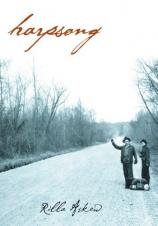
Harpsong
by Rilla Askew
List Price: $24.95
Pages: 243
Format: Hardcover
ISBN: 0806138238
Publisher: University of Oklahoma Press
Harlan Singer, a gifted harmonica-playing troubadour, shows up in the Thompson family’s yard one morning. He steals their hearts with his music, and their daughter with his charm. Soon he and his fourteen-year-old bride, Sharon, are on the road, two more hobos of the Great Depression, hitchhiking and hopping freights in search of an old man and the settlement of Harlan’s long-standing debt.
The newlyweds don’t head west in classic Dust-Bowl-to-California migration but careen around the Great Plains in a giant figure eight, with Oklahoma in the middle, “the squeezed-in hourglass place.” The young couple’s personal hardships play out against the backdrop of communal hardships of the era, as they appear in hobo jungles and Hoovervilles, rabbit drives and dust storms, bank robberies, cow killings, and the siege of a county courthouse by out-of-work miners and their families in the coal-mining district.
Through much of the novel Harlan is searching for a wandering hobo and spiritual philosopher, an old man named Profit, who once saved Harlan’s life. Sharon longs to stop their ceaseless traveling, to return home to her family and settle down, but caught between the disruptive forces of the Great Depression and Harlan’s obsession --- and her own powerful love for her husband--she can only follow along. After Harlan's ruthless beating by a railroad bull, his quest changes, and Sharon comes to a moment of reckoning: will she continue to wander through the wilderness with her profoundly gifted and, in all practical ways, useless husband, or will she follow her own wants and needs, walk away and leave him so that she can live some semblance of a normal life? Sharon’s choice to go with her husband leads to the climactic scene in the Pittsburg County Courthouse that ultimately makes Harlan both a folk hero and a fugitive from the law with a price on his head.
Harpsong is told in three voices: folksay, the folktale-inflected, collective voice of the people of eastern Oklahoma; Sharon, who declares that no one knows the real story except “me here, Sharon, his wife;” and deepsong, the poetic, deep consciousness of Singer himself, whose source the reader understands only at the story’s end. Employing an elliptical narrative structure that turns back on itself, reflecting the paths of the young travelers as they roam the country in an infinity-sign figure eight, Harpsong explores themes of love and loss, sin and redemption, hope and hopelessness, what human beings ultimately owe one another, and the wayfaring orphan’s search for home.
top of the page

1. A novel set in Depression-era Oklahoma invites comparison with John Steinbeck's Grapes of Wrath. Compare the characters in Harpsong with the Joad family in Steinbeck’s mythic novel. Compare and contrast the incidents in both novels. Where do Steinbeck’s and Askew’s themes seem to intersect or diverge? In what ways do they paint similar or differing portraits of Oklahomans in that era?
2. What is it about Harlan Singer that causes the people to talk about him and eventually claim him as a folk hero? Consider other characters in history, literature, or folktale with whom he might be compared. In what ways does Harlan’s character justify how the people mythologize him, and in what ways does it not?
3. Harpsong is divided into three sections, told in three voices. Discuss the ways in which each voice renders a portion of the truth of the story. Where do the understandings of each voice contradict or deny one another?
4. The narrative structure in Harpsong is similar in Parts One and Two but changes dramatically in Part Three. Trace the structure of the novel, considering what the reader knows when and how that influences the reader’s understanding of underlying themes.
5. Sharon narrates the majority of the novel. Of the three voices, is hers the one that tells the “real truth” about Harlan, as she claims? Why or why not? What does Sharon want in her life with Harlan? She speaks of “the third desire of [her] heart.” What is that?
6. Discuss the themes of sin and redemption, hope and hopelessness that permeate the novel. What are the differences between Harlan and Sharon in terms of their understanding of sin? Of salvation?
7. What is Harlan’s “sin” that so causes him to feel he needs redemption? How does he seek redemption? Does he achieve it in the end?
8. Discuss the old man’s notion of “sixty-forty.” Does the novel seem to indicate this is a fairly accurate proportion of good to evil, decency to cruelty, in humans?
9. What is the relationship between history and folktale in Harpsong? In America’s ongoing narrative of itself? Discuss the impulse in people to create mythic heroes. Is the need greater in times of overwhelming despair, or do we continue to create larger-than-life heroes in good times as well as bad?
10. What historical events inform Harpsong? Consider which events are based in historical and geographical fact and which are a part of the folktale. Discuss the events in Harpsong in relation to oral histories handed down in readers’ families that tell stories about the Great Depression.
top of the page

“American Book Award-winning author Askew mixes fiction with legend and history in this extraordinary novel of Oklahoma during the Great Depression, Volume 1 of the "Oklahoma Stories and Storytellers" series. Harmonica-playing Harlan Singer marries 14-year-old Sharon Thompson, and they immediately take to riding the rails. Unlike many Okies, however, they never go to California but instead keep making figure eights, always returning to their center point, Oklahoma. The charismatic Harlan --- - a brilliant musician and storyteller with friends among the hobos, Cherokees, and African Americans --- - has taken Sharon along on his own mysterious quest. Sometimes they steal, but only needed food and clothing, and they always try to repay their debts. Throughout, Askew interweaves three narrative strands: Sharon's voice; Harlan's poetry, or "deepsong"; and "folksay," the legends and history surrounding these two. The result is a vivid portrait of an age and a place, of desperate poverty, near starvation, red dust, and strong biblical faith. Regional literature at its finest; highly recommended.”
Mary Margaret Benson, Library Journal
“A young man, his teenaged wife and his harmonica crisscross the Depression-era Southwest in Askew's mournful, compelling, religion-infused third novel. Sharon Thompson may be only 14, but as soon as mysterious stranger Harlan Singer appears in her small town of Cookson, Oklahoma, she knows they are destined to mate. The self-named Harlan may be part Cherokee, but what's for sure is his genius with the harmonica, or harp-he's a veritable Pied Piper. He so charms Sharon's dirt-poor parents (her Daddy is a traveling preacher) that they give him work. But work doesn't agree with Harlan. After an almighty ruckus, Harlan whisks Sharon away to Muskogee, where they marry; they honeymoon atop a freight car, for Harlan has been riding the rails for years; Sharon, "ignorant as pudding," realizes she doesn't know her husband at all. Still, she shows spirit as they navigate the hobo jungles and run from the bulls, i.e., railroad detectives. Harlan is searching for Profit, his spiritual mentor, a smelly old hobo who once saved his life, but his search is as hopeless as Sharon's for her family, since on their return to Cookson, her home is deserted; bank foreclosures have doomed the town. The past is unrecoverable; that is one of the novel's themes, along with responsibility to our fellow man, also addressed in Askew's Fire in Beulah (2001). Harlan, as retribution, robs the local bank and becomes the stuff of legend, though he later returns the money, for he and Sharon are religious folks, caught in a cycle of sin and the quest for redemption. Askew skillfully weaves their personal dramas (a miscarriage, Harlan's fearsome beating by the bulls) with the communal hardships of the Depression; through it all floats the sound of Harlan's harmonica, mesmerizing his listeners.”
Kirkus
“
Get your senses ready. Rilla Askew's hauntingly evocative Harpsong, set in Depression-era Oklahoma, comes as close to "sensurround" as any novel I've ever read. You'll feel the bone-jarring jolt of jumping from a moving freight train onto drought-packed earth; you'll understand the unutterable deliciousness of a simple plate of beans; and most of all, your eyes, throat and heart will constrict with the weight of that all-encompassing shroud of red dust.
With this book, the first in a planned "Oklahoma Stories and Storytellers" series from the University of Oklahoma Press, Ms. Askew winningly takes on the Dust Bowl myths held sacred since John Steinbeck's iconic The Grapes of Wrath was published in 1939. This... is the story of the Okies from Muskogee, and thereabouts, who never made it to "the promised land" of California but stayed put and made do, realizing that "the whole nation's a kicked-over anthill… It ain't just us."
In the case of Sharon and Harlan Singer, the young couple at the heart of Harpsong, "staying put" actually entails hopping freight trains on a loop from as far west as Albuquerque to as far east as Georgia, but always veering back to northeast Oklahoma. "I come to understand that me and Harlan were tied to a tether," 13-year-old Sharon mourns. "We could swing out only so far before the tie jerked us back."
Ms. Askew hardly spares the reader from the realities of poverty and homelessness...Most days, merely looking for food and a place to sleep becomes the Singers' daylong work. Ms. Askew's sensory wizardry is such that you'll believe you've heard the harpsong of Harlan Singer, playing a nation's desperation and grief on a $2 harmonica.
In this part of the country, where many of us are a generation or two removed from Dust Bowl ancestors, Harpsong will resonate long after you put it down. You might be inspired to go through the photo albums, and take a second, perhaps more respectful look at those who endured.”
Joy Tipping, Dallas Morning News
“When Rilla Askew finished reading from the opening pages of her novel Harpsong at last month's Centennial Voices event, my wife turned to me and said, "OK. I'm hooked." She wasn't the only one, to be sure. Askew is a writer whose prose almost begs to be read out loud. It's an incantatory mix of down-home directness and high-flying poetry, the sound of plain-spoken people whose voices have been steeped in the language of the King James Bible. It is a fictional voice that has earned Askew deserved comparisons to William Faulkner and Cormac McCarthy. And it finds maybe its best expression in Harpsong.
It is...a novel about faith --- not simply religious faith, although that is a large part, but faith in people, in the land, in the need and even comfort that can be found simply in keeping on…Singer is after some sort of truth, a way of making the Bible he's read and had recited to him have meaning in a world that has lost its hope…It is a story that moves with the ease and inevitability of a country stream, and lingers in the mind like a melody.”
James D. Watts Jr., The Tulsa World
|
Oprah's Book Club Selection
Tell us and you could win 12 copies of this book for your group!
Beautiful Ruins
by Jess Walter
Click here
for more details.

Contest
Win Copies for your Book Group

This month's prize:
City of Women by David R. Gillham
Click here
for more details


|