Reading Group Guide
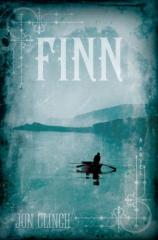
Finn
by Jon Clinch

List Price: $14.00
Pages: 320
Format: Paperback
ISBN: 9780812977141
Publisher: Random House Trade Paperbacks

Click here to buy this book from Amazon.com.
Click here to buy this book from Amazon.ca.


About This Book


In this masterful debut by a major new voice in fiction, Jon Clinch takes us on a journey into the history and heart of one of American literature’s most brutal and mysterious figures: Huckleberry Finn’s father. The result is a deeply original tour de force that springs from Twain’s classic novel but takes on a fully realized life of its own.

Finn sets a tragic figure loose in a landscape at once familiar and mythic. It begins and ends with a lifeless body–flayed and stripped of all identifying marks–drifting down the Mississippi. The circumstances of the murder, and the secret of the victim’s identity, shape Finn’s story as they will shape his life and his death.

Along the way Clinch introduces a cast of unforgettable characters: Finn’s terrifying father, known only as the Judge; his sickly, sycophantic brother, Will; blind Bliss, a secretive moonshiner; the strong and quick-witted Mary, a stolen slave who becomes Finn’s mistress; and of course young Huck himself. In daring to re-create Huck for a new generation, Clinch gives us a living boy in all his human complexity–not an icon, not a myth, but a real child facing vast possibilities in a world alternately dangerous and bright.

Finn is a novel about race; about paternity in its many guises; about the shame of a nation recapitulated by the shame of one absolutely unforgettable family. Above all, Finn reaches back into the darkest waters of America’s past to fashion something compelling, fearless, and new.

top of the page


rgg_discuss.gif (1294 bytes)


1. Finn (the character) is both sympathetic and unsympathetic. How do his various traits and actions make him that way? Did you ?nd yourself rooting for him or against him? For what reasons? How did your reactions to him change as the book went on?

2. Finn is deeply con?icted on issues of race. Which of his impulses are good? Which are bad? What could he have done to change the outcome of his circumstances?

3. Finn is also ?ercely con?icted in his relationship with his father, the Judge. He wants desperately to please him, but subverts his own intentions time and again. How does this make you feel about the two of them–and about their relationship?

4. The author chose to give Finn no ?rst name and to give certain other characters either no names at all or names that identify them as archetypes (e.g., the Judge, the preacher, the laundress). Why do you suppose he made this decision? How did this unusual naming convention affect your understanding of and involvement with the story?

5. The events in Finn are told out of sequence. How would the novel have been different if it had been told chronologically?

6. Although the action in Finn is closely tied to the events of Adventures of Huckleberry Finn and The Adventures of Tom Sawyer, the novel stands by itself and takes some very different directions from Twain’s work. Did that surprise you? If the author had chosen to stay closer to Twain, how would the book have been different?

7. If you have read Adventures of Huckleberry Finn recently, how did the world envisioned in Twain’s novel compare with the world in Clinch’s? Which seemed to you more realistic? Why?

8. Adventures of Huckleberry Finn has a ?rst-person narrator (Huck tells the story himself ), while Finn has an omniscient third-person narrator. Huck is told in the past tense, and Finn in the present. How do these differences affect your understanding of the novels and your connection to them?

9. Adventures of Huckleberry Finn is widely regarded as a masterpiece of dialect writing. Did the author of Finn choose wisely in avoiding the use of dialect in his novel? What tricks did he use to give the impression of dialect speech without actually rendering it?

10. What images–either from memorable scenes or through vivid language–stand out to you? The author has said that much of the inspiration for the language of this book came from William Faulkner, the King James Bible, and old gospel hymns. Does that make sense to you?

11. Some minor characters from Adventures of Huckleberry Finn reappear in Finn. Which of them did you recognize? How are they different, if at all?

12. One important theme of Finn is paternity: the things we take from our fathers and pass to our children. There are several father-and-child combinations in the book, both real and symbolic: Finn and the Judge, Finn and Huck, Judge Thatcher and Huck, Judge Thatcher and Becky, the Judge and Will, Judge Stone and his children, Mary’s father and Mary, the laundress’s husband and the murdered child. How do they compare to one another?

13. The last sentence of Finn–“He will take what he requires and light out”–echoes the end of Adventures of Huckleberry Finn: “...I got to light out for the Territory ahead of the rest. . . . ” Yet it also refers to the issues of paternity raised in Finn. Twain’s ending was hopeful. Is Clinch’s? How are the endings different?

top of the page

Critical Praise

“A brave and ambitious debut novel… It stands on its own while giving new life and meaning to Twain’s novel, which has been stirring passions and debates since 1885… triumph of imagination and graceful writing…. Bookstores and libraries shelve novels alphabetically by authors’ names. That leaves Clinch a long way from Twain. But on my bookshelves, they'll lean against each other. I’d like to think that the cantankerous Twain would welcome the company.”
USA TODAY


“Ravishing…In the saga of this tormented human being, Clinch brings us a radical (and endlessly debatable) new take on Twain’s classic, and a stand-alone marvel of a novel. Grade: A.”
ENTERTAINMENT WEEKLY


“A fascinating, original read.”
People


“Haunting…Clinch reimagines Finn in a strikingly original way, replacing Huck’s voice with his own magisterial vision–one that’s nothing short of revelatory…Spellbinding.”
WASHINGTON POST

 
Back to top.   


Privacy Policy | Contact Us | Advertising | About Us

© Copyright 2001-2008, ReadingGroupGuides.com. All rights reserved.