Reading Group Guide
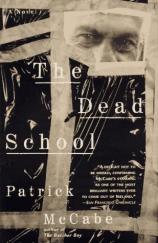
The Dead School
by Patrick McCabe

List Price: $11.95
Pages: none
Format: Paperback
ISBN: 038531423X
Publisher: Delta

Click here to buy this book from Amazon.com.
Click here to buy this book from Amazon.ca.


About This Book


From the award-winning author of The Butcher Boy comes a new novel of extraordinary power that, according to the San Francisco Chronicle, "confirm[s] McCabe's standing as one of the most brilliant writers to ever come out of Ireland."

In The Dead School, Patrick McCabe returns to the emotionally dense landscape of small-town Ireland to explore the inner lives of two men: a headmaster and a schoolteacher, each man the product of a soul-stifling culture, each battling his own demons of loss and betrayal. Tension coils--until tragedy strikes a young student in their charge, and the latent despair and rage that has festered in their hearts explodes onto the page. As in The Butcher Boy, McCabe demonstrates his remarkable command of the vernacular and an uncanny ability to pinpoint the exact moment when ordinary minds take flight into madness. Equally compelling, equally heartbreaking in its impact, The Dead School has established McCabe as one of the most celebrated writers of literary fiction today.

top of the page


rgg_discuss.gif (1294 bytes)


1.The New York Times Book Review wrote that The Dead School "transfixes through the brilliant manipulation of voice." Discuss the impact of the omniscient narrator voice on the tone and message of the novel. Both Malachy Dudgeon and Raphael Bell, the novel's protagonists, have distinct voices of their own. In what way does this affect the tone and message of the book as well?

2. One of McCabe's primary themes throughout his work is societal repression vs. individual freedom. Though Raphael and Malachy come from different generations, how does McCabe articulate this theme throughout the novel?

3. Do you think Raphael and Malachy can be cast as isolated "madmen," or as examples of the times in which they lived?

4.The Chicago Tribune has written that "Patrick McCabe is a master at depicting the byways of interior lives, particularly those of characters who have a tenuous grasp on sanity." Discuss the moments in the novel when both Malachy's and Raphael's sanity begins to slip--and why. Given the circumstances of both men's lives, could these moments have been prevented?

5. Both Dudgeon and Bell suffered irrevocable losses in childhood. Discuss these losses and their impact on the characters' lives. Are these losses alone enough to have set in motion the psychological damage that leads to the eventual denouement of the novel?

6.The Dead School is told in loosely alternating chapters. Discuss how McCabe uses this as an effective storytelling tool.

7.McCabe has inserted two excoriating--and poignant--fable-like chapters in the novel: "Little Chubbies" and "The Dummy." How do they service McCabe's view of small-town life in Ireland?

8. Discuss McCabe's use of popular culture (rock music, cinema, television) to create an external counterpoint to the inner lives of his characters.

9. How does the role of Catholicism, both as a cultural force and an individual commitment, play an important role in The Dead School?

10.Headmaster Raphael Bell considers the feminist Evans as his nemesis. Can Bell's and Evans's opposing points of view about society and education ever be reconciled? Are his feelings of betrayal in her presence legitimate? Or do they simply arise from his inability to adjust to the changing times?

11.The Dead School can be considered a dark novel, but many have referred to McCabe's use of antic humor throughout. Explore the technique of introducing humor in the novel, and its effectiveness as a storytelling device.

12. Critics have said that McCabe is moving in startling new directions from the magisterial accomplishment of Joyce, Yeats, and Beckett. Discuss why this might be so, and if the author himself is as much a reflection of his time as his predecessors were of theirs.  

top of the page

Critical Praise

"A spellbinding story of betrayal and broken dreams narrated to a wonderfully menacing effect...the sheer force of his language...positively thrums with life. "
——Los Angeles Times


"The Dead School makes compelling literature....The writing is seamless, the effect shocking: Imagine Apocalypse Now cheerfully narrated by Jimmy Stewart. "
——The Seattle Times


"McCabe [is] as skilled and significant a novelist as Ireland has produced in decades. "
——Kirkus Reviews


"A delight not to be missed, confirming McCabe's standing as one of the most brilliant writers ever to come out of Ireland. "
——San Francisco Chronicle


"A mesmerizing tango of psychological ruin. "
——Chicago Tribune


"Mr. McCabe suffuses this book with undeniable power. "
——Baltimore Sun


"The big challenge for an Irish writer is to move in a new direction from the magisterial accomplishment of Joyce, Yeats, and Beckett, and to do it within the remarkable scope of Irish English. McCabe is the man. "
——Kirkus Reviews

 
Back to top.   


Privacy Policy | Contact Us | Advertising | About Us

© Copyright 2001-2008, ReadingGroupGuides.com. All rights reserved.