Reading Group Guide
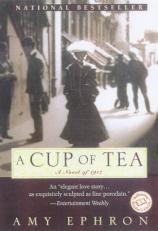
A Cup of Tea
by Amy Ephron

List Price: $10.00
Pages: 224
Format: Paperback
ISBN: 0345425707
Publisher: Ballantine

Click here to buy this book from Amazon.com.
Click here to buy this book from Amazon.ca.


About This Book


Born to privilege, Rosemary Fell has wealth, well-connected friends, and a handsome fiancé, Philip Alsop. One cold and rainy night she sees, under a streetlamp, the mysterious Eleanor Smith huddled against the elements. In a moment of beneficence, Rosemary invites the penniless young woman home for a cup of tea.

Arriving on the scene, Philip notices Eleanor warming herself by the roaring fire. When Rosemary sees them exchange an unmistakable look, she promptly sends the girl packing. But too late. In that one brief moment, Rosemary's carefully sculptured life has cracked beyond repair....

Inspired by the classic Katherine Mansfield short story, A Cup of Tea springs to life from its rich cast of characters and brilliant evocation of the uncertain days of World War I. This darkly romantic novel engages us with impeccable plotting and a deep sense of foreboding, propelling us toward its shocking conclusion.

top of the page


rgg_discuss.gif (1294 bytes)


1. What was happening in American society during World War I? Why do you think the author chose to set the story in those days?

2. Aside from a brief glimpse of her father, and a flashback scene in which Eleanor shows Philip the type of neighborhood from which she came, very little is said about Eleanor's background. Why do you think Ephron leaves Eleanor's past to our imagination? What do you imagine Eleanor's past to be? How might she have fallen on hard times?

3. How would you describe Rosemary? What do you think motivated her decision to take Eleanor in and help her out? Rosemary is obviously a pampered and protected young woman. Do you consider her to be a shallow person? Do you think she's being patronizing toward Eleanor?

4. What do you think of Rosemary's reaction when Philip describes Eleanor as being "astonishingly pretty." Would you have shown so little emotion if it had been your fiance who seemed to connect with someone like Eleanor?

5. What are the class differences that exist between Eleanor and women like Jane and Rosemary? How do those differences impact on the way they treat each other?

6. Why do you think Jane Howard raced after Eleanor and helped her find a job? Does she bear any responsibility for the love triangle that ensues between Eleanor, Rosemary, and Philip?

7. How does the war change Philip? In what way does it make him ready to follow his heart when it comes to Eleanor and Rosemary? What sort of changes did the war impose on society?

8. Rosemary performs an act of kindness and hospitality and is rewarded with betrayal. However, was Rosemary's initial offer of a cup of tea really so simple? Was it just altruism, or did she have her own motivations?

9. Could you imagine helping a homeless person on the street in the same way that Rosemary did?

10. At one point, Ephron describes Rosemary as a society girl who had lost the society she was raised in. What do you think she means by that?

11. Why do you think Philip chose to marry Rosemary even though he knows he's in love with Eleanor? Is Philip being a social climber--marrying Rosemary because of her position in society?

12. Philip claims that "Duty" and "Honor" have forced him to marry Rosemary. Do you think these are valid reasons? Society, at the time, placed a great premium on the concepts of duty and honor . . . particularly among certain social classes. Do you think such codes of conduct are outmoded?

13. Does it seem to you that Jane encourages Philip in his affair with Eleanor? Should she have taken a stronger stand to protect her best friend, Rosemary?

14. Do you think Eleanor believed Philip would change his mind and marry her instead of Rosemary before going off to war?

15. In one scene, during which Jane helps Rosemary dress, Jane says, "'Mother says a girl's waist is supposed to be tiny before she marries. Now, look at my waist. See, I barely have one. Not that it would be my preference to marry a man.' And in that moment, she acknowledged what they never spoke about." Why was the subject of lesbianism taboo?

16. Eleanor goes to the church where Philip and Rosemary are married and watches them come out after the ceremony is over. She watches the moment when they kiss, "to try to see if it measured up in any way to what [she and Philip] had...." Why does Eleanor torture herself so? How would you feel, and react, in a similar situation?

17. Do you think Eleanor left Philip's letter behind on purpose because she wanted to be discovered, or did she merely forget it?

18. Jane feels guilty about her responsibility for Philip and Eleanor's affair. Do you think she has anything to feel guilty about? Do you think Jane is right in saying that she had "egged him on, delighted in it, unmindful of the consequences all of it might have"?

19. Jane feels it's her responsibility to tell Eleanor that Philip has been reported killed in action in Europe, but when she sees Tess, she is unable to do so. Why do you think this is the case? Jane also feels that Rosemary has a right to know about Philip and Eleanor's affair and the fact that they had a baby. Do you agree with her? Why does Rosemary react in the way that she does when Jane finally tells her about the affair? Why does she lash out at Jane? Why does she feel compelled to confront Eleanor?

20. What might Rosemary have done to help Philip deal with his wartime experiences? How might their relationship have changed, or perhaps deepened, if she'd had the sense to talk to him about it, or, rather, let him speak to her about what it was like?

top of the page

Critical Praise

"With deceptive simplicity and appealingly uncluttered prose, novelist and screenwriter Amy Ephron...weaves a morality tale that moves inexorably from mannered start to jarring finish. "
——People


"Ephron brings a sharp edge to this love triangle with shrewdly drawn characters and storytelling as exquisitely sculpted as fine porcelain. "
——Entertainment Weekly


"A little trinket of a story...with pretty period details and an appealing spareness to her prose. "
——The Baltimore Sun


"Every scene is sharply drawn and immediate....A page-turner from start to finish, Ms. Ephron's spare novel has classic proportions. "
——The West Coast Review of Books


"Compelling in its tightness but never lacking proper development, this is a sterling novel. "
——Booklist


"Ephron weaves a solid tale of love and betrayal. "
——The Hartford Courant


"Ephron...tells this sentimental tale simply and directly, with an old-fashioned touch that anchors it firmly in its time frame. "
——The Anniston Star


"This book is smooth and seamlessly written with a screenwriter's sure hand for manipulation in short spaces. "
——Los Angeles Times

 
Back to top.   


Privacy Policy | Contact Us | Advertising | About Us

© Copyright 2001-2008, ReadingGroupGuides.com. All rights reserved.