IndieBound Independent Bookstores

Barnes & Noble

Loading
Reading Group Guide
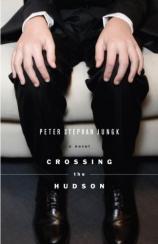
Crossing the Hudson
Translated from the German by David Dollenmayer
by Peter Stephan Jungk

List Price: $14.95
Pages: 232
Format: Paperback
ISBN: 9781590512753
Publisher: Other Press

Click here to buy this book from Amazon.com.
Click here to buy this book from Amazon.ca.


About This Book

A novel of uncanny and unsettling resonances, crafted by a true original.

Gustav Rubin, a fur dealer in Vienna, flies to New York to spend the summer with his wife and two young children on vacation in a lake house north of the city. When, after a long delay in Reykyavik, he arrives late at JFK, he is met by his opinionated, unrelenting mother, Rosa. They rent a car --- then, because she can’t stand the first one, Gustav exchanges it for a second, a Cadillac --- and set out for Lake Gilead. But Gustav loses his way, and son and mother end up on the wrong side of the river. Trying to find the right route north, they become trapped on the Tappan Zee Bridge in the traffic jam of all traffic jams --- a truck transporting toluene, a toxic distillate of petroleum and coal, has turned over --- and Gustav and Mother remain gridlocked high above the Hudson River. Gustav begins to think of his beloved father, a renowned authority on thermonuclear fusion and the consequences of technological and scientific developments, now eleven months dead. Then, in a surprising, highly original twist worthy of Kafka, both Gustav and Mother see the body --- “the colossal, golem-like fatherbody” --- of Ludwig David Rubin floating naked in the waters below.


Jungk gives a profound meditation on a Jewish family and its past, especially the lasting distorting effects on a son of a famous, vital father and a clinging, overwhelming mother, and of the differences between the generation of European intellectual refugees who arrived in the United States during the Second World War and the children of that generation.

top of the page


rgg_discuss.gif (1294 bytes)


1. Ludwig Rubin says that he, his wife, and their son Gustav are “Siamese triplets, attached at the head and the genitals. And behind us, the dead.” (Page 98) Ludwig says they are different from others because they have no other family and both he and his wife feel embarrassed and ashamed to be alive, after much of their family died during World War II. Do you believe this justifies the smothering nature of their relationship?

2. Water repeats in Crossing the Hudson --- the family baths, the beloved game played by father and son of throwing something in a stream and watching its journey. How does the bizarre fatherbody floating in the Hudson fit into this motif? Does it make psychological sense?

3. Gustav’s mother seems to take a sadistic satisfaction in putting down her son in every way, pretending not to recognize him as her son once when he was a child and giggling as she lists what she sees as his unattractive physical qualities. Do you think Gustav’s intense attachment to such a mother is masochistic? Do you think they love each other? What is the nature of their love?

4. The theme of the bridge goes throughout Crossing the Hudson, from the grandfather’s fear of crossing bridges, to Gustav’s love of bridges and his role as a bridge between his parents, the improvised lecture on the history of the bridges, the pilot’s feelings about the Tappan Zee. What are the varied meanings of the bridge in Crossing the Hudson?

5. Jewish guilt has famously been seen in a positive way as a strong sense of responsibility for others and the world and in a negative, if humorous way, as neurotic self-absorption. How do you think guilt of this kind and others plays out in the Rubin family?

6. How do you perceive Gustav’s choice to become an orthodox Jew? What might have been his motivations?

7. How do the eccentric characters they meet on the bridge provide comic relief, and serve as a counterpoint to Gustav’s mother?

8. How do Ludwig and his wife’s descriptions of their marriage differ? Gustav’s mother insists that no one had a marriage like theirs, certainly not Gustav and his wife. Do you think Gustav had a chance to have a successful marriage? Do you think he played a role in keeping his parents together?

9. Ludwig is horrified at his son’s choice of commerce over academic life, and lists what he considers to be the terrible professional choices of the children of numerous famous intellectual European émigrés. Ludwig states, “No one knows about this, but Jean Amery’s illegitimate daughter became a pedicurist. No wonder he committed suicide.” (Page 36) What do you think about the abyss in values between these generations?

10. Gustav says, “Whoever hasn’t slugged it out with his father, whoever has failed to defend himself will feel weak, incomplete, unmanly the rest of his life.” (Page 140) Do you think a son must rebel against his father to become a man?

11. Why is the airline pilot so extremely captivating to both Gustav and his usually very critical mother? How do she and her mother contrast to the two of them?

12. Do you think Gustav will be able to leave his father (and his mother) psychologically and save his life? How does the last image of his breaking away from his father strike you? What do you make of the last line of the book?

13. Do you find Crossing the Hudson comic? Which aspects of it were particularly amusing? What other tones make up the novel?

top of the page

Critical Praise

"Brilliantly blending reality and fantasy, Peter Stephan Jungk has written an intriguing novel...set forth with great wit and skill."
The National Jewish Post and Opinion


"A stirring meditation on family, faith and intellect…Jungk's beautiful, uncanny work breaks new ground in stories about fathers and sons."
Kirkus Reviews


"The details in Crossing the Hudson [give] this novel about the troubled generations of a post-War Jewish family a verisimilitude that draws readers in...Jungk's telling of the story is irresistible."
ForeWord Magazine


"Pleasantly bizarre…an unusual and inventive work…refreshingly strange."
Publishers Weekly


"Modern Jewish fiction has generally preferred to depict the Oedipal struggle. A strange, durable love --- not Roth’s sublimated hatred, not Kafka’s fear --- reigns in Crossing the Hudson...[a] journey taken far too infrequently by Jungk’s literary predecessors.."
Times Literary Supplement


"Jungk’s beautiful, surpassingly strange novel deals with emotions and faith... a treatment of father-son relationships that’s both deeply intimate and deeply intellectual.."
The Star Tribune
Read the full review here.

 
Facebook Fan Page  Follow us on Twitter


Add Your Guide to ReadingGroupGuides.com!

Bookreporter.com Bets On...: Books We're Betting You'll Love


Privacy Policy | Contact Us | Advertising | About Us

© Copyright 2001-2012, ReadingGroupGuides.com. All rights reserved.
The Book Report, Inc. • 250 West 57th Street • Suite 1228 • New York, NY • 10107
Ph: 212-246-3100 • Fax: 212-246-4640

Bookreporter.comReadingGroupGuides.comGraphicNovelReporter.comFaithfulReader.com
Teenreads.comKidsreads.comAuthorsOnTheWeb.com