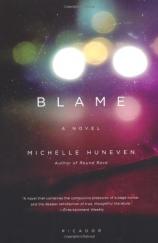
Blame
by Michelle Huneven
List Price: $15.00
Pages: 304
Format: Paperback
ISBN: 9780312429850
Publisher: Picador
A gripping novel of addiction and atonement, Blame raises provocative questions about the nature of shame and the healing potential of love. Waking up in jail after an alcoholic blackout, Patsy MacLemoore learns that she has run over and killed a mother and daughter in her driveway. A promising young history professor, she now goes to prison, where her life is a daily struggle—with retribution, with sobriety, and with her past relationships. After serving her sentence, she moves next door to an old boyfriend, attends AA, and begins to see her old life in a new way, becoming an exemplary ESL teacher and eventually marrying a much older man who shares her struggle with commitment to sobriety and a service-centered life. Then, in a stunning twist, Patsy makes a discovery that shatters all her fundamental beliefs and challenges the reader’s too-easy reverence for the truth.
top of the page

1. How were you affected by the shift from Joey’s world to Patsy’s? What does the closing line of part one (capturing Joey’s belief that her mother had not died but was alive and well at the Bellwood Hotel) say about the nature of hope, illusion, and grief?
2. How did your impressions of Patsy change throughout Blame? What cultural shifts does she experience over the novel’s two decades?
3. Were you surprised that Patsy was a high achiever in academia? What makes history an appropriately ironic field for her?
4. When you first read about Patsy’s sentencing, did you think it was just? Did prison seem like an appropriate consequence? Given today’s drunk driving laws and treatment options, does her sentence seem light or extreme?
5. Behind bars, what version of a family does Patsy find? How do her tenuous friendships there compare to her relationships with her mother, father, and brother?
6. Why is it noteworthy that Jane and Jessica Parnham were Jehovah’s Witnesses? How does Mark seem to feel about their faith?
7. What is Mark Parnham’s motivation in visiting Patsy? How are they affected by each other?
8. How do Patsy’s days with the firefighting crew serve as a metaphor for her life? What does Martin’s crayon drawing of a stick figure dousing burning trees (described near the end of part two) indicate about his understanding of Patsy?
9. What is ideal about the support provided by Brice and Gilles? How do Gilles and Patsy bond, and why do they become such good friends? What is the role of Alcoholics Anonymous in Patsy’s life?
10. Discuss the other approaches to sobriety Patsy experiences, including deprivation in prison; accountability to her parole officer, Jeffrey Goldstone; and sessions with Mrs. Silver. Why does she succeed in staying sober?
11. How is Patsy influenced by her ESL students? What common ground does she share with them?
12. How does Patsy’s marriage to Cal compare to her earlier relationship with Ian? What does she want in a relationship? How does her understanding of love change throughout the novel?
13. At the end of chapter 26, Cal tells Patsy that no matter what the truth is about the Parnham deaths, “what happened got you to where you needed to be.” Ultimately, what did it take for her to get sober?
14. Much of Patsy’s adult life has been spent in atoning for the deaths of Jane and Jessica Parnham. What were the various aspects of her atonement? Were any aspects regrettable or unnecessary?
15. How did the revelations about Bill Hogue transform your understanding of the novel? What does his crime indicate about the way society handles retribution and other morality-based “debts”?
16. Discuss the novel’s title. Why was Patsy so willing to accept the blame for the accident? How much blame is she willing to relinquish? Where should the blame for the Parnham deaths lie?
17. How does Blame amplify the themes explored in Michelle Huneven’s previous novels? What are the hallmarks of her storytelling style?
top of the page

"Yes, this book is dark... But also funny and full of life... This book is a pleasure, on every level."
Bookforum
"Michelle Huneven’s new novel, Blame, is a lovely, shimmering tour de force, full of an astonishing sense of the beauty of the world, the inestimable complexity of moral consequences, and the bright pleasures of Huneven’s prose. Read it."
Roxana Robinson, author of Cost
"In Blame, a guilty protagonist strives for the good and achieves the beautiful --- and, eventually, the truth. Huneven’s supple, world-loving prose elevates small gestures into redemptive acts and everyday objects into restorative gifts, rewarding the reader on every page."
Janet Fitch, author of White Oleander and Paint It Black
"Brilliant observations, excellent characters, spiffy dialogue and a clever plot keep readers hooked, and the final twist turns Patsy’s new life on its ear. Huneven’s exploration of misdeeds real and imagined is humane, insightful and beautiful."
Publishers Weekly, Starred Review