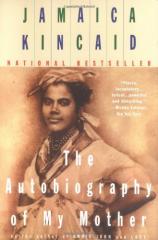
The Autobiography of My Mother


About the Book
The Autobiography of My Mother



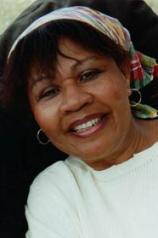
Few writers have gained such acclaim and following as quickly as Jamaica Kincaid. Her five books have amazed and stunned both critics and readers, propelling them into unfamiliar territory with a unique prose likely to leave a memorable impression forever. Her style of writing, similar to a poet's musical understanding of the nature of things, sets her apart from other authors. Kincaid draws in readers with frank and often horrific scenes, never shying away from revealing what we fear most. She does so without condemnation, instead presenting characters and their lives matter-of-factly. Her unpretentious storytelling probes into dark corners some would rather leave undisturbed.
Her novels and short stories suggest an ongoing fictional autobiography. Her first book, At the Bottom of the River, is a collection of short stories in which Caribbean childhood is explored, sensuality and fierce emotion displayed, and family relations and death experienced. Annie John, a coming of age tale about a young girl growing up in Antigua, Kincaid's hometown, ends with the 17-year-old protagonist leaving the island for good, on her way to study to be a nurse in England. Her one nonfiction book, A Small Place, is a piercing look at tourism and colonialism inspired by a visit to Antigua nineteen years after she left the island. Kincaid boldly writes about the effects of one powerful government over a smaller, more dependent one. Her anger is evident as she presents the history of an island colonized over a period of time. Lucy tells the story of a slightly older woman working as a nanny in the States, just as Kincaid did.
The Autobiography of My Mother may be regarded as another chapter to this ongoing fictional autobiography. This powerful and haunting tale of a child growing up in Dominica continues to explore the power of colonialism and oppression. The narrator takes us through her life, which was marred from the beginning by the death of her mother during childbirth. Alone at the end of her life, she tells us the story of her loss and longing, making her another one of the sorrowful and hard-hearted Caribbean women who populate Kincaid's literary universe. Kincaid has focused her work on the lives of mothers and daughters, sexuality, power, and the end result of colonialism on small islands, revealing a history of suffering and humiliation and the demise of a civilization. She uses both her driving rage and passion to write about how politics and history, private and public events, are interchangeable with one another. We are touched with her seemingly effortless ability to make us one with the characters in her novels, to believe in what they believe, and to feel what they are feeling. It is no wonder that Kincaid became one of the most applauded authors of our time.
Kincaid's third novel is a haunting, disturbing story of one woman's journey through a cruel and loveless life on the Caribbean island of Dominica. Narrated by the 70-year-old Xuela Claudette Richardson, it reveals a world divided by the strong and the weak, the rich and the poor, and the powerful and the powerless. Xuela's mother, orphaned, dies while giving birth to her, leaving Xuela motherless and without a connection to her past. Abandoned by her father with his laundress until the age of seven, she finds herself living a solitary life without love or protection. Xuela is part Carib, a dying race on the island, and part Scottish and African. Her mixed background only contributes to the oppression forced under the English colonization. Xuela becomes dependent on no one but herself, and is left to create herself from herself--without a background from her mother or father. Despite those who wander in and out of her life, she remains isolated from them, resisting friendship, cruelty, and oppression. At 15 she is sent to live with her father's friends the LaBattes, to continue her education. She has her first sexual experience with M. LaBatte and discovers a world of sensual pleasure which she freely partakes in and enjoys. Discovering that she is pregnant, she aborts the child, leaving her barren for the rest of her life. She is unwilling to give life, unwilling to belong to anyone or have anyone belong to her. She does allow herself to love Roland, a stevedore who steals bolts of Irish linen for her to make dresses from, but abandons the relationship and the passion she felt for him. Xuela eventually marries the English doctor, Philip Bailey, after his first wife poisons herself. Regardless of his love for her, she is aware of the position she was born into, that of the oppressed and defeated. Alone at the end of her life, she waits for the inevitable--death, the only certainty she will have to face. After a life formed by the loss of her mother, she now faces the unknown without fear. At this vantage point, Xuela tells us about the person she never was allowed to be and the person she never allowed herself to become.
The Autobiography of My Mother extends the themes which characterize Kincaid's work-mothers and daughters, sexuality and power, and the legacy of colonialism to those born in places like Dominica. She writes to make us feel uncomfortable and to experience the plight of her subjects. The honesty of her prose is brutal, the tale stirring and beautiful. This is a story of one person's resistance and her survival.


The Autobiography of My Mother
- Publication Date: January 1, 1997
- Paperback: 240 pages
- Publisher: Plume
- ISBN-10: 0452274664
- ISBN-13: 9780452274662