Reading Group Guide
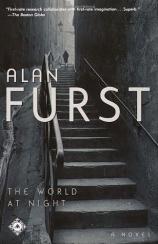
The World at Night
A Novel
by Alan Furst

List Price: $11.95
Pages: 288
Format: Paperback
ISBN: 0375758585
Publisher: Random House

Click here to buy this book from Amazon.com.
Click here to buy this book from Amazon.ca.


About This Book


Paris, 1940. The civilized, upper-class life of film producer Jean Casson is derailed by the German occupation of Paris, but Casson learns that with enough money, compromise, and connections, one need not deny oneself the pleasures of Parisian life. Somewhere inside Casson, though, is a stubborn romantic streak. When he’s offered the chance to take part in an operation of the British secret service, this idealism gives him the courage to say yes. A simple mission, but it goes wrong, and Casson realizes he must gamble everything—his career, the woman he loves, life itself. Here is a brilliant re-creation of France—its spirit in the moment of defeat, its valor in the moment of rebirth.

top of the page


rgg_discuss.gif (1294 bytes)


1. If you asked Jean Casson to define the word honor, what would he say? Which, if any, of the following would be included: Loyalty to friends? Loyalty to country? Loyalty in love? Loyalty to self?

2. After his meeting with Simic, in which he is first offered the chance to work for British intelligence, Casson thinks to himself, "You think you know how the world works, but you really don't. These people are the ones who know how it works.". How would you say Casson's understanding of the world has changed by the novel's conclusion? Has he become one of the people who know how the world "really works"?

3. To what extent is Casson culpable for the death of his friend Langlade?

4. During the early years of the German Occupation of France, a common question, which Langlade poses to Casson, was this: "If your barber cuts hair under the Occupation, does that make him a collaborator?" How would you respond? What would you have done in similar circumstances?

5. Alan Furst has said that his books are written from the point of view of the nation where the story takes place. Describe the French point of view as it appears in The World at Night.

6. Critics praise Furst's ability to re-create the atmosphere of World War II-era Europe. What elements description make the setting come alive? How can you account for the fact that the settings seem authentic even though you probably have no firsthand knowledge of the times and places he writes about?

7. Furst's novels have been described as "historical novels", and as "spy novels." He calls them "historical spy novels." Some critics have insisted that they are, simply, novels. How does his work compare with other spy novels you've read? What does he do that is the same? Different? If you owned a bookstore, in what section would you display his books?

8. Furst is often praised for his minor characters, which have been described as "sketched out in a few strokes." Do you have a favorite in this book? Characters in his books often take part in the action for a few pages and then disappear. What do you think becomes of them? How do you know?

9. At the end of an Alan Furst novel, the hero is always still alive. What becomes of Furst's heroes? Will they survive the war? Does Furst know what becomes of them? Would it be better if they were somewhere safe and sound, to live out the war in comfort? If not, why not?

10. How do the notions of good and evil work in The World at Night? Would you prefer a confrontation between villian and hero? Describe Furst's use of realism in this regard.

top of the page

Critical Praise

"First-rate research collaborates with first-rate imagination....Superb."
The Boston Globe


"[The World at Night] earns a comparison with the serious entertainments of Graham Greene and John le Carré....Gripping, beautifully detailed...an absorbing glimpse into the moral maze of espionage."
—Richard Eder, The Los Angles Times


"[The World at Night] is the world of Eric Ambler, the pioneering British author of classic World War II espionage fiction....The novel is full of keen dialogue and witty commentary....[T]hrilling."
—Herbert Mitgang, Chicago Tribune


"With the authority of solid research and a true fascination for his material, Mr. Furst makes idealism, heroism, and sacrifice believable and real."
—David Walton, The Dallas Morning News

 
Back to top.   


Privacy Policy | Contact Us | Advertising | About Us

© Copyright 2001-2008, ReadingGroupGuides.com. All rights reserved.