Reading Group Guide
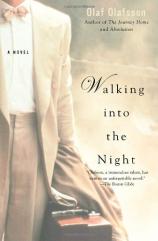
Walking Into the Night
by Olaf Olafsson

List Price: $13.95
Pages: 272
Format: Paperback
ISBN: 1400034809
Publisher: Anchor

Click here to buy this book from Amazon.com.
Click here to buy this book from Amazon.ca.


About This Book


As butler to William Randolph Hearst at San Simeon castle, Christian Benediktsson lives quietly, almost invisibly. He completes his tasks efficiently and with aplomb, catering to the whims of the volatile Chief and overseeing the running of the hectic household. Privy to the goings-on of the celebrity guests who visit as well as to Hearst's intimate relationship with his mistress, the actress Marion Davies, he is the picture of discretion. An extremely private man, those around him know nothing of him or his life. And so it is in his thoughts and in unsent letters to his wife back in Iceland that we witness the unraveling of his former life, which began when he abandoned her and their children for an actress in New York City. Once a successful businessman, he erases his past and himself after a sudden tragic death and his financial ruin, the result of a jilted lover's vengeance. Walking into the Night is a stunning portrait of a man wrestling with guilt and secret passions.

top of the page


rgg_discuss.gif (1294 bytes)


1. Rather than simply following Christian's life chronologically, Walking into the Night is written in the third person narrative and interspersed with flashbacks told through personal letters. How does this point of view affect the reader's perception of the story? Why doesn't Christian ever send the letters?

2. What is the function of Elisabet's occasional narration? Does her perspective change your view on anything --- Christian, Elisabet herself, or the situation? How does hearing her side of the story affect the reader?

3. Geography plays a crucial part of Walking into the Night, whether it is a small fishing village in Iceland, the capital Reykjavik, New York City, or the Southern California estate of San Simeon. Describe each place and its importance and role in the context of the entire novel. What are the symbolic differences? How do the various places affect Christian? Does he transform as he travels from place to place? Where is he most comfortable and content?

4. The story takes place in Europe and America in the 1920s and 30s, before and after the Great Depression and between the wars. How does the time period affect the story and the characters? Could Christian's life experiences happen in the late 1990s and at present, or are they particular to a certain age?

5. Discuss the master/servant relationship between Hearst and Christian. Compare and contrast the two men. Is one a foil to the other? How do the two men change or grow over the course of the novel? Does Christian's sense of self change because of his subservient relationship with Hearst?

6. What does Christian represent? What is the significance of his name? Is he a sympathetic character? An everyman? A hero?

7. Birds are a recurring motif throughout Walking into the Night. What are the various types of birds that appear in the novel? What do they symbolize, and what is their significance to the protagonist and to the novel? Why is the final sentence of the novel about a bird?

8. Of one early photograph of himself, Christian says, "Somewhere behind the dignified expression in the photograph . . . lurked a flaw that could ruin everything" [p. 123]. How do photographs expose Christian? What is the importance of photographs in the novel?

9. The theme of betrayal is prominent in Walking into the Night. What types of betrayal occur? What are the causes and consequences of them? Are the betrayals justified? Is anyone innocent? Does guilt play a role or haunt any of the characters?

10. What kinds of captivity and freedom does the author explore in Walking into the Night? Is Christian free? If not, what stifles or prevents him from being free? Other people, circumstances, his own personality traits? Is Hearst, one of the richest men in America, free?

11. How has Christian's rural Icelandic upbringing, community, and his family's poverty affected his personality and desires? What does he want from life, and what compromises has he made?

12. What sorts of relationships does Christian have with the three women in his life-Elisabet, Klara, and Marion Davies? What binds Christian to each woman? How and why does each woman need and depend on Christian? How do the individual women impact Christian and his decisions?

13. What are Christian's ideas of familial and romantic love? Do his definitions of family and love evolve? What determines and/or undermines his attachments to the women in his life? If you've read Olafsson's earlier fiction, how do Christian's romantic and familial relationships compare or contrast with those in The Journey Home or Absolution?

14. Early in the novel, Christian writes, "I never gave myself time to let my thoughts wander. I knew that if I did, the memories would flood over me" [p. 22]. And later, "The nights are the hardest, when silence surrounds me and there's nothing to deflect the memories" [p. 24]. Why doesn't he want to confront his memories? Are his unsent letters to Elisabet a way of remembering, accepting, apologizing for, or controlling the past?

15. Do you trust the memories that are relayed through Christian's letters? Does he? He describes his memoirs/letters as an explanation to Elisabet-"I haven't forgotten my promise to try to explain what happened" [p. 11]. Does the reader accept this even though Christian never sends the letters to her? Why or why not?

16. Discuss the significance of the title and the ending. Why does the novel conclude this way? What do you think is in the future for Christian?

top of the page

Critical Praise

"Memorable. . . . Olafsson is a master puppeteer, violently pulling the strings of memory, desire and fate, even as the words flow calmly and sensuously from his pen."
Los Angeles Times Book Review


"Quietly moving. . . . An evocative tale of grief and hope."
The New York Times Book Review


"Sublime. . . . Olafsson is a gifted dramatist."
The Denver Post


"Exquisite. . . . Olafsson delivers the story like our minds deliver memory-in stretches of calm, in flashes of intensity, with jagged edges of remorse, in self-protective remove. . . . We turn the pages because we are entranced by the pristine quality of the prose."
Chicago Tribune

 
Back to top.   


Privacy Policy | Contact Us | Advertising | About Us

<© Copyright 2001-2008, ReadingGroupGuides.com. All rights reserved.