Reading Group Guide
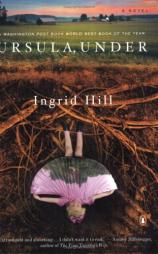
Ursula, Under
by Ingrid Hill

List Price: $14.00
Pages: 496
Format: Paperback
ISBN: 0143035452
Publisher: Penguin

Click here to buy this book from Amazon.com.
Click here to buy this book from Amazon.ca.


About This Book


In Michigan's Upper Peninsula, a dangerous rescue effort draws the ears and eyes of the entire country. A two-and-a-half-year-old girl has fallen down a mine shaft --- "the only sound is an astonished tiny intake of breath from Ursula as she goes down, like a penny into the slot of a bank, disappeared, gone." It is as if all hope for life on the planet is bound up in the rescue of this little girl, the first and only child of a young woman of Finnish extraction and her Chinese-American husband. One TV viewer following the action notes that the Wong family lives in a decrepit mobile home and wonders why all this time and money is being "wasted on that half-breed trailer-trash kid."

In response, the novel takes a breathtaking leap back in time to visit Ursula's most remarkable ancestors: a third-century-B.C. Chinese alchemist; an orphaned playmate of a seventeenth-century Swedish queen; Professor Alabaster Wong, a Chautauqua troupe lecturer (on exotic Chinese topics) traveling the Midwest at the end of the nineteenth century; her great-great-grandfather Jake Maki, who died at twenty-nine in a Michigan iron mine cave-in; and others whose richness and history are contained in the induplicable DNA of just one person --- little Ursula Wong.

Ursula's story echoes those of her ancestors, many of whom so narrowly escaped not being born that her very existence --- like ours --- comes to seem a miracle. Ambitious and accomplished, Ursula, Under is, most of all, wonderfully entertaining --- a daring saga of culture, history, and heredity.

top of the page


rgg_discuss.gif (1294 bytes)


1. Although Ingrid Hill sets much of Ursula, Under in distant historical times, she writes almost all of the novel in the present tense. How might this choice affect the reader's response to her narrative?

2. Many of the figures in the historical chapters of Ursula, Under are potentially rich enough to be the heroes of their own separate novels. Which of these characters do you think would be the best subject for a complete book, and why?

3. A sparkling scene takes place in "The Minister of Maps" when Ming Tao challenges Father Josserand to explain the mysteries of Christianity to her. Although the scene illustrates the depth of Josserand's humor and humanity, it also reveals his willingness to entertain blasphemous ideas. What are the most important questions raised about religion, and about Josserand's character, in this story?

4. Ursula, Under is a book laden with seemingly senseless catastrophes. A priest is murdered in his sleep for having performed a baptism. Children are trampled to death at a Christmas party. Annie is crippled by a hit-and-run driver. A pregnant woman drowns in a frozen pond. Does Hill appear to find moral or cosmic significance in suffering? If so, what is that significance?

5. The sexual pairings and circumstances by which the bloodlines are carried forward in this novel often anything but conventional. There is a general scarcity of long, happy, monogamous unions. What does the unusual quality of the relationships contribute to Hill's novel?

6. The historical chapters of Ursula, Under are frequently concerned with the struggles of women to achieve control and dignity in their lives despite social forces that, left unchallenged, would render them passive and dependent. Can Ursula, Under be classified as a feminist novel, and, if so, what are the features of Hill's idea of feminism?

7. Ingrid Hill frequently reminds us of the many things that her characters do not know; she comments repeatedly on their inability to remember the past and the impossibility of foreseeing the future. Why do you think she chose to place such powerful emphasis on states of not knowing?

8. In some ways, Ursula, Under can be thought of as a protracted response to Jinx Muehlenberg's question, "Why are they wasting all that money and energy on a goddamn half-breed trailer-trash kid?" How successfully does the novel respond to that question? Are the stories submerged in a person's hereditary past a persuasive reason for caring about that person? Are we truly willing to embrace the premise that every person is, as Hill says with reference to Ursula, "priceless . . . to the planet"?

top of the page

Critical Praise

"[Hill] astounds with her ability to meld simply and beautifully told stories, stories with an air of fable about them."
The Washington Post Book World


"It's a divine view of a family tree... Ride along to the end of this merry, generous book."
Time Out New York


"Hill's stories lure-the characters are vital, clever, detailed, appealing; I wolfed the book down like a bowl of cookie dough."
The San Diego Union-Tribune


"Ursula, Under never ceases to surprise and compel. What a grand and daring book."
—Brady Udall, author of The Miracle Life of Edgar Mint

 
Back to top.   


Privacy Policy | Contact Us | Advertising | About Us

© Copyright 2001-2009, ReadingGroupGuides.com. All rights reserved.
The Book Report, Inc. • 250 West 57th Street • Suite 1228 • New York, NY • 10107
Ph: 212-246-3100 • Fax: 212-246-4640

Bookreporter.comReadingGroupGuides.comGraphicNovelReporter.comFaithfulReader.com
Teenreads.comKidsreads.comAuthorsOnTheWeb.comAuthorYellowPages.com