IndieBound Independent Bookstores

Barnes & Noble


Loading
Reading Group Guide
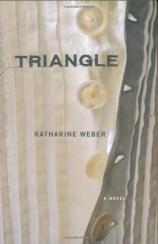
Triangle
by Katharine Weber

List Price: $23.00
Pages: 256
Format: Hardcover
ISBN: 0374281424
Publisher: Farrar, Straus and Giroux

Click here to buy this book from Amazon.com.
Click here to buy this book from Amazon.ca.


About This Book

Much has been written about the notorious 1911 Triangle Shirtwaist fire that took the lives of at least 146 garment workers, most of them women. But Triangle, Katharine Weber’s mesmerizing novel, brings a unique vision to the history and recollections surrounding that event. At the center of the story is Esther Gottesfeld, who at age 106 is the last living survivor of the gruesome tragedy. Her testimony was a crucial element in the criminal trial that ensued. When Esther dies, her few belongings raise new questions about her story, and two women find themselves at odds while trying to reconstruct the truth.

Esther’s granddaughter, Rebecca Gottesfeld, a scientist, has been raised to believe that chance enabled Esther to escape while her sister and fiancé perished in the sweatshop blaze. After Rebecca receives a call from the feminist historian Ruth Zion, she is both resentful and curious to learn that her grandmother had granted Ruth a series of interviews. Ruth’s research on other Triangle workers proposes disturbing alternative possibilities about the nature of Esther’s suffering and survival. With her partner, George Botkin, an ingenious composer, Rebecca begins to sift through new artifacts, wondering whether the discrepancies in her grandmother’s stories were caused by ordinary human fallacy, or are the consequence of secret histories having been concealed in the remnants of an industrial inferno. The historian, the scientist granddaughter, and the musician each give voice to an essential, though sometimes conflicting, aspect of the fire and its repercussions.

Leading us to consider how we tell our stories, how we hear them, and how history is forged from unverifiable truths, Triangleis a brilliant ode to the memorial process itself, and to the lives lost on that terrible day.

top of the page


rgg_discuss.gif (1294 bytes)

1. Reread the poem by Robert Pinsky that opens the novel. What do you make of the way the poem blends past and present? In what way do various forms—poetry, journalism, scholarly books, musical compositions, fiction—complement one another in documenting history? What echoes did you notice between Pinsky’s poem and the Triangle Oratoriowith which the novel concludes? What similar reverberations occur throughout the novel?

2. What assumptions did you make about Esther after reading the recollections that form the first chapter? How did your perception of her shift throughout the novel?

3. In your mind, what do George’scompositions sound like? What was the effect of reading about the medical aspects of his music? In what ways does this mesh with the legacy of loss in Rebecca’s ancestry?

4. What are the benefits and shortcomings of Rebecca’s DNA research? How does it affect her relationship with George?

5. What does George’s failure to have a cell phone indicate about his character and sensibility? In what way does George’smusic weave science and technology into traditional and classical forms?

6. In the interview transcript featured in chapter four, what new details emerged that you had not noticed before in Esther’s initial retelling of the Triangle fire? What defines her immigration story?

7. The profile of George, comprising chapter five, includes his own take on the cadences that inspire his music. What does this interview, alongside the one between Ruth and Esther, tell us about the various ways we view our own lives? If areporter were to interview you about a significant incident in your life, what facts would have to be conveyed in your own words? What experiences would a reporter likely misinterpret?

8. What was it like to finally “hear” Ruth’s voice in chapter eight? What conclusions had you drawn about her before she was given a voice in the novel? What is Ruth right about? What are her shortcomings? Why are Esther and Rebecca so resistant to viewing the fire through the lens of feminism?

9. Chapter eight opens with the inaccurate news story that reports Esther’s death. What is the effect of her death date and its proximity to 9/11? What parallels exist between the Triangle tragedy and 9/11?

10. In chapter nine, Rebecca tells her therapist about the few memories she has of her father, realizing “she believed that her father wouldn’t have died in the car accident along with her mother, that they would both be alive today if it were not for the Triangle fire. But Esther herself would have died years ago had she not been so busy surviving the fire so effectively.” What universal qualities exist in this line of thinking? What is it like to be a survivor? What patterns does the mind discover in the randomness of tragedy? Was the death of Rebecca’s parents “random”? Or the death of Morris Jacobs, in a fire no less?

11. How did you interpret Esther’s habit of wearing eyeglasses that didn’t perfectly correct her vision? What did you make of her comment, paraphrased by Rebecca in chapter thirteen, that “it was so she could see the world a little blurry on purpose”?

12. Why didn’t Esther spend any of the money she received secretly after the fire? How would she have responded to the Triangle Oratorio?

13. What causes the shift in Rebecca and George’s relationship, leading to marriage and a child?

14. How much knowledge of the Triangle Waist Company fire did you have before reading Triangle?What details about the fire surprised you? What is the effect of reading a book that blends historical fact with fiction?

15. Had you pieced together the truth by the time you reached the novel’s closing scenes, when the realities of Esther’s and Pauline’s experiences at the factory are revealed? What choices would you have made in Pauline’s situation?

16. What are the key events in your family history? What discrepancies exist in the various accounts of it? To what do you attribute those discrepancies? Are there artifacts such as letters, legal documents, or family photos like the ones in the novel that could reveal family secrets or hidden truths if examined more closely?

top of the page

Critical Praise

“Katharine Weber has always been a brilliant and ingenious formalist; at last she has found a subject deep and durable enough to bear the jeweled precision of her gaze. Here one of our most irresistible writers meets one of the most immovable events of our history. Triangleis an incandescent novel.”
Madison Smartt Bell, author of The Stone That the Builder Refused

 
Facebook Fan Page  Follow us on Twitter


Add Your Guide to ReadingGroupGuides.com!

Bookreporter.com Bets On...: Books We're Betting You'll Love


Privacy Policy | Contact Us | Advertising | About Us

© Copyright 2001-2013, ReadingGroupGuides.com. All rights reserved.
The Book Report, Inc. • 250 West 57th Street • Suite 1228 • New York, NY • 10107
Ph: 212-246-3100 • Fax: 212-246-4640

Bookreporter.comReadingGroupGuides.comGraphicNovelReporter.comFaithfulReader.com
Teenreads.comKidsreads.comAuthorsOnTheWeb.com