Reading Group Guide
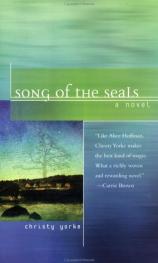
Song of the Seals
A Novel
by Christy Yorke

List Price: $14.00
Pages: 320
Format: Paperback
ISBN: 0425188248
Publisher: Berkley

Click here to buy this book from Amazon.com.
Click here to buy this book from Amazon.ca.


About This Book


Her novels have been called "haunting" (Booklist), "evocative" (Kristin Hannah), and "beautiful" (Luanne Rice). With Song of the Seals, Christy Yorke offers a compelling novel of life, loss, and the bittersweet joy of loving with one's whole heart.

Kate Vegas has fostered several children over the years, saving them from delinquency and helping them heal from the miseries they've endured. Kate also finds healing in these arrangements, some relief from the pain she's felt since that terrible day years ago when her own son was taken from her.

Now her latest charge, Wayne, almost eighteen, is sure he will find salvation in Seal Bay—one of the last of the old Northern California fishing towns. With little left to keep them rooted, Kate and her widowed father, Gerald, join him, settling in a strange, superstitious place where tales are told of sixty-foot sea monsters; where women tremble on the edge of madness when their men are at sea, the fog rolls in, the laurel tree weeps, and the seals cry out in the harbor. Seal Bay is both terrifying and wonderful for Wayne, for Kate, and for Gerald; and teetering on the edge of tragedy, they all discover the miracle of love.

Filled with wisdom about the price love demands and the payoff it provides, Song of the Seals is an unforgettable journey to an unforgettable place—and a rich, rewarding novel from an exciting new literary voice.

top of the page


rgg_discuss.gif (1294 bytes)


1. "The only ghosts she believed in were the ones kept alive by devotion," Yorke writes of Kate Vegas. What do we learn about her character from this early description? Does she still think this at the end of the story? Why or why not?

2. How does the central event of Kate's life—the loss of William—alter her beliefs? By the end of the book, has she reconciled her mother's insistence that "Joy is in pursuit of us all" (p. 46) with her own professed lack of faith? What influences her decision?

3. Contrast the physical details of Seal Bay at Kate, Gerald, and Wayne's arrival with the Seal Bay at the end of their story. How does the environment impact their lives? Did they changed the town—or did the town change them? Or both? Discuss.

4. "Sorrow had once seemed lodged in a loftier atmosphere than anger or even joy, but over time she had realized it was no different. As with anything, it snapped like a frayed cable if you put too much weight on it, if you hung your whole life on its thread," (p.5) Kate Vegas says. How do the Dodson daughters, Crazy Mary, and Kate herself illustrate this idea? What about the men? Do the events of the novel suggest that there is an alternative path away from grief? Discuss.

5. What does Kate's artwork—paintings which layer image upon image, the seen and the unseen—reveal about her personality?

6. In Seal Bay, a weeping laurel tree brings death to sailors and a blind old woman offers spells for the living. At the same time, a "sea monster" is conjured from PVC pipe and "treasure" appears in the sand when a small boy and his mother most need it. Are some kinds of magic more "real" than others? Do you think the author is trying to say something about the ‘supernatural,'—or about the way people deal with what they cannot understand? Discuss.

7. Romantic relationships blossom for almost every major character in the book: Kate and Ben, Jenny and Wayne, Gerald and Gwen, Trudy and Zachary, and Nicole and William. Is the nature of each love affair different? Where does each derive its power?

8. "Love is not something you get over," Mary insists (p. 300). "Why would you even want to?... why can't we wake up in our beds at night, sure he came to us while we were sleeping? I'm telling you, life gets lonely fast enough. Why not share it with a ghost or two?" Compare this perspective on ‘ghosts' with Kate's (see question 1). What does the novel ultimately say about the price of love—and the refusal to let it go?

9. Why do you think the author chose to end the novel the way she did from the point of view of the old dog? Discuss.

top of the page

Critical Praise

"In Song of the Seals, Christy Yorke writes about matters of the heart with pure poetic justice. A lyrical and spellbinding writer. An exquisite storyteller."
—Deborah Smith

 
Back to top.   


Privacy Policy | Contact Us | Advertising | About Us

© Copyright 2001-2008, ReadingGroupGuides.com. All rights reserved.