Reading Group Guide
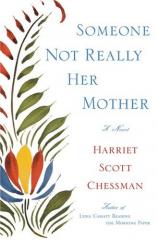
Someone, Not Really Her Mother
by Harriet Scott Chessman

List Price: $21.95
Pages: 176
Format: Hardcover
ISBN: 0525947930
Publisher: Dutton Adult

Click here to buy this book from Amazon.com.
Click here to buy this book from Amazon.ca.


About This Book


The captivating story of a contemporary American family, in which three generations of women confront the intricacies of memory, geography, and motherhood, from the lauded author of Lydia Cassatt Reading the Morning Paper.

As Hannah's memories of her 1940 escape to England from war-torn France come to the foreground of her consciousness, her memory of her more recent American life, including her relationships with her daughter and granddaughters, is almost erased. Her daughter, Miranda, attempts to bring her mother into the present and the daily activities of family life, yet finds herself instead pulled into Hannah's unresolved past. Miranda's daughters confront the shadows of history in their own ways. Fiona, content with her life as a new mother, tries to ignore the ghostly presence of Hannah's family, who perished in the war, while Ida clings to Hannah's revelations as if they form a lifeline. Facing the mystery of Hannah's unspoken memories of grief, each woman must ask how well anyone can know the inner life of another person, even of someone one cherishes.

top of the page


rgg_discuss.gif (1294 bytes)


1. The title Someone Not Really Her Mother implies a number of meanings. How do you interpret it?

2. Despite its quiet, understated, poetic qualities, Harriet Chessman has created a very suspenseful novel. Examine the ways in which she achieves this.

3.How does Hannah Pearl's loss of memory and inability to find the right words enhance the narrative? How does language play a crucial role in this novel?

4. We see through Hannah how the trauma experienced by the generation who grew up during the Second World War affected the second and third generations. How has Miranda been affected by her mother's past? Ida and Fiona have also been affected by their grandmother's past but in different ways. How do you explain these differences?

5. How do the different points of view-Hannah's, Miranda's, Fiona's and Ida's-enrich the story? Look, for example, at the incident of Ida hiding from her grandmother told from three different perspectives. BR>
6. The novel is written in the present tense. Why do you think that Harriet Chessman chose this tense? What does it allow her to do?

7. What does the author suggest about the life of the artist through Ida? (p41) How do Ida's and her grandmother's lives parallel each other?

8. On page 109, Hannah says, "Je suis tellement desolee," and this feeling of being so very sorry, too sorry for words fills this bright air now..." Why does Hannah feel so sorry?

9.At the beginning of her novel, Harriet Chessman includes a quote by Virginia Woolf from To the Lighthouse, "How then, she asked herself, did one know one thing or another thing about people, sealed as they were? Only like a bee, drawn by some sweetness or sharpness in the air intangible to touch or taste, one haunted the dome-shaped hive, ranged the wastes of the air over the countries of the world alone, and then haunted the hives with their murmurs and their stirrings; the hives, which were people."

How does this quote relate to the central theme of the novel?

10. Harriet Chessman's novel is filled with wonderful imagery. For example, on page 3, we are told that Hannah Pearl notices a "young woman with hair the color of honey," echoing the image of the bee in the quote by Virginia Woolf, given in the beginning of the novel. This image is picked up again on page 15, when Hannah remembers another girl with hair "The color of honey," and remembers that this girl is Miranda. Why is imagery so important in this novel? Can you find any other significant images?

11. On page 131, Hannah says to Miranda, "Maman bought me shoes...to go away in." We are told that "The hot day grows cold. All Mir can think is; here it is again, in this sunlight, on this sidewalk-history. The story unfolding constantly, in circles, the thing you always think you can outrace, only you can't outrace it, because it's here. You're in an ordinary place, just walking along, oblivious, and then you blink, and here again is the day cut out of time-one that glints like a jagged mirror, painful each time you touch one of its poignant edges. New bits, once in a while, bring surprisingly fresh pain." Is this passage central to the novel? How do you interpret it? (It also suggests through the word "circles" the image of the bee again.)

12. Do you agree with Miranda when she says, "Could it be that her mother's deepest sorrow is about something more even than the invasion by the Germans, or the Occupation, or what came after? That it's about something in addition to the history she had to breathe and move in, day to day, minute to minute-something in addition to her grievous loss? Could it be that, at the core, it's a question of love? Could it be this ordinary a logic, yet misguided? Emma was kept, proving that Emma was loved. Hannah was sent to England, proving that Hannah was not loved."

13. Why is it significant that Hannah Pearl now speaks French after not speaking it for so many years?

14. What happened to Russell? How did he die?

15. The novel is divided into different sections with titles; Once, Something; Dove, Thy Eternal Summer; Baby Sitter; etc. Why do you think the author chose to do this?

16. The novel ends with Hannah and her grandson, Seamus. Why is this the perfect place to end the novel?

top of the page

Critical Praise

"In deft, impressionistic prose, Harriet Scott Chessman has given us an elegant, haunting novel of memory and its loss, flickering like a beautiful dying candle flame, full of private heroisms. So true, so true."
—Susan Vreeland, author of Girl in Hyacinth Blue


"With a poet's eye for luminous detail and a mother's heart, Chessman traces her character's erratic path through unspeakable grief and insistent hope."
—Christina Schwarz, author of Drowning Ruth

 
Back to top.   


Privacy Policy | Contact Us | Advertising | About Us

© Copyright 2001-2009, ReadingGroupGuides.com. All rights reserved.
The Book Report, Inc. • 250 West 57th Street • Suite 1228 • New York, NY • 10107
Ph: 212-246-3100 • Fax: 212-246-4640

Bookreporter.comReadingGroupGuides.comGraphicNovelReporter.comFaithfulReader.com
Teenreads.comKidsreads.comAuthorsOnTheWeb.comAuthorYellowPages.com