Reading Group Guide
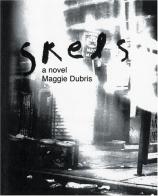
Skels
by Maggie Dubris

List Price: $14.95
Pages: 256
Format: Paperback
ISBN: 1932360255
Publisher: Soft Skull Press

Click here to buy this book from Amazon.com.
Click here to buy this book from Amazon.ca.


About This Book


Lyrical, violent, and vibrantly drawn, Skels is a portrait of the urban underworld from a paramedic's point of view. The story is based on an unusual idea: What would happen if the ambulance world was permeated with the works of past authors, and the homeless patients (the "skels") carried the consciousness of the writers? What would a paramedic do if she met a great poet, dirty and covered with lice, and was granted the chance to save him - not from dying but from his own life? A funny, gritty urban thriller, Skels pits corrupt cops, acid tripping holographers, drunken ambulance drivers and punk rock drag queens against this surreal literary environment, portraying a New York City of 1979 rich with an ancient truth that is all but invisible from the outside.

Maggie Dubris worked full time as a 911 medic in New York City for almost 20 years. Drawing on these experiences, she connects the poetry and intensity found in the works of Jack London, Walt Whitman, Rimbaud, and Mark Twain to the CBGB and Maxwell's Kansas City scene and the harrowing stories of NY's poorest poor. In Skels, Dubris shares what she saw: the magic and humor of haunted world that survives to this day inside our own.

top of the page


rgg_discuss.gif (1294 bytes)


1. The author has stated, "When I wrote Skels, I was thinking about what would happen if the ambulance world was permeated with the works of past writers, and the skels were carrying the consciousnesses of the writers themselves." How does idea this play out in the book? Do you see specific writers in specific characters? If so, which ones?

2. How does humor function in the book? In your opinion does it function to enhance or detract from the book's social commentary and literary themes?

3. How is a sense of place transmitted in Skels? How much of a sense of magic or disorientation do you feel Dubris intentionally creates and how much do you see as endemic to the city and time period? What was going on socially and economically at the national level in 1979 and how, if at all, do larger social and economic forces shape the characters and plot?

4. How does holographer's billboard expand on the idea of 'poetry' in daily life?

5. Who do you think is the most decent or admirable person in the book? The least admirable? Does the world the characters inhabit change your standards for judging them?

6. Compare and contrast the use of rural and urban images and landscapes. In Skels, does the country appear at times inside the city, and vice versa? If so, what function does this serve in relation to the plot and theme?

7. What do you think really happened that night on the pier when Morgan's partner shot himself? Do find this a "reason" that explains Morgan's behavior? Or do you think his nature was this way to begin with? What other characters in literature had a similar nature?

top of the page

Critical Praise

"The narrator of Maggie Dubris's Skels, a New York City paramedic named Orlie Breton, is a naive poet from Ohio. It's the summer of 1978, and she works Harlem and Hell's Kitchen when she's not kicked down to the freaky morgue shift. Orlie also follows around a homeless albino poet, trading riddles written on the walls of abandoned railway tunnels. Her boyfriend takes way too much acid and becomes a magician of holographs in Times Square. Orlie is a screw-up and then a cover-of-the-tabloids heroine -and she meets Walt Whitman. Meantime, Dubris hasn't even broken a sweat in the writing. Her New York has everything and nothing to do with the real world, which is a reminder of something very simple: books don't need to get all pompous about our social disasters in order to make the grandest possible statements about them. Skels floats completely free of those painful, tiresome conversations about who we're supposed to be and who we have to be. On a hot Manhattan night, with hydrants pumping in the streets and the sirens Dopplering off, Orlie's in the same ambulance with the rest of us, unconcerned with being a subject, an object, a woman, a character."
The New York Times Book Review


"A vivid and poetic novel that tells the story of a young EMT plunged into the jungle that is New York City in the steamy summer of 1979. With every call to save a life, Maggie Dubris-who worked as a 911 paramedic in Harlem and Hell's Kitchen throughout the '80s and '90s-enters a different and strange world…. A vivid rendering of the lives of New York's poorest and most invisible."
The New York Post


"Dubris captures that hurried sense of absurdity that other authors, like Denis Johnson, have tackled in the emergency room-trauma story genre. And like Johnson, Dubris harnesses a dry, sick sense of humor... Skels conveys the overwhelming feelings one has during epic moments of tragedy."
LA Weekly


"Maggie Dubris has saved a thousand lives, not only in the streets of Hell's Kitchen where we worked as paramedics, but in the breathtaking lines of this book. Her compassion is unmatched, tested on the hardest cases. Her poetry shines in the darkest places. My patron saint of suicide notes and crime scene confessions, of anguished letters written in the backs of ambulances."
—Joe Connelly, author of Bringing Out the Dead

 
Back to top.   


Privacy Policy | Contact Us | Advertising | About Us

© Copyright 2001-2008, ReadingGroupGuides.com. All rights reserved.