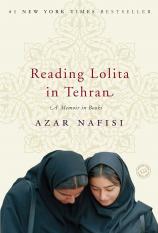
Reading Lolita in Tehran
A Memoir in Books
by Azar Nafisi
List Price: $13.95
Pages: 384
Format: Paperback
ISBN: 081297106X
Publisher: Random House
We all have dreamsthings we fantasize about doing and generally never get around to. This is the story of Azar Nafisi's dream and of the nightmare that made it come true.
For two years before she left Iran in 1997, Nafisi gathered seven young women at her house every Thursday morning to read and discuss forbidden works of Western literature. They were all former students whom she had taught at university. Some came from conservative and religious families, others were progressive and secular; several had spent time in jail. They were shy and uncomfortable at first, unaccustomed to being asked to speak their minds, but soon they began to open up and to speak more freely, not only about the novels they were reading but also about themselves, their dreams and disappointments. Their stories intertwined with those they were readingPride and Prejudice, Washington Square, Daisy Miller and Lolitatheir Lolita, as they imagined her in Tehran.
Nafisi's account flashes back to the early days of the revolution, when she first started teaching at the University of Tehran amid the swirl of protests and demonstrations. In those frenetic days, the students took control of the university, expelled faculty members and purged the curriculum. When a radical Islamist in Nafisi's class questioned her decision to teach The Great Gatsby, which he saw as an immoral work that preached falsehoods of "the Great Satan," she decided to let him put Gatsby on trial and stood as the sole witness for the defense.
Azar Nafisi's luminous tale offers a fascinating portrait of the Iran-Iraq war viewed from Tehran and gives us a rare glimpse, from the inside, of women's lives in revolutionary Iran. It is a work of great passion and poetic beauty, written with a startlingly original voice.
top of the page

1. On her first day teaching at the University of Tehran, Azar Nafisi began class with the questions, "What should fiction accomplish? Why should anyone read at all?" What are your own answers? How does fiction force us to question what we often take for granted?
2. Yassi adores playing with words, particularly with Nabokov's fanciful linguistic creation upsilamba (18). What does the word upsilamba mean to you?
3. In what ways had Ayatollah Khomeini "turned himself into a myth" for the people of Iran (246)? Also, discuss the recurrent theme of complicity in the book: that the Ayatollah, the stern philosopher-king, "did to us what we allowed him to do" (28).
4. Compare attitudes toward the veil held by men, women and the government in the Islamic Republic of Iran. How was Nafisi's grandmother's choice to wear the chador marred by the political significance it had gained? (192) Also, describe Mahshid's conflicted feelings as a Muslim who already observed the veil but who nevertheless objected to its political enforcement.
5. In discussing the frame story of A Thousand and One Nights, Nafisi mentions three types of women who fell victim to the king's "unreasonable rule" (19). How relevant are the actions and decisions of these fictional women to the lives of the women in Nafisi's private class?
6. Explain what Nafisi means when she calls herself and her beliefs increasingly "irrelevant" in the Islamic Republic of Iran. Compare her way of dealing with her irrelevance to her magician's self-imposed exile. What do people who "lose their place in the world" do to survive, both physically and creatively?
7. During the Gatsby trial Zarrin charges Mr. Nyazi with the inability to "distinguish fiction from reality" (128). How does Mr. Nyazi's conflation of the fictional and the real relate to theme of the blind censor? Describe similar instances within a democracy like the United States when art was censored for its "dangerous" impact upon society.
8. Nafisi writes: "It was not until I had reached home that I realized the true meaning of exile" (145). How do her conceptions of home conflict with those of her husband, Bijan, who is reluctant to leave Tehran? Also, compare Mahshid's feeling that she "owes" something to Tehran and belongs there to Mitra and Nassrin's desires for freedom and escape. Discuss how the changing and often discordant influences of memory, family, safety, freedom, opportunity and duty define our sense of home and belonging.
9. Fanatics like Mr. Ghomi, Mr. Nyazi and Mr. Bahri consistently surprised Azar by displaying absolute hatred for Western literature a reaction she describes as a "venom uncalled for in relation to works of fiction." (195) What are their motivations? Do you, like Nafisi, think that people like Mr. Ghomi attack because they are afraid of what they don't understand? Why is ambiguity such a dangerous weapon to them?
10. The confiscation of one's life by another is the root of Humbert's sin against Lolita. How did Khomeini become Iran's solipsizer? Discuss how Sanaz, Nassrin, Azin and the rest of the girls are part of a "generation with no past." (76)
11. Nafisi teaches that the novel is a sensual experience of another world which appeals to the reader's capacity for compassion. Do you agree that "empathy is at the heart of the novel"? How has this book affected your understanding of the impact of the novel?
top of the page

"Anyone who has ever belonged to a book group must read this book. Azar Nafisi takes us into the vivid lives of eight women who must meet in secret to explore the forbidden fiction of the West. It is at once a celebration of the power of the novel and a cry of outrage at the reality in which these women are trapped. The ayatollahs don't know it, but Nafisi is one of the heroes of the Islamic Republic."
Geraldine Brooks, author of Nine Parts of Desire
"I was enthralled and moved by Azar Nafisi's account of how she defied, and helped others to defy, radical Islam's war against women. Her memoir contains important and properly complex reflections about the ravages of theocracy, about thoughtfulness, and about the ordeals of freedomas well as a stirring account of the pleasures and deepening of consciousness that result from an encounter with great literature and with an inspired teacher."
Susan Sontag
"When I first saw Azar Nafisi teach, she was standing in a university classroom in Tehran, holding a bunch of red fake poppies in one hand and a bouquet of daffodils in the other, and asking, What is kitsch? Now, mesmerizingly, she reveals the shimmering worlds she created in those classrooms, inside a revolution that was an apogee of kitsch and cruelty. Here, people think for themselves because James and Fitzgerald and Nabokov sing out against authoritarianism and repression. You will be taken inside a culture, and on a journey, that you will never forget."
Jacki Lyden, National Public Radio, author of Daughter of the Queen of Sheba
"A memoir about teaching Western literature in revolutionary Iran, with profound and fascinating insights into both. A masterpiece."
Bernard Lewis, author of What Went Wrong?