Reading Group Guide
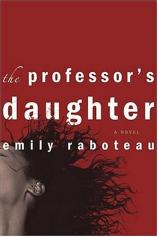
The Professor's Daughter
A Novel
by Emily Raboteau

List Price: $24.00
Pages: 288
Format: Hardcover
ISBN: 0805075062
Publisher: Henry Holt

Click here to buy this book from Amazon.com.
Click here to buy this book from Amazon.ca.


About This Book


"My father is black and my mother is white and my brother is a vegetable." When Emma Boudreaux's older brother, Bernie, winds up in a coma after a freak accident, it's as if she loses a part of herself. All their lives, he has served as her compass, her stronger, better half: Bernie was brilliant when Emma was smart, charismatic when she was awkward, and confident when she was shy. Only Bernie was able to navigate -- if not always diplomatically -- the terrain of their biracial identity. Now, as the chronic rash that's flared up throughout her life returns with a vengeance, Emma is sleepwalking through her first year at college, left alone to grow into herself.

The key to Emma's self-discovery lies in her father's past. Esteemed Princeton professor Bernard Boudreaux is emotionally absent and secretive about his family history. Little does Emma know just how haunted that history is, how tortured the path from the Deep South town to his present Ivy League success has been. Though her father and brother are bound by the past, Emma might just escape.

In exhilarating, magical prose, The Professor's Daughter traces the borderlands of race and family, the contested territory that gives birth to rage, confusion, madness, and invisibility. This striking debut marks the arrival of an astonishingly

top of the page


rgg_discuss.gif (1294 bytes)


1. People perplexed by Emma's ethnicity repeatedly ask her, "what are you?" How does she respond to that question? In what way is the novel itself an answer?

2. Emma feels invisible next to her brother, Bernie. In particular, she feels invisible to her father, Bernard. Why? How does that invisibility affect her childhood and her development into a habitual runaway? Conversely, Bernard was extremely visible as the only black child in an all-white, private boy's school. Compare and contrast Emma and Bernard's childhood experiences.

3. The circumstances surrounding the death of Bernard's father are kept secret from him until he goes off to New Orleans to integrate St. Ignatius Prep. Nan Zan explains: "Hate works like a circle if you don't stop it somewhere." Why did she keep the truth from him for so long and what are the repercussions?

4. Bernard's best friend, Professor Lester marries an Ethiopian woman. How does Lester's approach to blackness and black history differ from Bernard's? What role does he play in Bernie's life? Why does Bernard resent Lester for his attempts to teach his son to 'be black'?

5. How does Bernie deal with his mixed race heritage? Does he exploit it? Discuss his manner, his talk, his physical appearance, and behavior. How does his identity differ from his sister's? Bernie-ism 18:1 says, "It is a privilege to be able to invent oneself. It is also a burden." What might he mean by this?

6. How does Bernie's accident affect the members of the family? Discuss the link between the first Bernard's death and Bernie's accident. Does Bernard Jr.'s refusal to discuss his father in some way contribute to his son's death?

7. Raboteau describes herself as a Catholic writer. Many of the episodes in the book (such as Meteke's transformation into the White Buffalo Woman in order to stop the deer hunt) are formulated as complex parables. All three of the Bernards are perceived variously as Christ figures by other characters in the book. Give examples of where this occurs in the text. Who are the Bernards meant to save and what are the psychological consequences of that kind of pressure? How does Emma figure into this equation?

8. Emma almost seems to be able to control her recurrent rash. She gets it for the first time when she and Bernie paint their faces with black shoe polish. Is the rash a punishment? Is it self-induced? Could it be psychosomatic? What does it symbolize?

9. Emma studies Franz Fanon's Wretched of the Earth in her ongoing inquiry into her own heritage and writes a story about an African girl, "The Origins of Little Willa," in lieu of a college paper. How does Willa's story parallel Emma's/Bernard's? What else does Emma write? Discuss her role as writer throughout the novel. How does her writing change?

10. Aunt Patty tells the children a story about her alcoholic father's dashed dream to be a pilot. Bernie dreams of actually flying. After his death, flight becomes Emma's defense mechanism when she runs away, first to New Orleans, later to Brazil. What is she looking for? What are her other defense mechanisms for dealing with the terror of abandonment--by her brother, her father, Poresh, etc.? Why does Emma choose Lou, a man whom her mother describes as 'beneath her' and who abuses alcohol? Discuss the role of alcoholism in the book.

11. How does Aunt Patty's confession of despair at the AA meeting affect Bernard? Describe Bernard's testimony. Does he, like Patty, still live in the shadow of his father? Do Bernie and Emma live in his? What does Bernard want for his own children? What does Emma mean when she says she wants to "begin?"

12. When Patty and Lynn go to Atlantic City Bernard realizes that Lynn is the "glue" that holds the family together. What is his role? Why does Bernard disconnect from his family? How does his emotional absence affect Lynn, Bernie and Emma? Would you describe his character as "self-loathing?" Why or why not?

13. Emma relates the story of Deb Levine, and her mother's attempt at stability after Bernard leaves them for a graduate student. To Emma's surprise, Lynn has been taking flying lessons. What does Deb's death, and the manner of her death, reveal to Emma about her mother's strength?

14. The narrative of The Professor's Daughter flip-flops from Emma's perspective to Bernard's. Whose story did you find more compelling? Brief interludes from Bernie's comatose perspective are also included. How do these contribute to the book's tone? Who would you describe as the hero of this book and why?

15. In a prayer to his father through his son's walkie-talkie, Bernard confesses that he married a white woman so that his children wouldn't "inherit our misery." He has inherited his father's name, as has Bernie. Emma steals what might have been Lou's inheritance to finance her own to flight to Brazil, where she feels free for the first time in her life. In the final chapter, Bernard returns home to reclaim his inheritance, which he gives to his daughter. Discuss the metaphor of inheritance in the book. In what ways are the characters stymied by their fathers' histories? Do you think Emma is equipped to break that pattern?

top of the page

Critical Praise

"Fearless and lyrically inventive, Raboteau is a writer to watch"
O: The Oprah Magazine


"Raboteau tackles racism and racial violence in her dark, twisting semi-autobiographical novel, The Professor's Daughter. But what sets this profound debut apart and should ensure its success is not only its thematic cultural relevance but the immediacy and authenticity of its narrative."
Elle


"Raboteau's lyrical yet clear writing style lends itself well to this story, which is often both terrifying and beautiful… A book with resonating themes and a powerful storyline, The Professor's Daughter is a strong debut from a talented writer."
Bookpage


"(The Professor's Daughter) is a moving and significant work by a truly gifted and important new writer maong us."
—Andre Dubus III

 
Back to top.   


Privacy Policy | Contact Us | Advertising | About Us

© Copyright 2001-2009, ReadingGroupGuides.com. All rights reserved.
The Book Report, Inc. • 250 West 57th Street • Suite 1228 • New York, NY • 10107
Ph: 212-246-3100 • Fax: 212-246-4640

Bookreporter.comReadingGroupGuides.comGraphicNovelReporter.comFaithfulReader.com
Teenreads.comKidsreads.comAuthorsOnTheWeb.comAuthorYellowPages.com