IndieBound Independent Bookstores

Barnes & Noble

Loading
Reading Group Guide
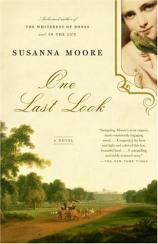
One Last Look
by Susanna Moore

List Price: $13.95
Pages: 304
Format: Paperback
ISBN: 1400075416
Publisher: Vintage

Click here to buy this book from Amazon.com.
Click here to buy this book from Amazon.ca.


About This Book


After several wretched months at sea, Eleanor Oliphant arrives in Calcutta with her brother Henry and sister Harriet. It is 1836, and her beloved Henry has just been appointed England's new Governor-General for India. Eleanor is to be his official hostess.

Despite the imported English gowns and formal soirees, India makes a mockery of Eleanor's sensibilities. Burning heat, starving people, insects as big as eggs--it is all an unreal dream, rife with tumultuous life. Harriet gives herself over to the adventure. Henry busies himself with official duties. Eleanor, though groping for bearings, slowly finds her isolation punctuated by moments of elation: her first monsoon, graceful women in vibrant sarees, Benares rising out of the mist. She discovers she likes curries and her native servants; and often dislikes her compatriots. Over the course of six years and a trek from Calcutta to Kabul and back, India manages to unsettle all of her "old, old ideas."

top of the page


rgg_discuss.gif (1294 bytes)


1. What is the effect of telling the story through Eleanor's diary entries? How would the novel have been different if it had employed a more conventional narration?

2. Early in the novel, Eleanor wonders "if generations of privilege have conspired to inure me to this place; I see all the naked creatures squatting at the doors of their huts and feel nothing but disgust" [p. 29]. Why would her privilege prevent her from feeling compassion for these "creatures"? How does her attitude toward the suffering and poverty of India change over the course of her time there?

3. "I have thought from time to time in my life as to what it means to be female," Eleanor writes, "but never before did I consider what it signifies to be English; now I think of it endlessly" [p. 87]. Why does being in India make her so conscious of her Englishness? How does it change her view of England and English imperialism?

4. Bishop Maxwell-Lewis asks Eleanor if she believes in the three C's: Commerce, Christianity, and Civilization. In what ways have the British used these concepts to justify their domination of India?

5. Eleanor and Henry think that Harriet has "gone all jungly" [p. 81]. What do they mean by this? How is Harriet's response to India deeper and more intimate than theirs? Why is she so enchanted by the jungle? How does living in the jungle change her view of English civilization, its comforts and moral restrictions?

6. What kind of relationship does Eleanor have with her brother Henry? Why is she so attached to him? How are we to understand the sexual dimension of their relationship?

7. What are the specific motives for Henry and Lafayette coming to India? How are their plans complicated and frustrated by the reality they encounter there?

8. Eleanor wonders, "The writing of women is always read in the hope of discovering women's secrets. Will my secrets be discovered?" [p. 239]. Is it true that women's writing is read with this purpose? Why would that be so? Has Eleanor revealed her secrets in her writing? Is reading another person's diaries always an act of voyeurism?

9. As she prepares to leave India, Eleanor tells the Bishop: "I myself can no longer distinguish between what is real and what is chimera, yet this feeling that I have, this elation of toiling through isolation and wonder, will soon be gone and I will mourn for the rest of my life its going!" [p. 277]. Why has her experience in India made it impossible for Eleanor to tell dream and reality apart? Why does she feel she will mourn its loss for the rest of her life?

10. Is One Last Look primarily a personal or a political novel? How does Susanna Moore balance these aspects of the book?

11. One Last Look is set in India in the 1830s. In what ways does it speak to our own time and circumstance? Can the novel be read as a cautionary tale about feeling superior to and exploiting other cultures? How relevant is the British overthrow of the Afghan leader Dost Mohammed in the novel to the current situation in Afghanistan and Iraq?

12. At the end of the novel, Eleanor tells Harriet: "I am so thankful for all that has happened, not least because it has cured me of almost everything I once believed" [p. 286]. What beliefs has Eleanor been cured of? How has her experience in India fundamentally changed her? How is she a different person when she returns to England?

top of the page

Critical Praise

"Intriguing. . . . Moore . . . conjure[s] the heat and light and color of this hot, beautiful land, its smells and sensual allure. A compelling and richly textured story."
The New York Times


"Moore is a wonderful writer with a sensuous style. . . . [One Last Look] takes on the quality of a feverish dream."
The Baltimore Sun


"How marvelous is a book that educates but does not preach. . . . [A] cautionary tale for smart women . . . and dumb men . . . but the beauty of the prose and the complexity of the narrative here far outweigh any edifying messages."
The Washington Post


"A beauitiful and powerful novel that records one woman's experience while illuminating a world of imperial folly and colonial rapacity and stupidity."
The Boston Globe

 
Facebook Fan Page  Follow us on Twitter


Add Your Guide to ReadingGroupGuides.com!

Bookreporter.com Bets On...: Books We're Betting You'll Love


Privacy Policy | Contact Us | Advertising | About Us

© Copyright 2001-2012, ReadingGroupGuides.com. All rights reserved.
The Book Report, Inc. • 250 West 57th Street • Suite 1228 • New York, NY • 10107
Ph: 212-246-3100 • Fax: 212-246-4640

Bookreporter.comReadingGroupGuides.comGraphicNovelReporter.comFaithfulReader.com
Teenreads.comKidsreads.comAuthorsOnTheWeb.com