Reading Group Guide
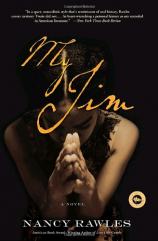
My Jim
A Novel
by Nancy Rawles

List Price: $12.95
Pages: 192
Format: Paperback
ISBN: 140005401X
Publisher: Three Rivers Press

Click here to buy this book from Amazon.com.
Click here to buy this book from Amazon.ca.


About This Book


To help her granddaughter accept the risks of loving, Sadie Watson mines her memory for the tale of the unquenchable love of her life, Jim. Sadie's Jim was an ambitious young slave and seer who, when faced with the prospect of being sold, escaped down the Mississippi with a white boy named Huck Finn. Sadie is suddenly left alone, worried about her children, reviled as a witch, punished for Jim's escape, and convinced her husband is dead. But Sadie's will and her love for Jim animate her life and see her through.

Told with spare eloquence and mirroring the true stories of countless slave women, My Jim recreates one of the most controversial characters in American literature. A nuanced critique of the great American novel, My Jim is a haunting and inspiring story about freedom, longing, and the remarkable endurance of love.

top of the page


rgg_discuss.gif (1294 bytes)


1. Have you read Huckleberry Finn? How does My Jim alter your interpretation of that classic's themes and attitudes? Is Sadie's Jim the same man as Huck's?

2. After a fever, Jim becomes a "seer," able to predict the future. Do you believe he could really do this, or was there some other explanation for his accuracy? How did his ability to "see" help him and his fellow slaves?

3. Throughout the novel, small items --- a button, a bowl, a knife --- take on totemic significance. Discuss what each item meant to Sadie, and why such things became so important. Which one do you think was most important to her? Is there a similarly significant item in your own life?

4. The colloquial language in My Jim is reflective of a slave woman's scant education, and at times challenging to understand. How did this affect your reading of the novel? In what ways are Marianne's sections different from Sadie's? Would it have been as successful if it had been written in standard English?

5. Discuss the Mississippi River's power in the lives of slaves. How does it serve as a metaphor? What did it mean to Sadie, and to Jim?

6. Throughout the novel, superstitions and religion are treated with nearly equal reverence. Why do you think that is?

7. Marianne Libre has a choice --- to leave with Chas, or to stay with Sadie. Why does she have such a difficult time making a decision? On page 14, Sadie says to her, "You scared to love cause you scared to lose." How did Sadie's experience with Jim enable her to understand that so clearly?

8. What function do the Marianne sections serve to the novel? How might it have been different if it were purely Sadie's voice?

9. On page 17 Sadie says to Marianne, "Cant lets you go off to no prairie less you got your family with you." Discuss the significance of the memory quilt Sadie and Marianne sew.

10. Where did Sadie find pleasure in her life? Was it real pleasure?

11. For slaves, the definition of "family" was by necessity different from what free people considered it. Who was Sadie's family? What about her children? Jim?

12. Why didn't Jim try to take Sadie with him when he ran? What were her feelings about him leaving? How would you have felt to be left behind in slavery?

13. How does this novel compare to other slave accounts you may have read, both fictional and non-fiction? What does it remind you of?

14. How does reading My Jim affect your thinking about race relations today?

15. Although the novel is entitled My Jim, is it really Jim's story?

top of the page

Critical Praise

"A wonderful first-person narrative . . . both a love story and a chronicle of a brutal time in American history."
Chicago Tribune


"My Jim is a compelling, eloquently written novel that can stand on its own merits beside the great works that inspired it."
San Francisco Chronicle


"Rawles's affecting spin-off of Twain's classic gives the resilient Sadie Watson a harrowing story and a powerful voice to tell it."
Entertainment Weekly


"In a spare, naturalistic style that's reminiscent of oral history, Rawles covers territory Twain did not....As heart-wrenching a personal history as any recorded in American literature."
New York Times Book Review

 
Back to top.   


Privacy Policy | Contact Us | Advertising | About Us

© Copyright 2001-2008, ReadingGroupGuides.com. All rights reserved.