|
|
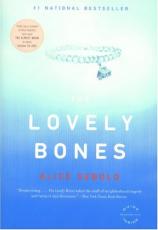
The Lovely Bones
Deluxe Edition
by Alice Sebold
List Price: $16.99
Pages: 352
Format: Paperback
ISBN: 9780316001823
Publisher: Back Bay Books
This deluxe trade paperback edition of Alice Sebold's modern classic features French flaps and rough-cut pages.
Once in a generation a novel comes along that taps a vein of universal human experience, resonating with readers of all ages. The Lovely Bones is such a book - a phenomenal #1 bestseller celebrated at once for its narrative artistry, its luminous clarity of emotion, and its astoniishing power to lay claim to the hearts of millions of readers around the world.
"My name was Salmon, like the fish; first name, Susie. I was fourteen when I was murdered on December 6, 1973."
So begins the story of Susie Salmon, who is adjusting to her new home in heaven, a place that is not at all what she expected, even as she is watching life on eath continue without her - her friends trading rumors about her disappearance, her killer trying to cover his tracks, her grief-stricken family unraveling.
Out of unspeakable traged and loss, The Lovely Bones succeeds, miraculously, in building a tale filled with hope, humor, suspense, even joy
"A stunning achievement." -The New Yorker
"Deeply affecting... A keenly observed portrait of familial love and how it endures and changes over time." -New York Times
"A triumphant novel... It's a knockout." -Time
"Destined to become a classic in the vein of To Kill a Mockingbird... I loved it." -Anna Quindlen
"A novel that is painfully fine and accomplished." -Los Angeles Times
"The Lovely Bones seems to be saying there are more important things in life on earth than retribution. Like forgiveness, like love." -Chicago Tribune
top of the page

1. In Susie's Heaven, she is surrounded by things that bring her peace. What would your Heaven be like? Is it surprising that in Susie's inward, personal version of the hereafter there is no God or larger being that presides?
2. Why does Ruth become Susie's main connection to Earth? Was it accidental that Susie touched Ruth on her way up to Heaven, or was Ruth actually chosen to be Susie's emotional conduit?
3. Rape is one of the most alienating experiences imaginable. Susie's rape ends in murder and changes her family and friends forever. Alienation is transferred, in a sense, to Susie's parents and siblings. How do they each experience loneliness and solitude after Susie's death?
4. Why does the author include details about Mr. Harvey's childhood and his memories of his mother? By giving him a human side, does Sebold get us closer to understanding his motivation? Sebold explained in an interview about the novel that murderers "are not animals but men," and that is what makes them so frightening. Do you agree?
5. Discuss the way in which guilt manifests itself in the various characters - Jack, Abigail, Lindsay, Mr. Harvey, Len Fenerman.
6. "Pushing on the inbetween" is how Susie describes her efforts to connect with those she has left behind on Earth. Have you ever felt as though someone was trying to communicate with you from "the inbetween"?
7. Does Buckley really see Susie, or does he make up a version of his sister as a way of understanding, and not being too emotionally damaged by, her death? How do you explain tragedy to a child? Do you think Susie's parents do a good job of helping Buckley comprehend the loss of his sister?
8. Susie is killed just as she was beginning to see her mother and father as real people, not just as parents. Watching her parents' relationship change in the wake of her death, she begins to understand how they react to the world and to each other. How does this newfound understanding affect Susie?
9. Can Abigail's choice to leave her family be justified?
10. Why does Abigail leave her dead daughter's photo outside the Chicago Airport on her way back to her family?
11. Susie observes that "The living deserve attention, too." She watches her sister, Lindsay, being neglected as those around her focus all their attention on grieving for Susie. Jack refuses to allow Buckley to use Susie's clothes in his garden. When is it time to let go?
12. Susie's Heaven seems to have different stages, and climbing to the next stage of Heaven requires her to remove herself from what happens on Earth. What is this process like for Susie?
13. In The Lovely Bones, adult relationships (Abigail and Jack, Ray's parents) are dysfunctional and troubled, whereas the young relationships (Lindsay and Samuel, Ray and Susie, Ray and Ruth) all seem to have depth, maturity, and potential. What is the author saying about young love? About the trials and tribulations of married life?
14. Is Jack Salmon allowing himself to be swallowed up by his grief? Is there a point where he should have let go? How does his grief process affect his family? Is there something admirable about holding on so tightly to Susie's memory and not denying his profound sadness?
15. Ray and Susie's final physical experience (via Ruth's body) seems to act almost as an exorcism that sweeps away, if only temporarily, Susie's memory of her rape. What is the significance of this act for Susie, and does it serve to counterbalance the violent act that ended Susie's life?
16. Alice Sebold seems to be saying that out of tragedy comes healing. Susie's family fractures and comes back together, a town learns to find strength in each other. Do you agree that good can come of great trauma?
top of the page

"Sebold has given us a fantasy-fable of great authority, charm, and daring. She's a one-of-a-kind writer."
Jonathan Franzen, author of The Corrections
"Ms. Sebold's achievements: her ability to capture both the ordinary and the extraordinary, the banal and the horrific, in lyrical, unsentimental prose; her instinctive understanding of the mathematics of love between parents and children; her gift for making palpable the dreams, regrets and unstilled hopes of one girl and one family."
Michiko Kakutani, New York Times Arts section review
"A small but far from minor miracle...a story that is both tragic and full of light and grace...full of suspense and written in lithe, resilient prose that by itself delights."
Publisher's Weekly (starred review)
"Masterful" and "compelling.... Sebold's beautiful novel shows how a tragedy can tear a family apart, and bring them back together again. She challenges us to re-imagine happy endings, as she brings the novel to a conclusion that is unfalteringly magnificent. And she paints, with an artist's precision, a portrait of a world where the terrible and the miraculous can and do co-exist."
Booklist
"The Lovely Bones is one of the strangest experiences I have had as a reader in a long time, and one of the most memorable. Painfully funny, bracingly tough, terribly sad, it is a feat of imagination and a tribute to the healing power of grief."
Michael Chabon, author of The Amazing Adventures of Kavalier and Clay
"What a wonderful writer Alice Sebold is. Out of darkness she makes light, out of despair and violence, beauty, out of deep loss a peculiar, hard-won gain. All her characters, for good or ill, travel to surprising places, and so do we, her extremely fortunate readers."
Margot Livesey, author of Eva Moves the Furniture
"Set in a heaven as real and possible as the earth is mysterious and shifting, The Lovely Bones explores, with clear-eyed affection and wit, the romance of family life, the shy, funny turbulence of adolescence, and the painful tracks love and loss make through our world."
Amy Bloom, author of A Blind Man Can See How Much I Love You
|
|