IndieBound Independent Bookstores BRC Facebook Fan Page
Coming Soon
Reading Group Guide
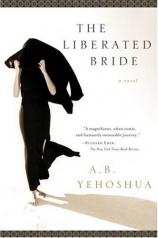
The Liberated Bride
by A. B. Yehoshua

List Price: $14.00
Pages: 576
Format: Paperback
ISBN: 0156030160
Publisher: Harvest Books/Harcourt Trade Publishers

Click here to buy this book from Amazon.com.
Click here to buy this book from Amazon.ca.


About This Book


A novel that stirs us to examine the nature of loyalty, identity, and history itself, The Liberated Bride presents a multitude of sectors in Israeli life, as seen through the eyes of an endearing professor named Yochanan Rivlin. Acclaimed author A. B. Yehoshua begins the journey with a wedding; the bride is one of Rivlin's students, a young Arab woman from a village in the Galilee. From this memorable evening springs a series of storylines that weave together Rivlin's own wife (a venerable judge), his research in Algeria's recent civil war, his son's failed marriage, translations of ancient storytelling, and even the passersby in Rivlin's neighborhood. As a fascinating tapestry emerges from scenes that are by turns deeply serious and highly entertaining, Yehoshua captures the universal desire for truth as well as the legacies of conquest that ripple throughout the world.

top of the page


rgg_discuss.gif (1294 bytes)


1. In what way does Samaher's wedding set the tone for the novel? What is the nature of the unions-political, nuptial, or otherwise-considered by Rivlin?

2. Throughout The Liberated Bride, Rivlin and the other characters must cross through numerous geographic borders. What are the parameters for defining homeland in the novel? Who is permitted to receive hospitality? What constitutes a foreigner?

3. Rivlin and his colleagues grapple with age-old conflicts regarding Israel and surrounding regions. How does the scholarly world's approach differ from that of politicians?

4. Discuss the portrayals of Rivlin's mother. What does her ghost signify to him?

5. Compare and contrast Rivlin's two sons. Do they reflect aspects of their father in any way? What was the effect of Ofer's secrecy and his immersion in his father-in-law's business? What are the social implications of his choices?

6. What does Rivlin discover about himself through the ancient Arab stories, translated from a blood-spattered manuscript?

7. Do you believe that Samaher was attempting to convey a message to Rivlin through her work on the project, or was she simply trying to stay motivated? What do you make of her rumored pregnancy?

8. The airport is a frequent destination in the novel. What does this indicate about the novel's setting in general, and Rivlin's role as ambassador and way station?

9. How would you characterize Rivlin's marriage? What techniques do he and his wife use to negotiate their mutual desire to be "right," as well as other issues such as tidiness, time management, and sex? How does Hagit compare to the other female characters in the novel?

10. Discuss the novel's various narratives of faith-including Rivlin's witnessing Ramadan and the fainting nun. What gives him such tolerance and curiosity? How does he characterize his own religious beliefs?

11. What might have prevented Rasheed from being subjected to such violence? Did Rashid place him in the crosshairs of Calamity and Right?

12. The repercussions of French colonization in Algeria form a recurring thread throughout the novel. What parallels can be drawn between this North African history and that of Rivlin's world-the history of Israel as well as Rivlin's own personal story?

13. Does Galya's reappearance at the end of the novel resolve previous questions among Ofer and his family, or does she create new dilemmas for them?

14. Discuss A. B. Yehoshua's storytelling style. What is the effect of his many literary devices, including intermittent use of second person and first person, the inclusion of fables, and an occasional epistolary format? In what way can language and linguistic history deepen our understanding of a people?

15. What can American audiences learn from the novel? What might Rivlin like to teach them, if he were their professor?

16. Consider the author's use of the word liberated in the title. Who in the novel becomes liberated, and from what? Who has the power to truly liberate others, both in the novel and in the world at large?

top of the page

Critical Praise

"A world-class writer at the height of his powers."
The Boston Globe


"The pure craft of a writer in exceptional form."
The Washington Post Book World


THE GIRLS FROM AMES


Become a Fan of ReadingGroupGuides.com on Facebook!


Bookreporter.com Bets On...: Books We're Betting You'll Love

Add Your Guide to ReadingGroupGuides.com!


Privacy Policy | Contact Us | Advertising | About Us

© Copyright 2001-2010, ReadingGroupGuides.com. All rights reserved.
The Book Report, Inc. • 250 West 57th Street • Suite 1228 • New York, NY • 10107
Ph: 212-246-3100 • Fax: 212-246-4640

Bookreporter.comReadingGroupGuides.comGraphicNovelReporter.comFaithfulReader.com
Teenreads.comKidsreads.comAuthorsOnTheWeb.comAuthorYellowPages.com