Reading Group Guide
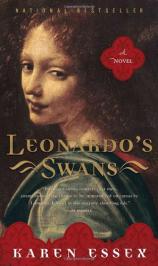
Leonardo's Swans
by Karen Essex

List Price: $12.95
Pages: 365
Format: Paperback
ISBN: 0767923065
Publisher: Broadway

Click here to buy this book from Amazon.com.
Click here to buy this book from Amazon.ca.


About This Book


Isabelle d’Este, daughter of the Duke of Ferrara, born into privilege and the political and artistic turbulence of Renaissance Italy, is a stunning black-eyed blond and an art lover and collector. Worldly and ambitious, she has never envied her less attractive sister, the spirited but naïve Beatrice, until, by a quirk of fate, Beatrice is betrothed to the future Duke of Milan. Although he is more than twice their age, openly lives with his mistress, and is reputedly trying to eliminate the current duke by nefarious means, Ludovico Sforza is Isabella’s match in intellect and passion for all things of beauty. Only he would allow her to fulfill her destiny: to reign over one of the world’s most powerful and enlightened realms and be immortalized in oil by the genius Leonardo da Vinci. Isabella vows that she will not rest until she wins her true fate, and the two sisters compete for supremacy in the illustrious courts of Europe.

A haunting novel of rivalry, love, and betrayal that transports you back to Renaissance Italy, Leonardo’s Swans will have you dashing to the works of the great master—not for clues to a mystery but to contemplate the secrets of the human heart.

top of the page


rgg_discuss.gif (1294 bytes)


1. While Leonardo’s Swans is written from the points of view of the Este sisters, each chapter begins with an excerpt from the actual notebooks of Leonardo da Vinci, who is a pivotal character. How did the portrayal of Leonardo change your opinion of this iconic artist? Were you aware of the breadth of his work, which included weaponry design, anatomy, sculpture, and machinery?

2. Leonardo’s challenges as a genius with a great vision and also a human being who needs to pay his bills and feed his dependents is explored throughout the novel. Did the fact that this great man was plagued by so many ordinary woes surprise you? Is his situation different from the artist’s plight today? Did his problems change your opinion about, or shed light upon, the struggles facing any contemporary artists that you might know?

3. The novel explores the eternal relationship between art and power. What is created and what survives is a direct result of who is in power and who is controlling the purse strings. Leonardo’s most famous paintings were commissioned by his patrons. Other works were not executed because of both war and whim. How does this theme continue to play out in our own culture? Did you make the connection between, say, the destruction of the colossal Buddhas in Afghanistan by the Taliban and Leonardo’s bronze for his colossal horse sculpture being shipped away to make cannons? Or the French soldiers destroying the clay sculpture after the fall of Milan? What works of art have been commissioned with public money in your community? Do you think they reflect the vision of the artist or the vision of those who commissioned them?

4. Isabella d’Este was obsessed with being immortalized by the great artists of her day. What would be a parallel in our own society? Is today’s quest for publicity and self-promotion the same instinct? How do today’s power players seek immortality through art and architecture?

5. Beatrice and Isabella d’Este were mere teenagers when they married and took their positions as co–rulers of great Italian city–states. If they were alive today, they would have been in high school instead of administering huge and complex governments. It is unimaginable that seventeen year–old girls would control treasuries, hear pleas from members of the community and decide resolutions, or commission works of art from great masters. How has our idea of adolescence and womanhood changed over the centuries? Do you think this is a positive or negative evolution?

6. The portrayal of the Este sisters accurately reflects their roles in their communities. Were you surprised that young women wielded such enormous power and influence during the Renaissance? Why is it that women of power are generally left out of the history books? Is all women’s history hidden history? Do you think that today’s young girls would be enriched by learning about the stories of these extraordinary women of the past?

7. The timing of Isabella’s marriage proposal from Francesco Gonzaga prevented her from marrying the man who might have been her true soul mate, Ludovico Sforza, Duke of Milan. Could history have been changed if Ludovico had been subject to Isabella’s stronger control? Do you think that if the marriages had been reversed and Beatrice would have wed Francesco, the outcome for both sisters—indeed, the outcome for the duchy of Milan—would have been more successful?

8. Isabella d’Este’s superior survival skills enabled her to weather the constantly changing political loyalties of her contemporaries, even those in her own family. She went on to become a great collector and patron of the arts and a strong political influence in Italy and beyond. Did she emerge as your favorite character, or did you have more sympathy for Beatrice? Is survival the most important goal after all? Do you think Isabella might have paid a price for “winning?”

9. Each chapter of Leonardo’s Swans is entitled with the name of a tarot card. The tarot deck was invented at the court of Milan and painted most famously by the artist Bonifacio Bembo. The cards reflected the nature of other playing cards of the day and were used to play a Game of Triumphs, or trumps, as is referred to in the novel. Beatrice, in fact, did excel at this game. Do you see the correlation between the tarot cards and the events of the chapters? Do you agree, along with Isabella, that la Fortuna, or the Wheel of Fortune, has a hand in human events?

10. Leonardo da Vinci was recognized in his own time as an innovator and a genius. To put it in contemporary terminology, he was one of the “rock stars” of his day, owing solely to his talent. Has the power of fine art such as painting and sculpture been reduced by the advent of television, video, cinema, and other alternative art forms and media? How important is it to preserve and support the fine arts?

top of the page

Critical Praise

"Privileged sisters compete over men, attention—and the chance to be immortalized on canvas by Leonardo da Vinci in this instantly absorbing tale."
Redbook magazine


"Two very different sisters, two very different husbands, and one of the greatest geniuses of all times, Leonardo da Vinci. In this sizzling historical novel set in fifteenth-century Italy, Essex combines art, political intrigue, family feuds and sex to create a page-turner that also probes the experience of being painted and whether it can offer immortality."
USA Today


"Acclaimed author Karen Essex spins a wild yarn about sexual politics and the struggle for immortality."
Harper’s Bazaar (“Hot Reads” pick)


"Meticulously researched. Exquisite detail . . ."
Chicago Tribune

 
Back to top.   


Privacy Policy | Contact Us | Advertising | About Us

© Copyright 2001-2008, ReadingGroupGuides.com. All rights reserved.