Reading Group Guide
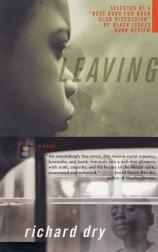
Leaving
by Richard Dry

List Price: $14.95
Pages: 464
Format: Paperback
ISBN: 0312302878
Publisher: Griffin Trade Paperback

Click here to buy this book from Amazon.com.
Click here to buy this book from Amazon.ca.


About This Book

An epic, engrossing first novel of an African-American family, its dispossession and regeneration.

Leaving begins in 1959, when newly-widowed and pregnant Ruby Washington and her half brother, Easton, board a bus in rural South Carolina destined for California. Their lives and the lives of Ruby's daughter Lida and her children Love and Li'l Pit are played out against the turbulent backdrop of the 1960s and the drug-infested neighborhoods of the 1980s and 1990s. Ruby and Lida struggle to embrace each other without disturbing the family secret that eventually drives Lida into prostitution; Easton grows into a charismatic community leader without control over his own inner world; and Love attempts to rescue his brother from the inhospitable streets of America.

Leaving places, leaving family, and leaving the prisms of racism and poverty-this debut novel is a remarkable synthesis of history and intimately-observed everyday life.

top of the page


rgg_discuss.gif (1294 bytes)

1. How does the structure of Leaving contribute to the themes explored in the novel?

2. What do the characters attempt to leave in this novel other than physical places? Can the act of leaving be applied to historical and psychological contexts?

3. To what degree are the characters successful or unsuccessful at leaving?

4. What role do the slave narratives and historical documents play in the book? Look at each Santa Rita chapter and discuss the relationship it has to the development of the characters, plot, and themes?

5. What does the intersection of the personal and the historical say about the confluence of individual and societal responsibility?

6. Is the race of the author significant? Why or why not? Does the same apply to gender?

7. What issues about relationships and self-knowledge apply to the human condition regardless of race?

8. Consider a particular passage in which Dry uses description to create emotional impact. How is emotion conveyed through physical detail?

9. How does Lida's relationship with Ruby parallel Love Easton Childer's relationship with Elise?

10. How does Love LeRoy's relationship to his brother, Li'l Pit, reflect his notions of responsibility and manhood?

11. What is the connection between Love Easton's sense of self and his relationships with female characters?

12. What differences exist between Love and Li'l Pit and how do they contribute to their development?

13. What differences and similarities exist between Joyce and Love?

14. Who is the person reading and speaking in the Santa Rita chapters? What significance does it have?

15. How do the characters undermine traditional notions of good and evil?

16. In what ways do the epigrams reflect themes in the novel?

top of the page

 
Back to top.   


Privacy Policy | Contact Us | Advertising | About Us

© Copyright 2001-2008, ReadingGroupGuides.com. All rights reserved.